
A safety technician notices that workers on a multi-story steel erection project rarely report dropped tools or close calls unless someone is actually struck. Why is establishing a non-punitive near-miss reporting process valuable for the site's safety program?
Select an answer to reveal the explanation.
Short Explanation
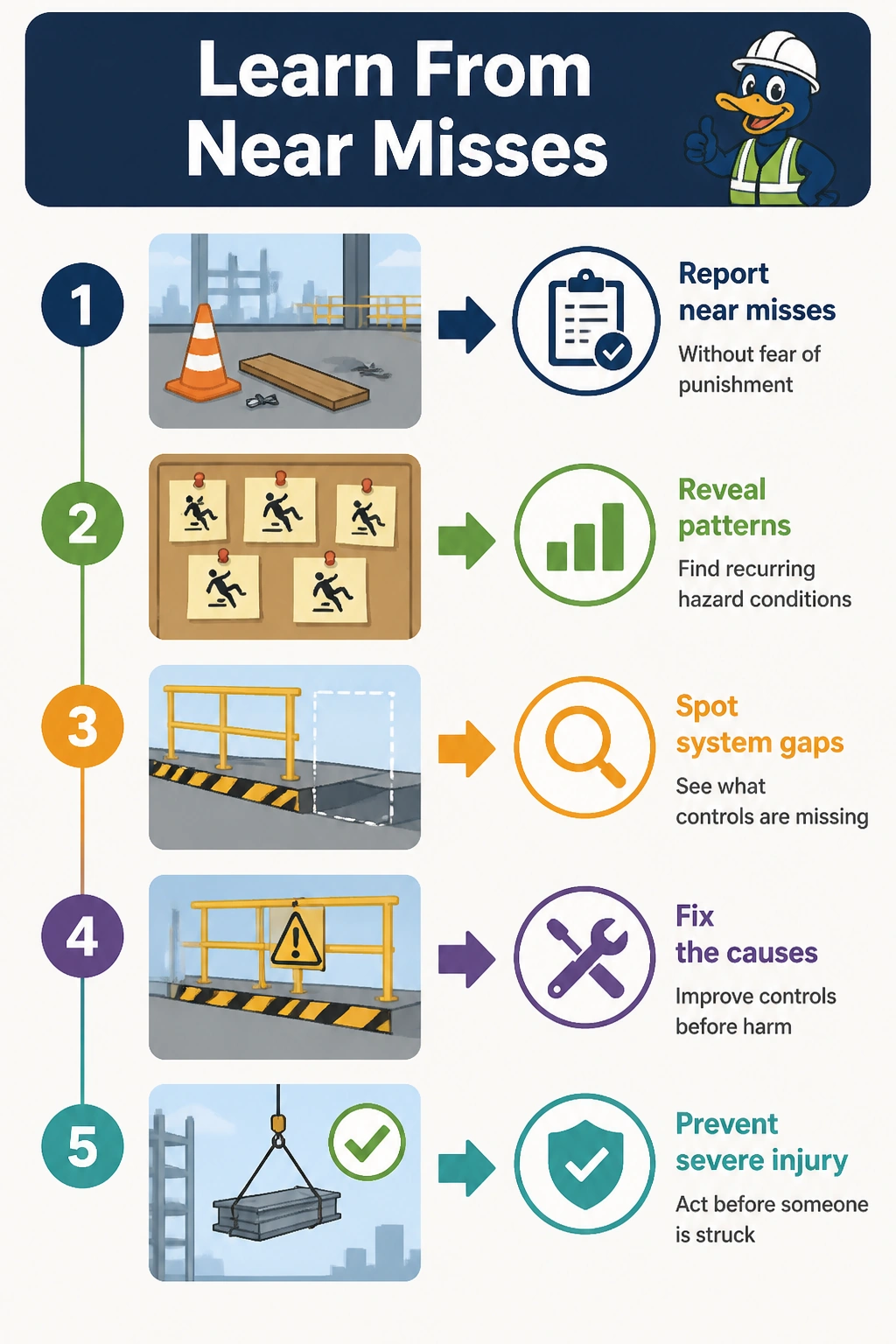
A near-miss is a free warning shot—gravity or electricity just missed someone, and the hazard is still sitting there waiting for a second chance. The trap is thinking close-call reports replace required OSHA logs or site inspections. Instead, you use near-miss reporting because It uncovers recurring hazard conditions and system gaps so controls can be fixed before a severe injury occurs.
Full Explanation
A non-punitive near-miss reporting process is a cornerstone of proactive safety management because It uncovers recurring hazard conditions and system gaps so controls can be fixed before a severe injury occurs. When workers can report dropped tools or rigging close calls without fear of blame, safety technicians gain early visibility into missing toe-boards, poor tool tethering, or congested travel paths. Claiming that It replaces the legal requirement to maintain an OSHA Form 300 Log for recordable injuries is false because 29 CFR 1904 recordkeeping remains mandatory for work-related injuries and illnesses regardless of near-miss programs. Believing that It automatically lowers the contractor's workers' compensation experience modification rate confuses proactive hazard tracking with insurance loss-run calculations based on actual claims. Suggesting that It eliminates the need for daily competent-person inspections of rigging and scaffolds is incorrect because worker reporting supplements—never replaces—required regulatory inspections. As a caveat, near-miss programs fail quickly if management ignores submitted reports or punishes workers who speak up. As an operational check, track near-miss submissions in weekly safety meetings, close out corrective actions promptly, and share the completed fixes with the crew so workers see their reports drive real change.
Prefer to study offline? Printable PDF study book + test engine ($7.50, unofficial). These questions stay free here.