
A general contractor hires three temporary laborers from a staffing agency and assigns a site superintendent to direct their daily tasks. One temporary laborer suffers a recordable fractured wrist while moving scaffolding. Under 29 CFR 1904.31, which employer must record the injury on its OSHA Form 300 Log?
Select an answer to reveal the explanation.
Short Explanation
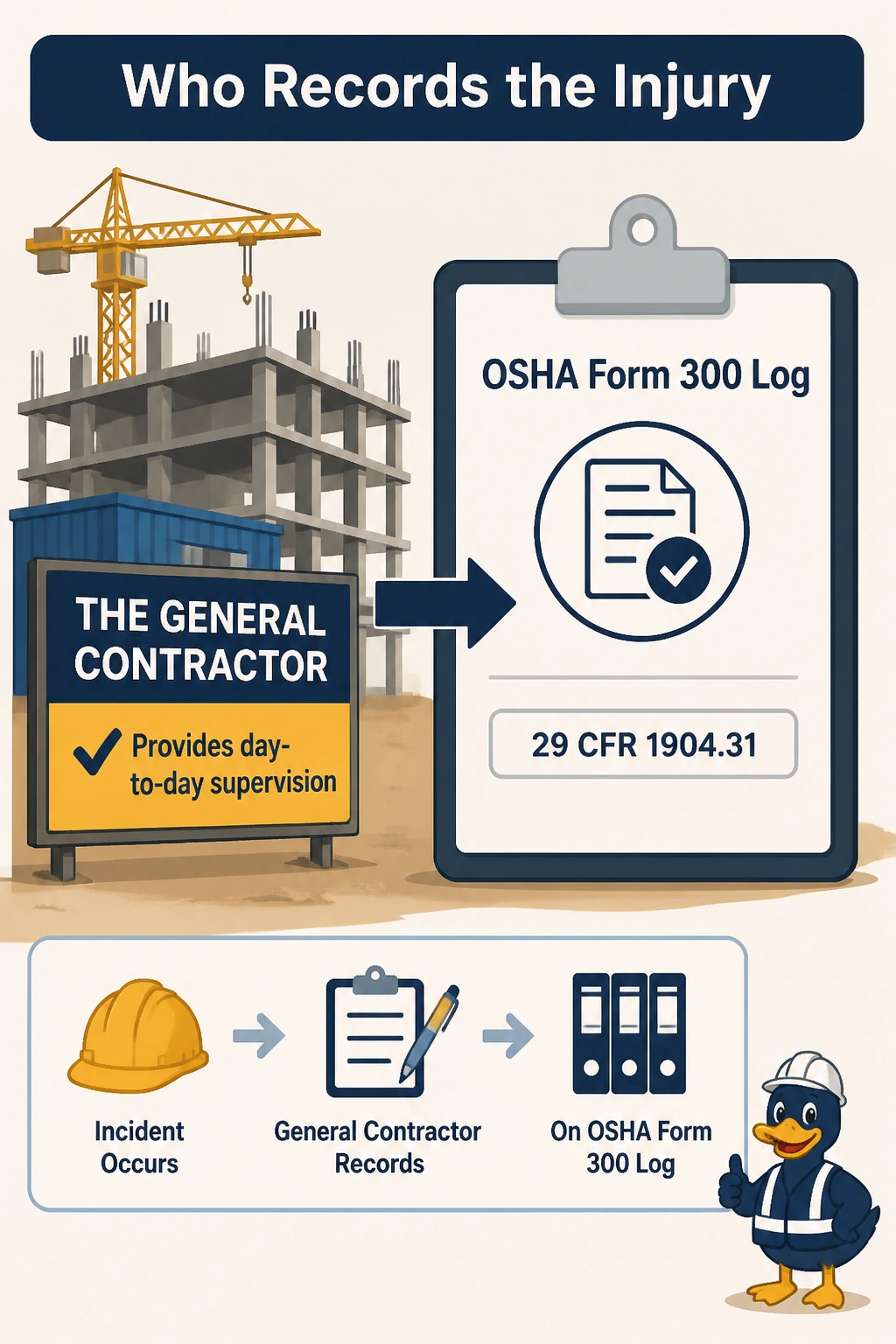
Payroll checks do not decide who owns the OSHA log entry—supervision does! When a host contractor directs a temporary worker's daily tasks, you must record their work-related injuries on the host site's Form 300, not push the paperwork onto the staffing agency.
Full Explanation
Under 29 CFR 1904.31, recordkeeping responsibility follows operational control rather than payroll. The general contractor because it provides day-to-day supervision is correct because the employer directing the worker's means, methods, and daily tasks is in the best position to understand the hazard and prevent recurrence. The staffing agency because it issues the laborer's weekly paycheck and tax forms fails because OSHA explicitly states that wage payment alone does not determine who logs the injury when the staffing firm does not supervise daily work. Both the general contractor and the staffing agency on their respective logs is wrong because OSHA prohibits double-counting the same case across two logs. Neither employer because temporary agency workers are exempt from injury logs is incorrect because temporary workers receive the exact same recordkeeping protections as permanent staff. As a practical caveat, the two employers should coordinate medical updates and return-to-work details so the host log stays accurate. For an operational check, verify your site's staffing agreements clearly assign daily supervision and confirm that every temporary worker's recordable case appears on the supervising host contractor's Form 300.
Prefer to study offline? Printable PDF study book + test engine ($7.50, unofficial). These questions stay free here.