
Halfway through a commercial office build, the project scope changes to add a deep foundation underpinning phase that was not part of the original mobilization plan. How should the safety technician manage the Site-Specific Safety Plan?
Select an answer to reveal the explanation.
Short Explanation
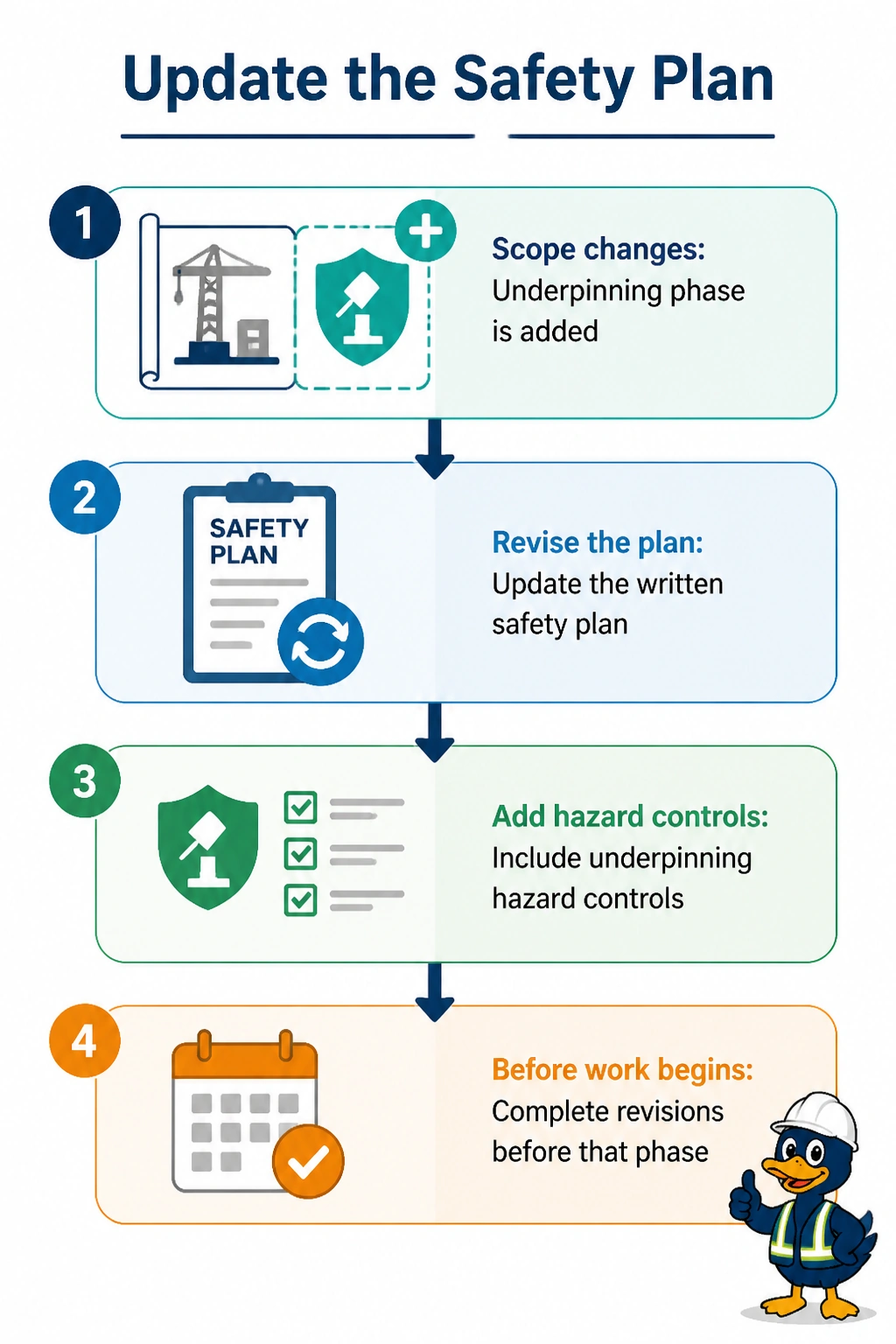
A Site-Specific Safety Plan is a living playbook, not a trophy you frame at mobilization and forget. When a project adds deep underpinning, your old concrete-slab rules leave crews flying blind against soil collapse and structural shifts. Update the written plan and controls before the new phase starts.
Full Explanation
Effective safety program management requires keeping site controls aligned with active work, so the technician must Revise the written plan with underpinning hazard controls before that phase begins. Updating the Site-Specific Safety Plan (SSSP) integrates engineering designs, competent person roles, emergency procedures, and trade coordination for the new excavation and structural risks. Choosing to Keep the original signed plan unchanged until project closeout leaves the project operating without documented controls for high-hazard scope additions. Choosing to Post a verbal reminder at the morning huddle without revising documents fails to establish enforceable site standards, training records, or subcontractor alignment. Choosing to Rely on the underpinning subcontractor to follow their home-office manual creates dangerous gaps because a generic corporate manual does not address site-specific soil, adjacent utilities, or emergency access routes. As a caveat, revising the written plan alone is insufficient unless affected supervisors and crews are briefed on the changes. Prior to mobilizing the underpinning crew, verify the revised SSSP is signed, distributed to trades, and reflected in pre-task plans.
Prefer to study offline? Printable PDF study book + test engine ($7.50, unofficial). These questions stay free here.