
While auditing a general contractor's field office files, a safety technician finds OSHA Form 300 Logs, Form 300A summaries, and Form 301 Incident Reports from three years ago. How long must the employer retain these records under 29 CFR 1904.33?
Select an answer to reveal the explanation.
Short Explanation
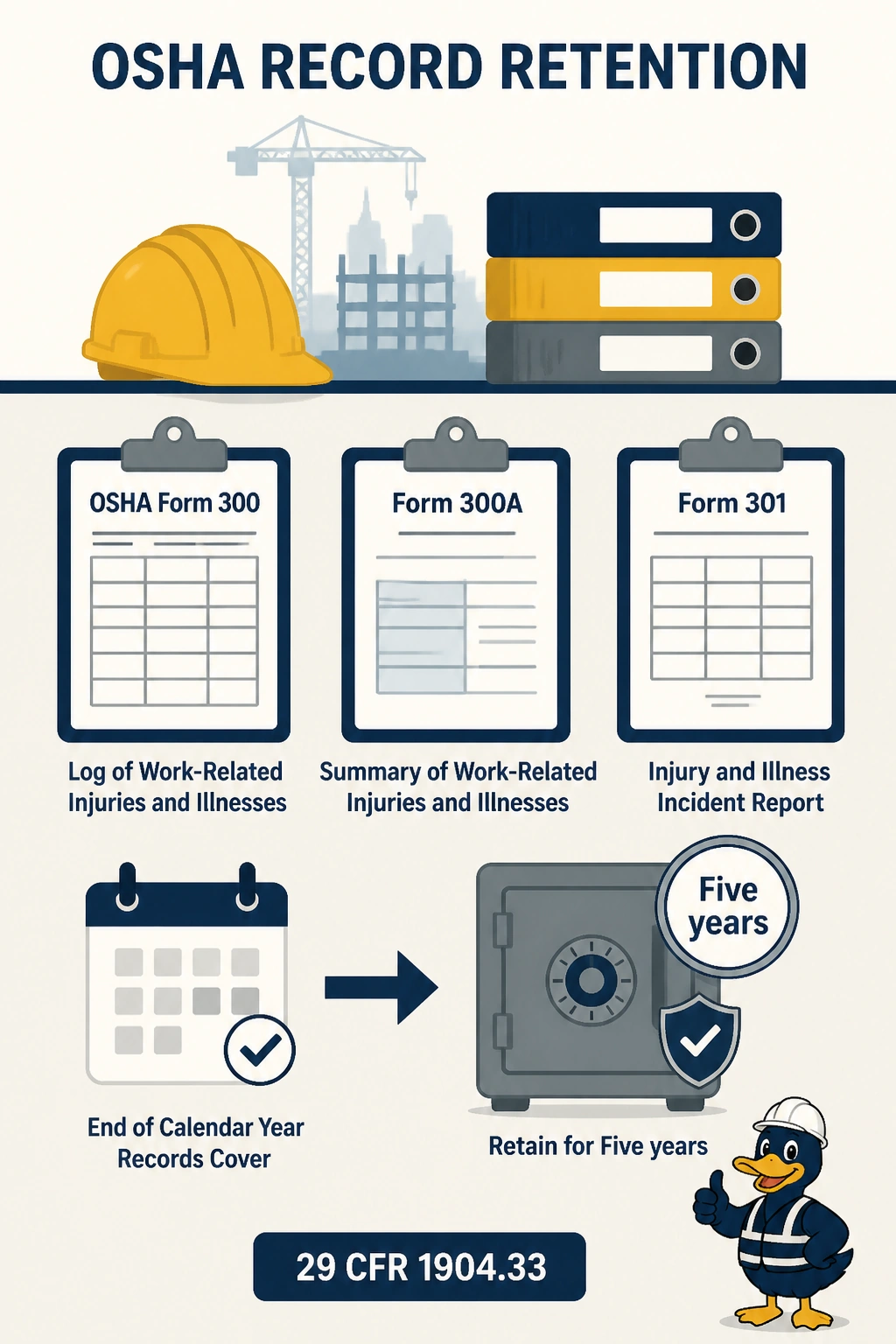
OSHA injury logs are not like temporary daily sign-in sheets that you toss when a job wraps up. Under 29 CFR 1904.33, you have to keep those 300, 300A, and 301 records on file for five full years after the calendar year they cover. The trap is thinking project completion or the end of the April posting window lets you shred them early.
Full Explanation
Under 29 CFR 1904.33, covered employers must save the OSHA 300 Log, any privacy case list, the Form 300A annual summary, and the Form 301 Incident Report forms for Five years following the end of the calendar year the records cover. Retaining these records allows employers and inspectors to review multi-year injury trends and update logs if an injury's outcome changes during that period. Keeping files Only until the annual Form 300A summary posting period ends in April violates the retention rule and erases required historical records. Discarding logs One year after the specific construction project reaches final completion confuses project closeout with company-wide statutory recordkeeping duties. Retaining them for Three years from the date each individual injury was initially logged falls short of the five-year federal requirement and miscalculates the calendar-year clock. As a caveat, employee medical and exposure records under 29 CFR 1910.1020 carry much longer retention periods than injury logs. For an operational check, audit archived safety binders or digital folders each January to verify five complete prior calendar years remain accessible.
Prefer to study offline? Printable PDF study book + test engine ($7.50, unofficial). These questions stay free here.