
A trench collapse on a municipal water main project fatally injures a pipelayer at 9:00 a.m. After emergency services secure the scene and notify next of kin, within what maximum timeframe must the employer report the fatality to OSHA under 29 CFR 1904.39?
Select an answer to reveal the explanation.
Short Explanation
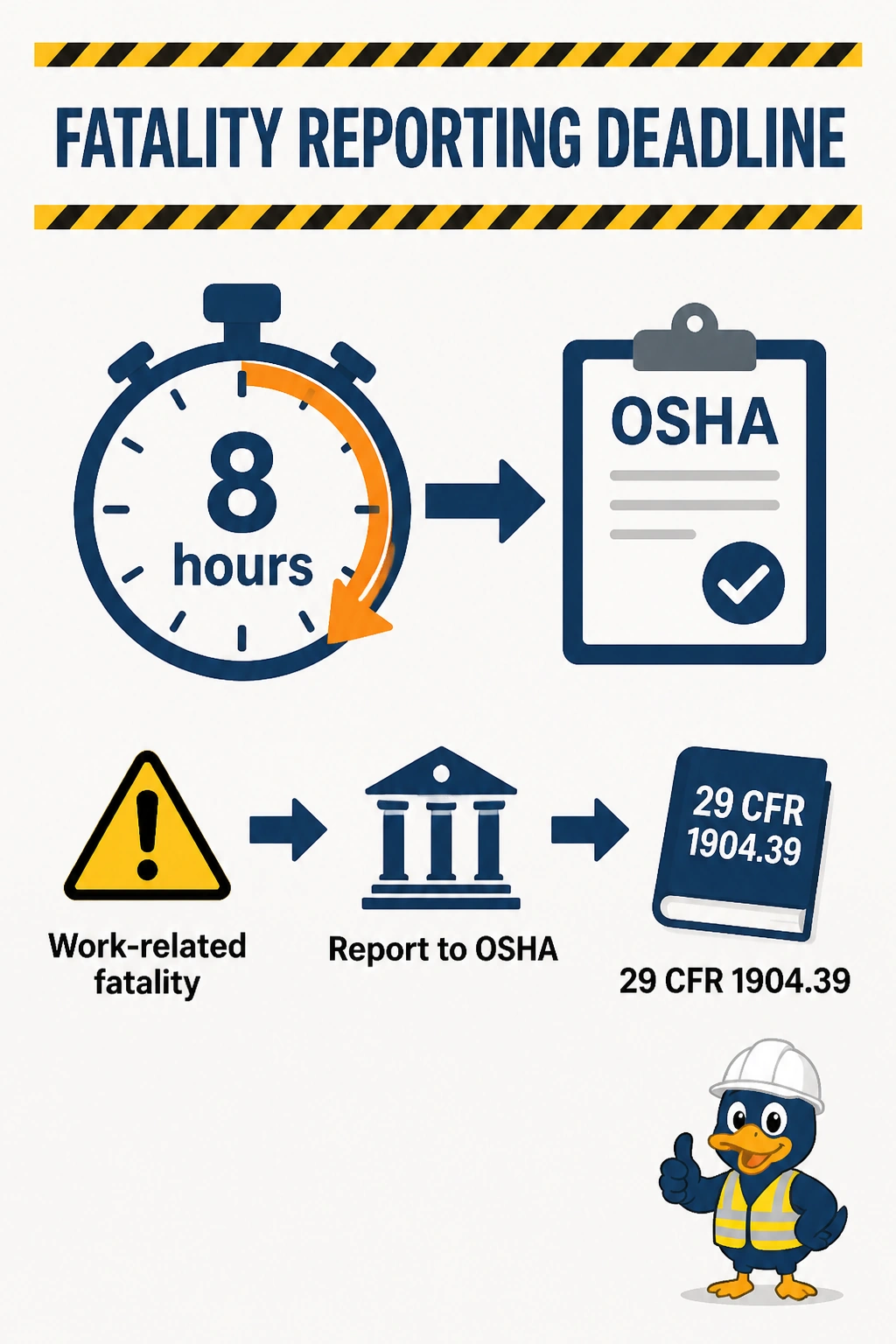
OSHA's reporting clock starts ticking the moment a work-related fatality occurs, and it moves much faster than routine injury logging. You have just eight hours to notify the agency. Don't confuse the 8-hour fatality rule with the 24-hour window for hospitalizations.
Full Explanation
Under OSHA recordkeeping rules, an employer must report any work-related death promptly, making Within 8 hours of the work-related fatality under 29 CFR 1904.39 the correct requirement. Notification can be made by calling the nearest OSHA area office, using the 24-hour toll-free hotline, or submitting the online serious-event report. Within 24 hours of completing the internal investigation is wrong because the 24-hour clock applies to in-patient hospitalizations, amputations, and eye losses, and the timer never waits for an internal investigation to finish. Within 7 calendar days on the OSHA Form 300 injury log confuses rapid agency notification with the separate 7-day deadline for recording cases on the employer's internal Form 300 log. Within 48 hours after the local police release the scene invents a non-existent delay that would violate federal reporting timelines. An important exam caveat is that if an employee dies within 30 days of a work-related incident, the fatality still must be reported within 8 hours of learning of the death. As an operational check, keep OSHA's reporting phone number and establishment NAICS code posted in the site office emergency binder for immediate access.
Prefer to study offline? Printable PDF study book + test engine ($7.50, unofficial). These questions stay free here.