
A highway bridge project adds a night paving shift, and night-crew workers report feeling disconnected from safety updates and hazard alerts shared only during daytime meetings. What leadership action best resolves this gap?
Select an answer to reveal the explanation.
Short Explanation
Night crews often feel like second-class citizens when safety leadership disappears after 5:00 p.m. Your trap is relying on passive paperwork or texts, instead of showing up in person with live briefings during night hours.
Full Explanation
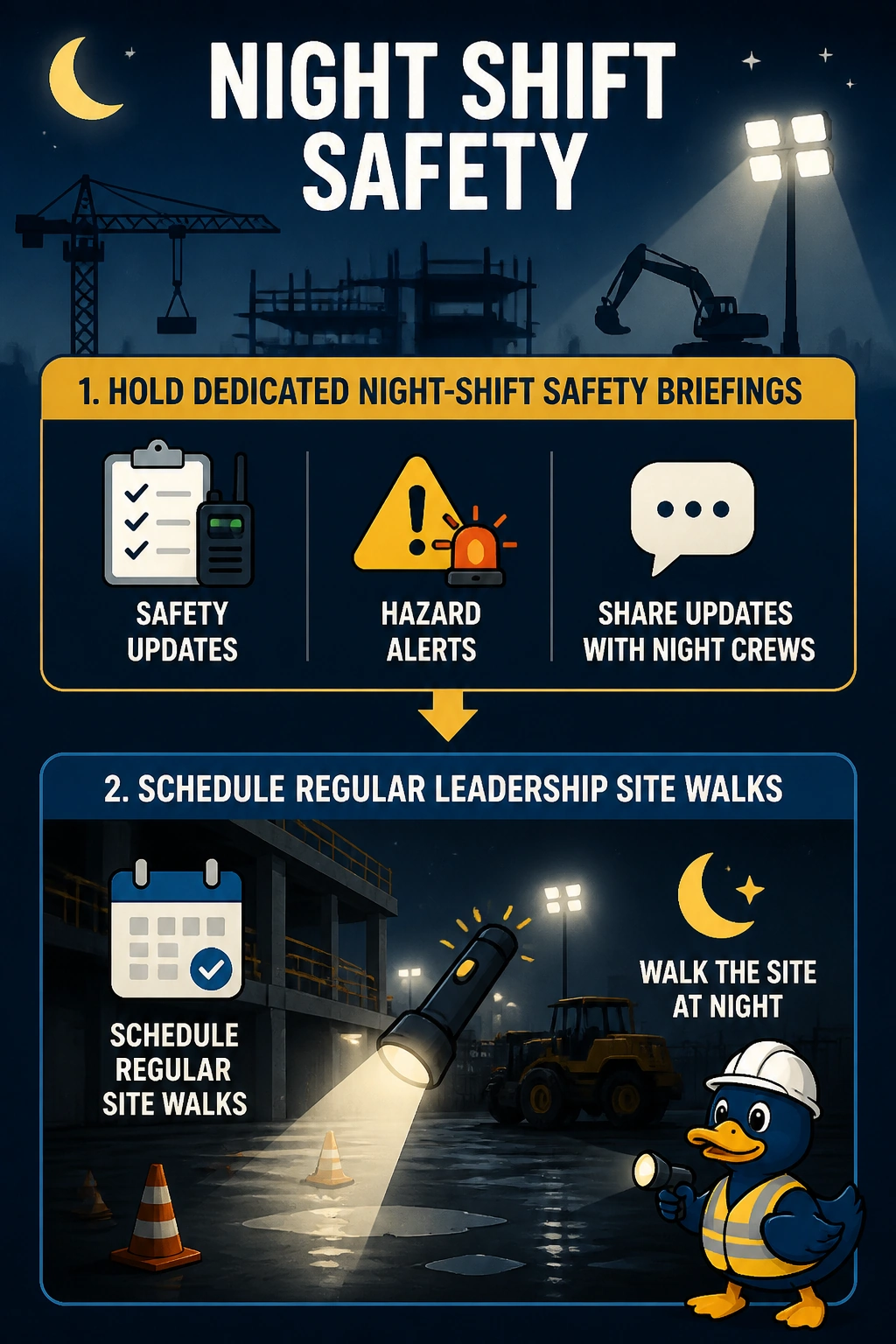
Night construction shifts carry heightened risks from reduced visibility, fatigue, and impaired drivers, making active leadership engagement essential. Choosing to hold dedicated night-shift safety briefings and schedule regular leadership site walks during night hours ensures two-way communication, immediate hazard resolution, and visible management commitment equal to day-shift support. Choosing to post printed day-shift meeting minutes inside the locked project manager trailer for night workers to request later creates barriers to access and turns urgent safety alerts into stale paperwork. Trying to exempt the night shift from daily pre-task briefings because traffic volume is lower after midnight ignores lighting, fatigue, and high-speed nighttime traffic hazards. Relying on an approach to ask day-shift foremen to text general safety reminders to night-shift laborers once every two weeks lacks real-time task specificity and two-way verification of understanding. As a caveat, ensure night-shift briefings cover shift-handoff changes such as newly opened excavations, altered traffic patterns, or equipment lockouts left by the day crew. For an operational check, audit safety walk logs monthly to confirm supervisors and safety staff conduct documented night-shift visits.
Prefer to study offline? Printable PDF study book + test engine ($7.50, unofficial). These questions stay free here.