
To recover from two weeks of rain delays, a commercial general contractor schedules mandatory 10-hour shifts six days a week across all trades. Which leadership action best prevents fatigue-related shortcuts and incidents during this schedule push?
Select an answer to reveal the explanation.
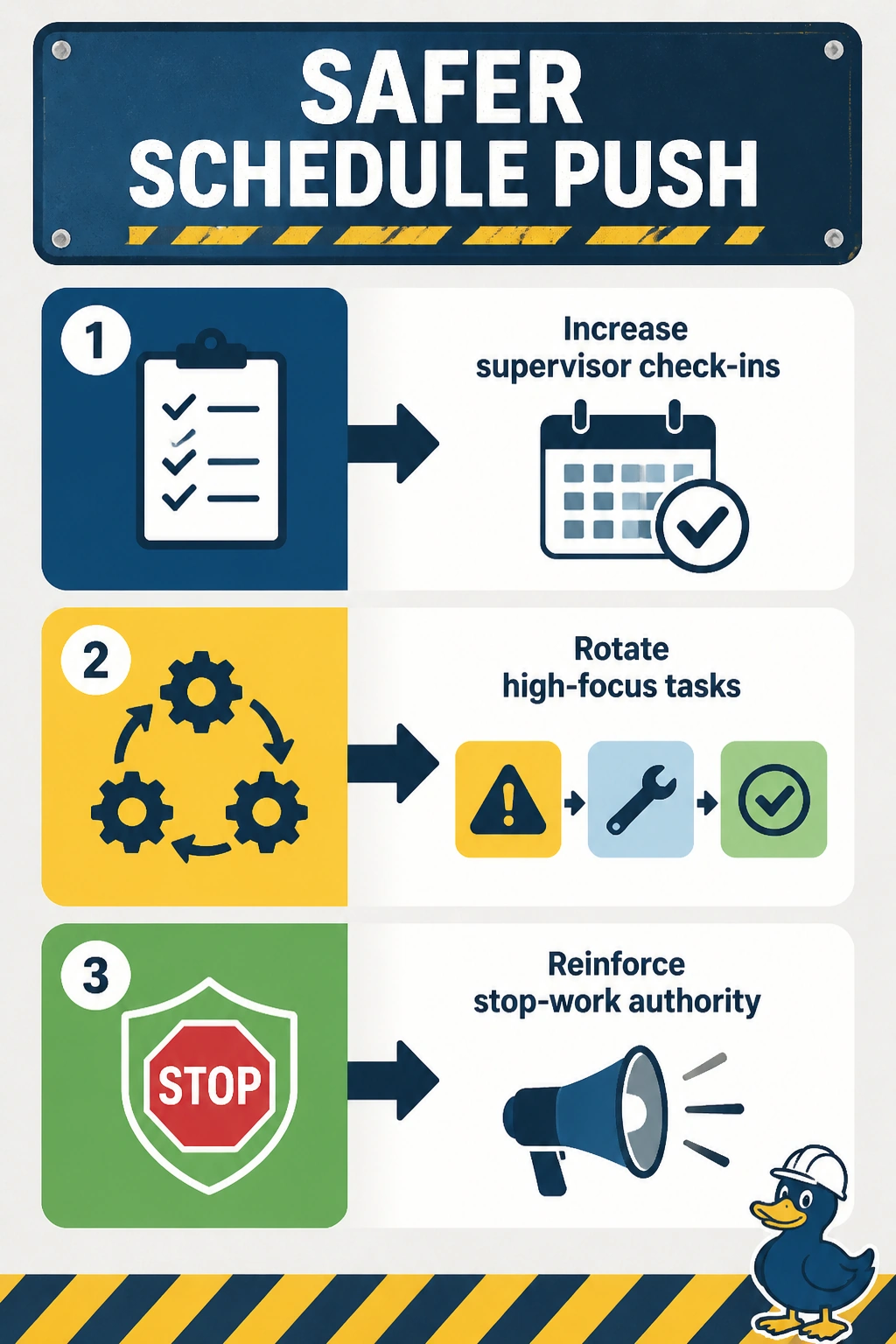
Short Explanation
Sixty-hour weeks can turn sharp craft workers into exhausted risk-takers before Friday hits. Your trap is cutting safety routines to buy back minutes, when you actually need tighter check-ins, task rotation, and clear permission to pause.
Full Explanation
Extended 60-hour workweeks degrade reaction time, situational awareness, and decision-making, especially late in the shift. Choosing to increase supervisor check-ins, rotate high-focus tasks, and reinforce stop-work authority directly counters cognitive and physical fatigue by catching early signs of exhaustion, sharing demanding work, and empowering crews to pause if conditions feel unsafe. Deciding to suspend daily pre-task safety huddles so crews can gain an extra fifteen minutes of production time removes the primary daily alignment tool right when changing site conditions and tired workers need it most. Offering to offer a cash bonus exclusively to the first trade that finishes its floor without any safety delays incentivizes rushing and discourages workers from reporting hazards or taking necessary breaks. Instructing leaders to tell foremen to overlook minor PPE omissions during overtime hours to keep crew morale high signals that schedule trumps safety and normalizes unsafe shortcuts. As a caveat, monitor hydration, heat or cold stress, and commute safety alongside task rotation when overtime stretches across multiple consecutive weeks. As an operational check, review late-shift near-miss trends and conduct afternoon spot checks during the final two hours of overtime shifts.
Prefer to study offline? Printable PDF study book + test engine ($7.50, unofficial). These questions stay free here.