
A roofing subcontractor pays crews a flat piece-rate bonus for every square of decking installed ahead of schedule, and the safety technician notices workers skipping perimeter tie-offs to move faster. How should leadership address this risk?
Select an answer to reveal the explanation.
Short Explanation
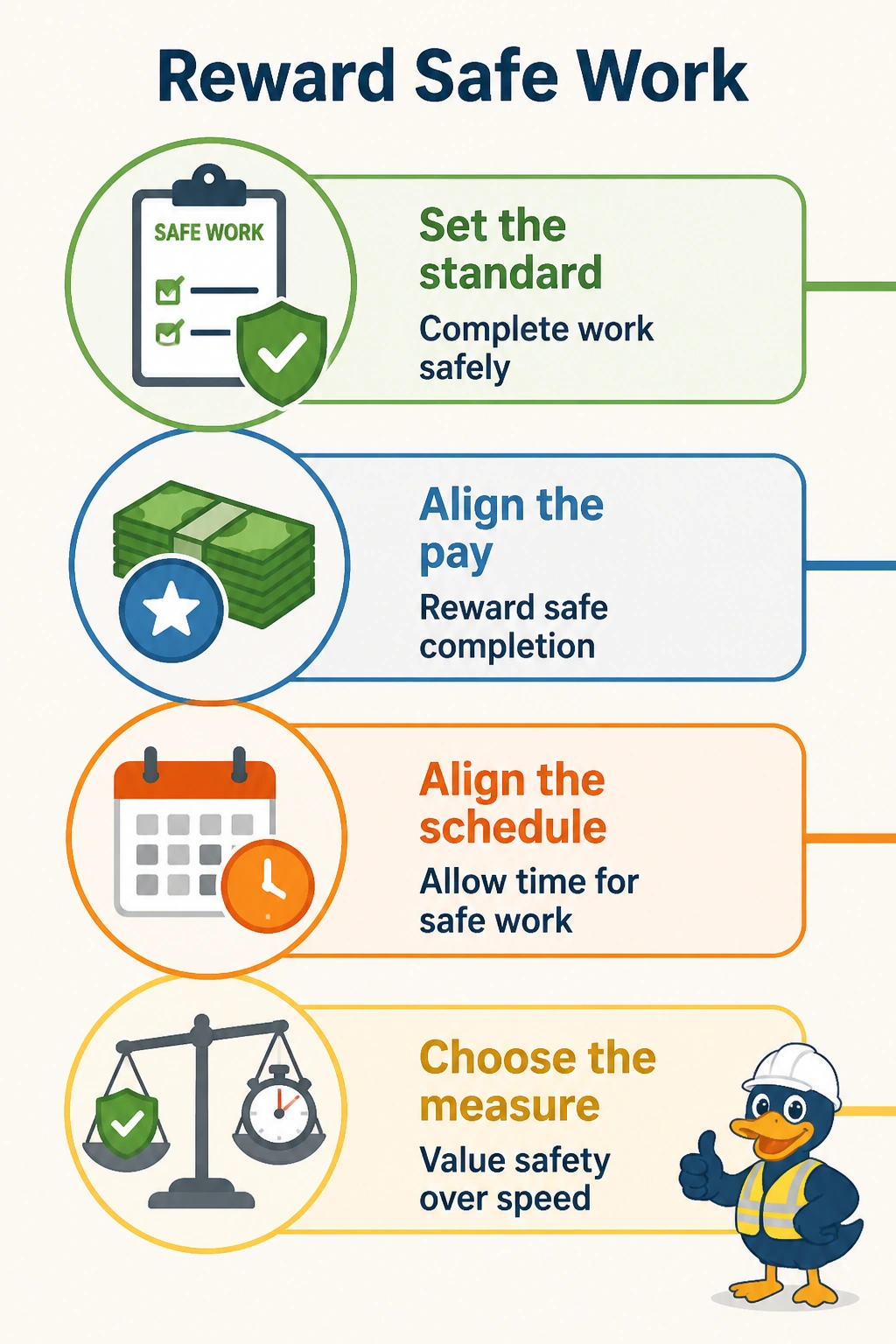
When a paycheck rewards raw speed, gravity usually wins the race before you can blow the whistle. You need to align pay and schedule incentives with safe work completion so crews never feel forced to trade fall protection for a bonus. The trap is assuming waivers or bigger speed bonuses will fix a hazard created by the pay structure itself.
Full Explanation
Incentive structures strongly shape daily behavior on a jobsite, and rewarding output alone drives predictable shortcuts around fall protection. Leadership must Align pay and schedule incentives with safe work completion rather than raw speed so supervisors and crews treat harness use and guardrail integrity as non-negotiable conditions of production. Choosing to Increase the piece-rate bonus so experienced workers can finish the roof even sooner only amplifies financial pressure to skip tie-offs and rush near leading edges. Trying to Require crews to sign a waiver accepting personal responsibility for any fall shortcuts is both ineffective and unlawful, because employers cannot contract away their statutory duty to provide a safe workplace. Deciding to Wait until the end of the project to deduct safety violations from the final crew bonus leaves workers exposed to fatal falls throughout the job and can drive unreported incidents. As a caveat, removing perverse speed incentives must still be paired with active supervision and properly rigged anchorages. As an operational check, review subcontractor compensation terms during pre-construction meetings and observe whether crews maintain tie-off compliance during peak production pushes.
Prefer to study offline? Printable PDF study book + test engine ($7.50, unofficial). These questions stay free here.