
On a large commercial build, project managers and foremen treat every hazard correction as the safety technician's sole duty, leaving unsafe conditions unaddressed until weekly walks. Which leadership action best fixes this gap?
Select an answer to reveal the explanation.
Short Explanation
A safety technician is a coach and advisor, not a one-person cleanup crew for the entire jobsite. When supervisors treat safety as your sole department's job, hazards linger between walks; the trap is adding more audits instead of making line leaders own daily safety.
Full Explanation
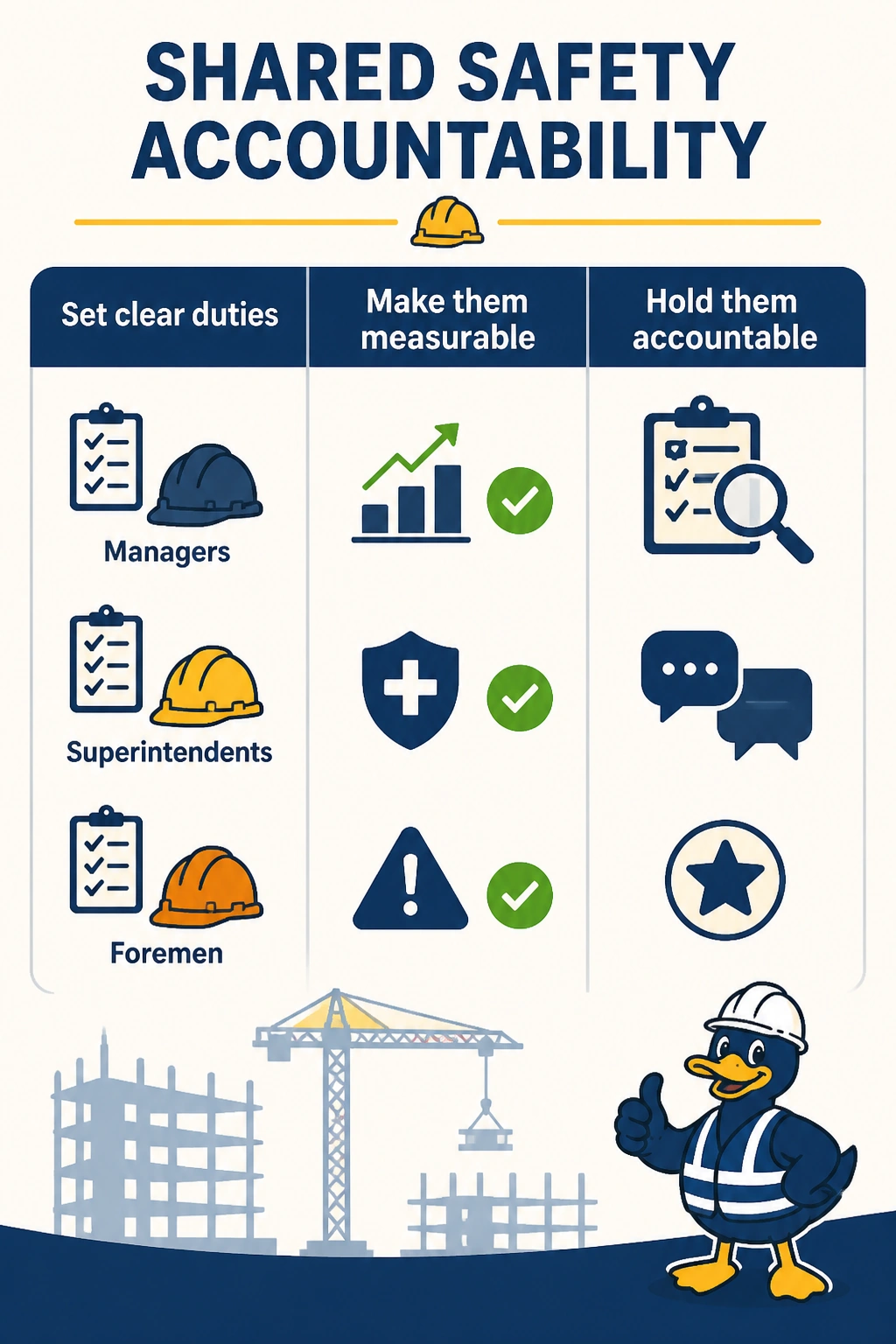
To build a sustained safety culture, leadership must Establish clear, measurable safety accountabilities for managers, superintendents, and foremen so hazard recognition and timely correction are embedded in everyday production supervision. Choosing to Increase the frequency of unannounced third-party safety audits across trades fails because outside inspections only capture snapshots in time and reinforce the mindset that safety belongs to external specialists. Choosing to Require the safety technician to sign every daily crew pre-task plan fails because it shifts ownership away from the foremen who directly oversee the work and creates an administrative bottleneck. Choosing to Post additional safety rule banners near the main jobsite entrance gate fails because passive signage does not change supervisory behavior or enforce daily follow-through on the deck. A critical caveat is that accountability only works when supervisors also have the authority, training, and schedule support to pause unsafe work. As a concrete operational check, verify during project leadership meetings that each superintendent and foreman tracks open hazards in their zone and closes them before shift end.
Prefer to study offline? Printable PDF study book + test engine ($7.50, unofficial). These questions stay free here.