
Carpenters on a commercial school renovation submit several hazard cards about slick mud on temporary entrance stairs, yet nothing visibly changes and submissions drop to zero the next month. Which leadership practice best rebuilds crew engagement in hazard reporting?
Select an answer to reveal the explanation.
Short Explanation
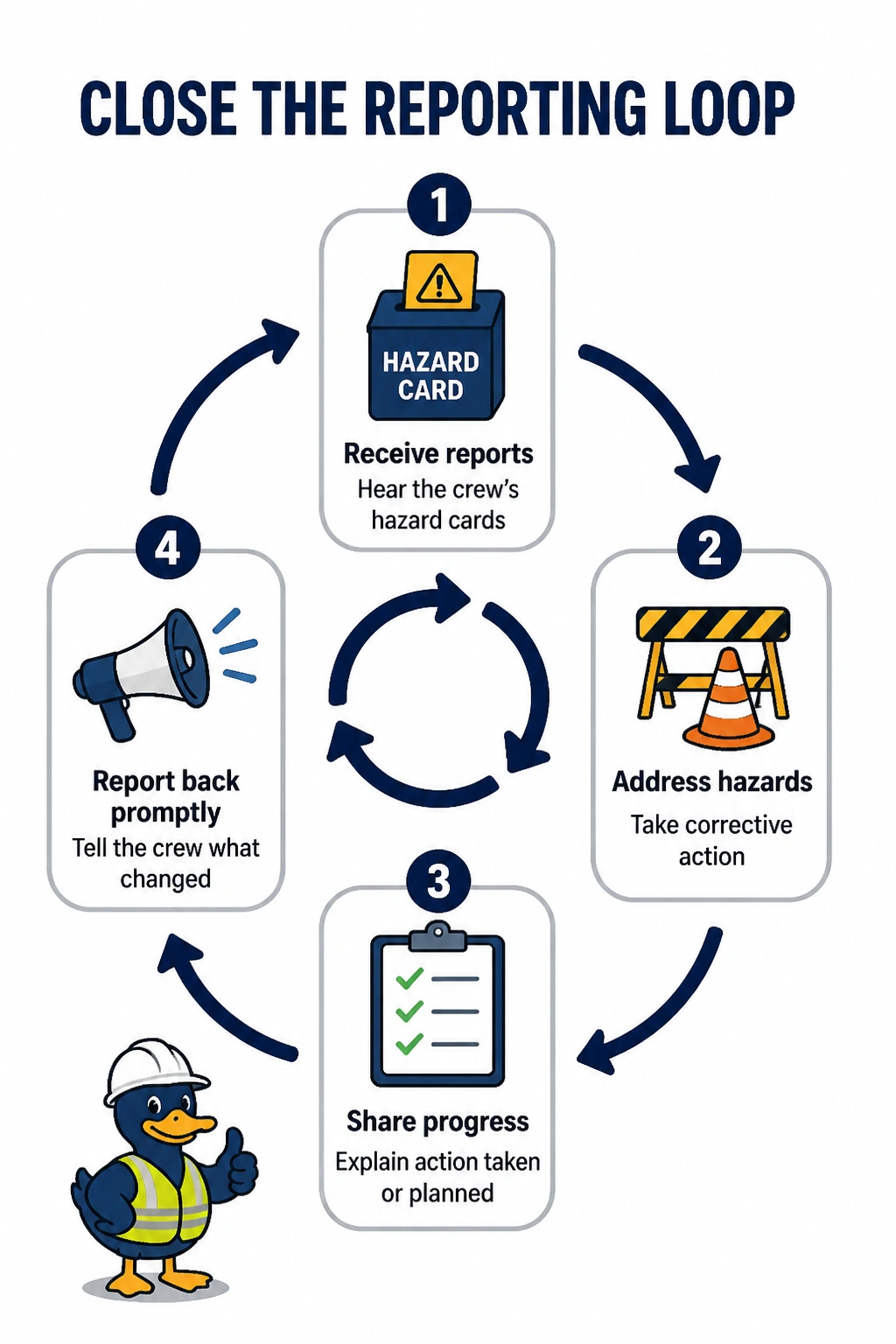
Nothing kills a safety reporting program faster than dropping hazard cards into a black hole where nothing seems to happen. When your crew speaks up, closing the loop shows that their eyes on the jobsite actually drive real fixes.
Full Explanation
Worker participation thrives when crews see a direct link between reporting a hazard and getting it fixed. Reporting back promptly to the crew on the corrective action taken or planned closes the communication loop, demonstrates management responsiveness, and reinforces why hazard cards matter. Posting monthly injury totals in the trailer without noting hazard fixes shares lagging numbers that do not address the specific stair slip hazard workers raised. Logging the report in a spreadsheet for the annual safety audit buries an immediate housekeeping and traction issue in paperwork without informing the crew or fixing the stairs. Sending a generic memo reminding crews to watch their step on stairs shifts blame onto workers instead of controlling the mud hazard and signals that leadership is not listening. As a caveat, if a permanent fix requires materials or engineering review, communicate the interim control and expected completion date right away rather than waiting until everything is finished. For an operational check, review open hazard reports during daily huddles and announce completed fixes alongside who spotted the issue.
Prefer to study offline? Printable PDF study book + test engine ($7.50, unofficial). These questions stay free here.