
On a multi-trade school renovation, craft workers view weekly safety inspections as management policing and rarely point out emerging hazards to supervisors. Which leadership practice best builds shared safety ownership among the crews?
Select an answer to reveal the explanation.
Short Explanation
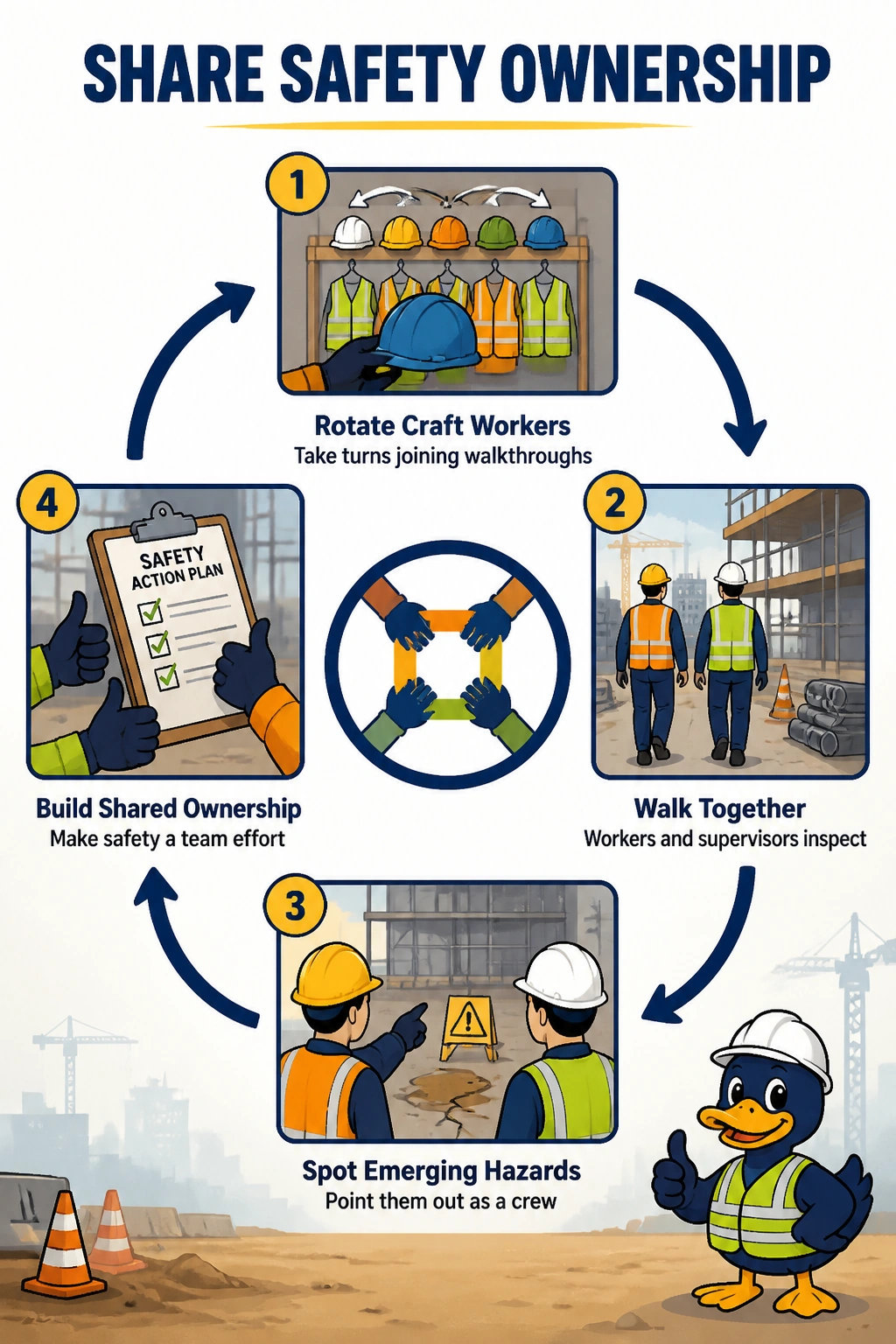
When workers only see clipboards watching them from afar, safety feels like a gotcha game instead of a team effort. Inviting craft workers onto your walkthroughs turns critics into co-owners; the trap is thinking silent oversight or fines will build trust.
Full Explanation
To transform inspections from policing into collaboration, leadership should Rotate frontline craft workers into joint safety walkthroughs with supervisors so tradespeople see how hazards are evaluated, share practical task insights, and take pride in fixing issues with their peers. Choosing to Have supervisors conduct inspections silently from the catwalk without talking to crews fails because distant observation deepens distrust and misses the real-world bottlenecks causing shortcuts. Choosing to Issue automatic financial penalties to any crew with a housekeeping finding fails because punitive fines drive hazards underground and encourage workers to hide problems rather than report them early. Choosing to Replace field walkthroughs with an automated weekly email survey to foremen fails because questionnaires cannot spot physical site hazards or foster face-to-face engagement on the floor. A critical caveat is that worker-identified findings must receive visible, timely follow-through or participation will quickly stall. As a concrete operational check, schedule one rotating craft representative per trade on each weekly walk and review their top three fixes at the next all-hands huddle.
Prefer to study offline? Printable PDF study book + test engine ($7.50, unofficial). These questions stay free here.