
When a safety technician points out missing perimeter guardrails to an electrical foreman, the foreman snaps that safety staff only care about slowing down production. How should the technician respond?
Select an answer to reveal the explanation.
Short Explanation
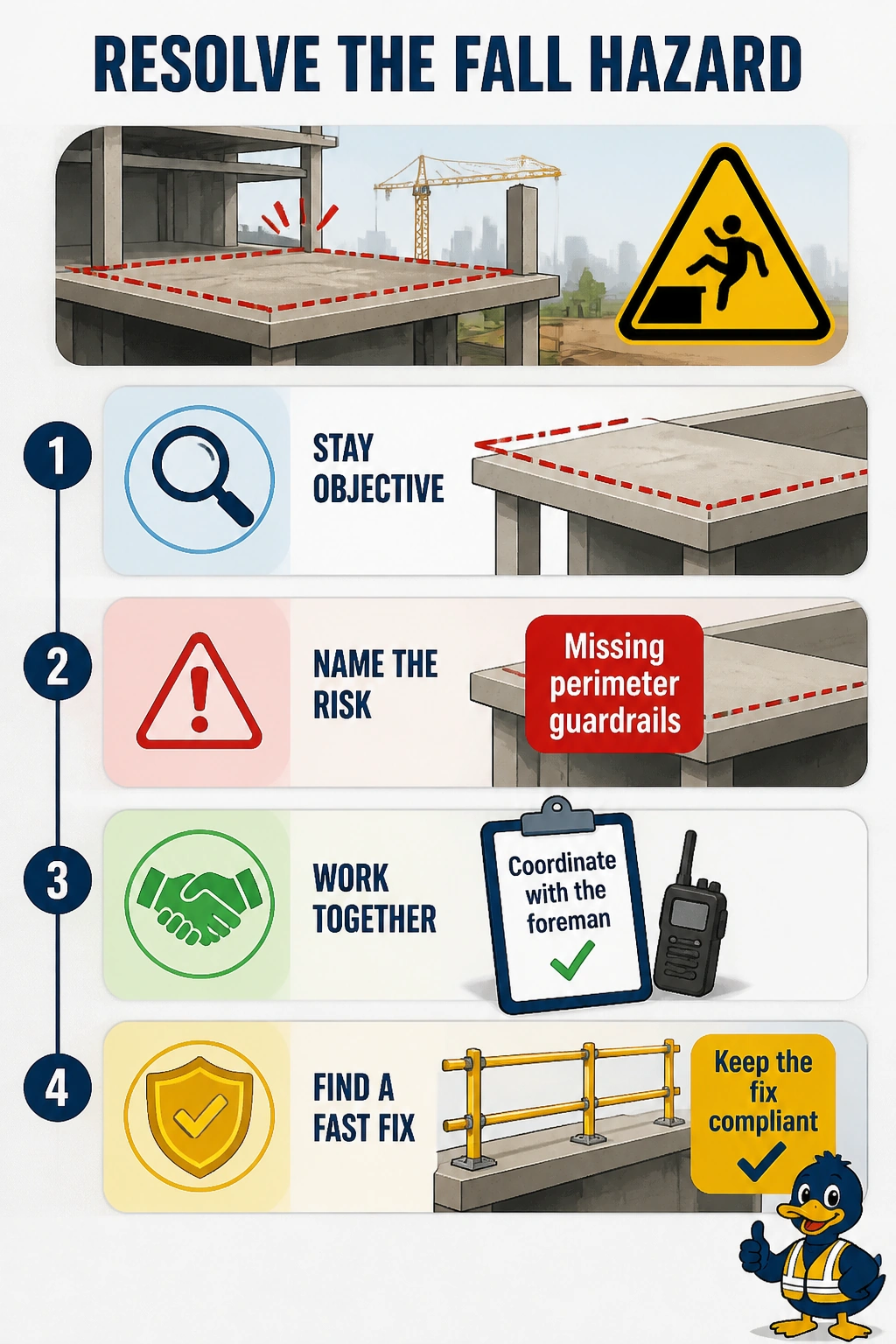
Nothing derails a safety conversation faster than taking supervisory frustration personally. If you argue back or walk away, the unguarded edge stays open and the relationship suffers. Stay calm, keep the focus on the objective fall hazard, and partner with the foreman on a quick, compliant fix.
Full Explanation
Effective safety leadership relies on de-escalation and collaborative problem-solving rather than power struggles. The technician should: Focus on the objective fall hazard and work together on a fast, compliant fix, which protects workers immediately while respecting the crew's schedule pressures. Choosing to "Walk away without addressing the guardrail to avoid escalating an argument" leaves workers exposed to a serious fall hazard and undermines safety standards. Deciding to "Threaten to have the foreman removed from the project before discussing the hazard" triggers defensive resistance and damages cross-team trust before normal resolution is tried. Opting to "Agree to leave the edge unguarded until the crew finishes pulling wire that afternoon" compromises a non-negotiable life-safety control for convenience. Caveat: if the foreman still refuses to pause work or install protection near an imminent fall hazard, escalate promptly through the project superintendent using stop-work authority. Operational check: confirm temporary fall protection or guardrail reinstallation is completed before work resumes near the edge, and follow up briefly after tensions cool to align on upcoming edge-work schedules.
Prefer to study offline? Printable PDF study book + test engine ($7.50, unofficial). These questions stay free here.