
During a steel erection walk, a veteran connector skips tying off while moving along a beam and tells the safety technician they have worked that way for twenty years without falling. How should the technician address this attitude?
Select an answer to reveal the explanation.
Short Explanation
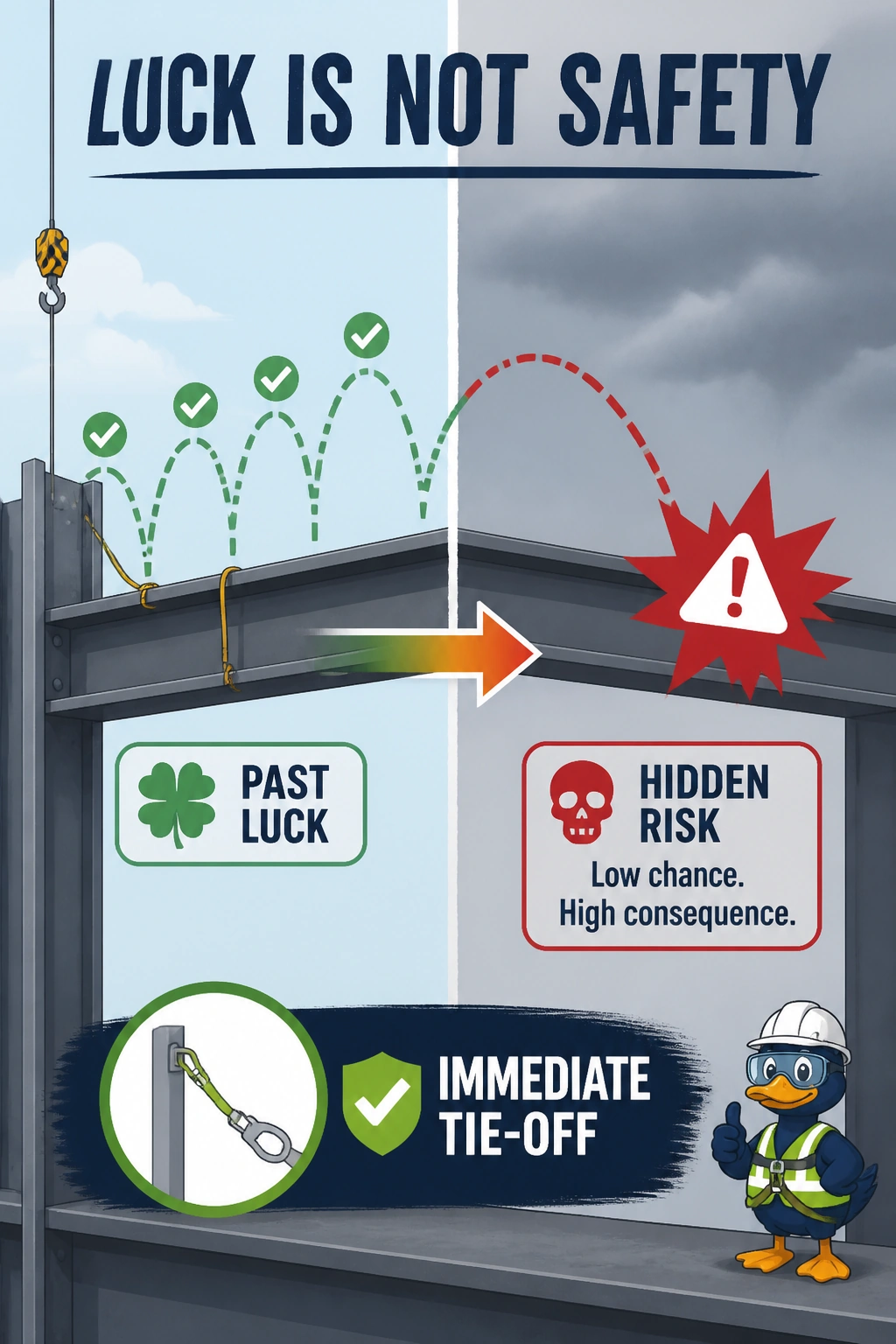
Nothing makes a risky habit harder to break than twenty years of getting lucky. When you hear 'nobody has gotten hurt yet,' you are looking at normalization of deviance in action. Address the hazard right away, explain why past luck never guarantees future safety, and enforce the tie-off rule consistently.
Full Explanation
Normalization of deviance occurs when repeated shortcuts go unpunished by an injury, leading workers to treat an unacceptable risk as normal. The technician should: Explain how past luck masks low-probability, high-consequence risk and require immediate tie-off, because a single slip at height is fatal regardless of tenure. Choosing to "Accept the connector's experience and monitor from a distance" abandons hazard control and signals to apprentices that safety rules are optional for veterans. Deciding to "Transfer the connector to ground material handling for the rest of the project" is a punitive reaction that skips coaching and fails to correct the underlying belief across the crew. Waiting to "Delay coaching until the next monthly safety committee meeting" leaves the worker exposed to a fall hazard for days or weeks while reinforcing unsafe behavior. Caveat: lecturing a seasoned craftsperson in front of peers often triggers defensiveness, so keep the correction firm on the immediate tie-off requirement and follow up with respectful one-on-one dialogue. Operational check: verify the worker connects to an approved anchor before resuming work, then review anchor accessibility with the foreman to remove any practical barriers to 100 percent tie-off.
Prefer to study offline? Printable PDF study book + test engine ($7.50, unofficial). These questions stay free here.