
During a midday walk, a safety technician observes a veteran pipefitter grinding a weld seam without a face shield over safety glasses. Which coaching approach is most likely to sustain safe behavior without creating resentment?
Select an answer to reveal the explanation.
Short Explanation
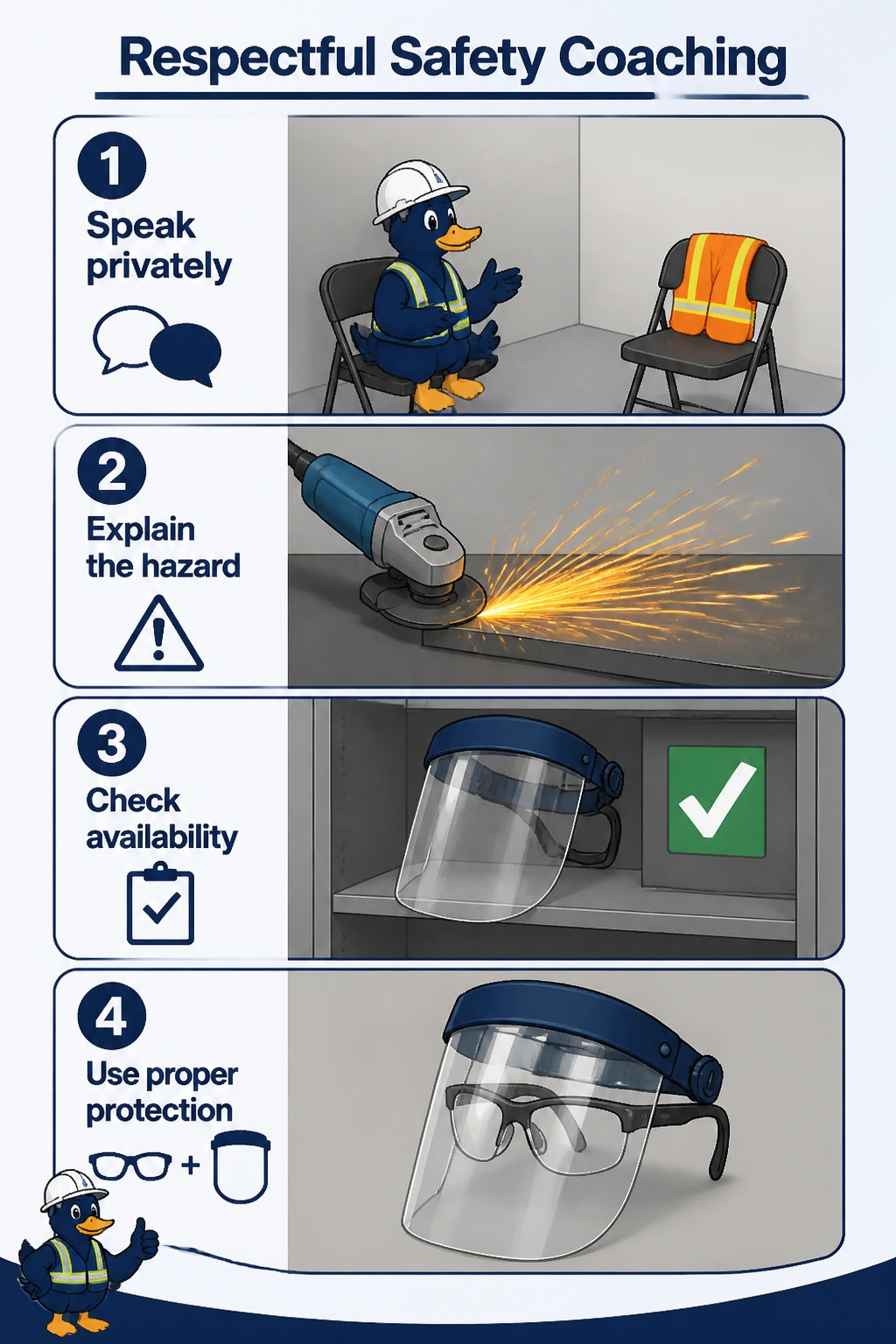
Calling out a veteran craftworker in front of their peers is a fast way to build a wall instead of a safety culture! The trap is swinging between public shaming and looking the other way. Pause the task, speak privately, explain the spark risk, and make sure your worker has the right face shield within reach.
Full Explanation
Effective safety leadership pairs immediate hazard correction with respectful, problem-solving communication so workers adopt safe habits even when supervisors are out of sight. Choosing to Speak privately with the worker, explain the flying-spark hazard, and verify a face shield is available protects the pipefitter's eyes and face immediately while uncovering practical barriers such as a damaged visor or missing stock. Choosing to Reprimand the worker loudly in front of the crew to set a strict example triggers defensiveness and encourages crews to hide shortcuts whenever safety staff approach. Choosing to Ignore the violation on the first walk and wait for the foreman to notice it leaves the worker exposed to a severe eye or facial injury and signals that PPE rules are optional. Choosing to Issue an immediate three-day unpaid suspension without discussing the task skips root-cause coaching and breeds distrust, especially if equipment availability contributed to the lapse. As a caveat, privacy should never delay stopping an imminent hazard—have the worker pause the grinder first, then step aside to talk. As an operational check, follow up later in the shift to confirm the worker has a clean, properly fitting face shield and check whether nearby tool cribs are stocked.
Prefer to study offline? Printable PDF study book + test engine ($7.50, unofficial). These questions stay free here.