
While preparing a site-specific hazard communication module for a diverse commercial roofing crew, a safety technician learns that several experienced laborers struggle with dense written manuals even in their native language. How should the technician deliver the material to ensure comprehension?
Select an answer to reveal the explanation.
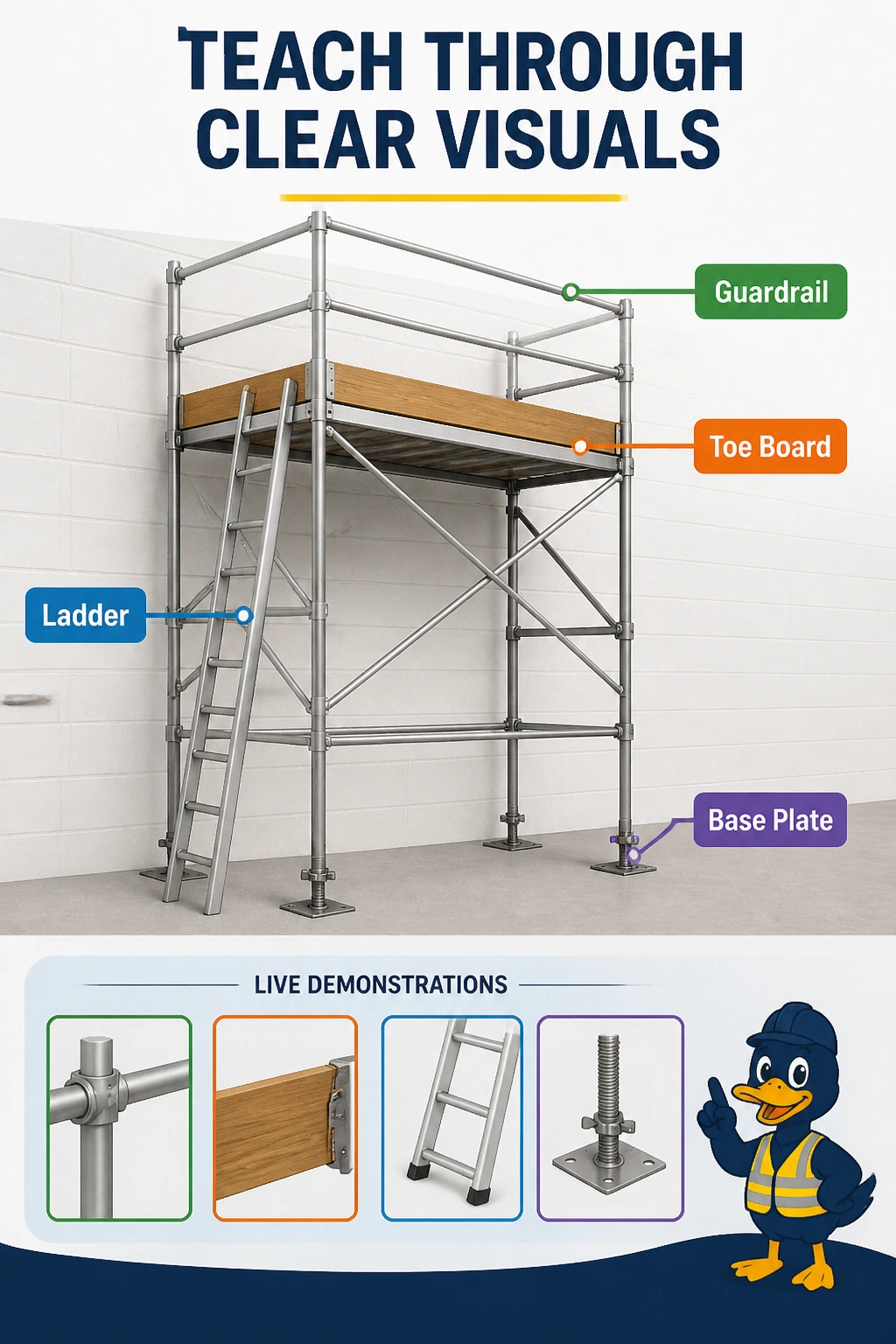
Short Explanation
Think of teaching someone to swim—you wouldn’t just hand them a manual and wish them luck! When dense reading is a barrier, signatures or written materials alone don’t prove comprehension. Use visuals and live demonstrations so you can see your crew understand how to stay safe.
Full Explanation
OSHA training expectations call for instruction in a language and vocabulary workers can understand, so you need to account for varying reading levels. Combining clear visual diagrams, color-coded labels, and live demonstrations of each control helps address literacy barriers by showing workers how to recognize hazards and apply protective measures in real time. Printed pocket booklets and signed attendance sheets document that workers received materials or attended training, not that they understood it. A timed multiple-choice written examination after a classroom slide presentation can measure reading speed rather than field competence. Posting full regulatory text and safety data sheets in the gang box for self-study leaves workers to decode complex technical jargon on their own. One caveat is that visual training still requires active verification: nodding along does not guarantee that a worker can perform a task under jobsite pressure. Before the shift, have each roofer point out container hazard pictograms and demonstrate proper glove and eye-protection use as a practical check.
Prefer to study offline? Printable PDF study book + test engine ($7.50, unofficial). These questions stay free here.