
During a third-party safety audit on a commercial hospital project, the auditor asks for proof that subcontractors completed site-specific orientation before starting work. Which documentation best demonstrates compliance?
Select an answer to reveal the explanation.
Short Explanation
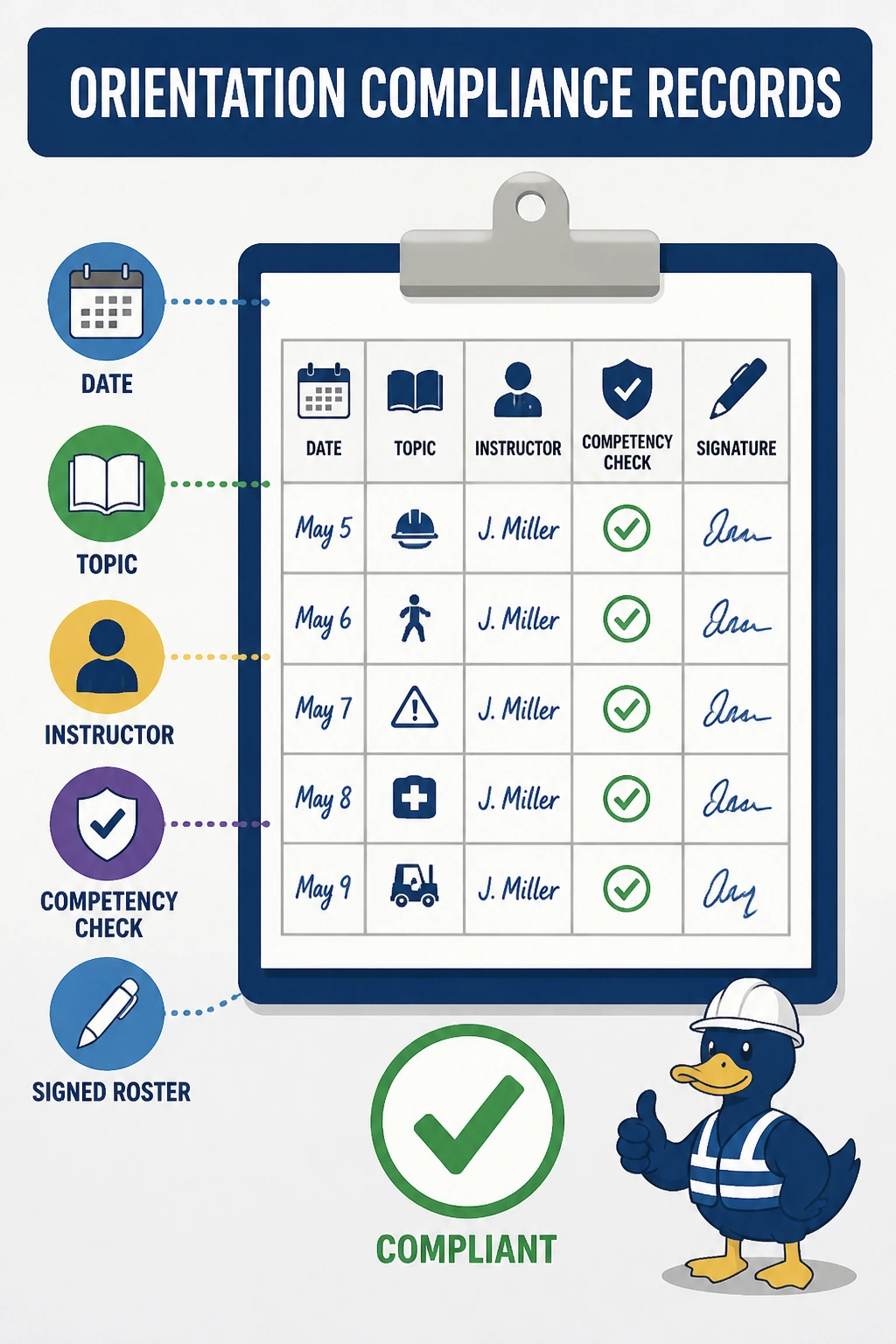
In safety auditing, if a training session isn't documented, you have no reliable way to prove it ever happened. A foreman's verbal assurance or generic brochures without worker names won't tell you which workers actually learned the site's emergency and hazard rules. Keep signed rosters with dates, topics, and verification.
Full Explanation
To verify that every worker received site-specific hazard and emergency instruction before entering the job, the technician should maintain Signed rosters listing dates, topics, instructor, and competency checks. Complete training records link each worker by name to the specific content delivered, the qualified trainer, the date completed, and proof that comprehension was verified. Choosing to rely on A foreman's verbal statement that everyone watched an orientation video provides no auditable evidence of who attended, what site-specific rules were covered, or whether workers understood the material. Choosing to rely on Generic company brochures handed out at the main gate without worker names fails to track individual attendance or verify that workers can apply site procedures. Choosing to keep Copies of each worker's driver's license stored in the project trailer confirms identity only and demonstrates zero safety training or hazard awareness. As a caveat, orientation records must be updated whenever site conditions or worker assignments change, not just collected once on day one. Cross-check daily gate sign-in logs against the orientation roster each morning so unoriented workers are trained before entering active work zones.
Prefer to study offline? Printable PDF study book + test engine ($7.50, unofficial). These questions stay free here.