
A general contractor's site manager proposes awarding a monthly cash bonus to any crew with zero OSHA-recordable injuries, but the safety technician warns this could backfire. What incentive approach best supports accurate reporting and proactive safety?
Select an answer to reveal the explanation.
Short Explanation
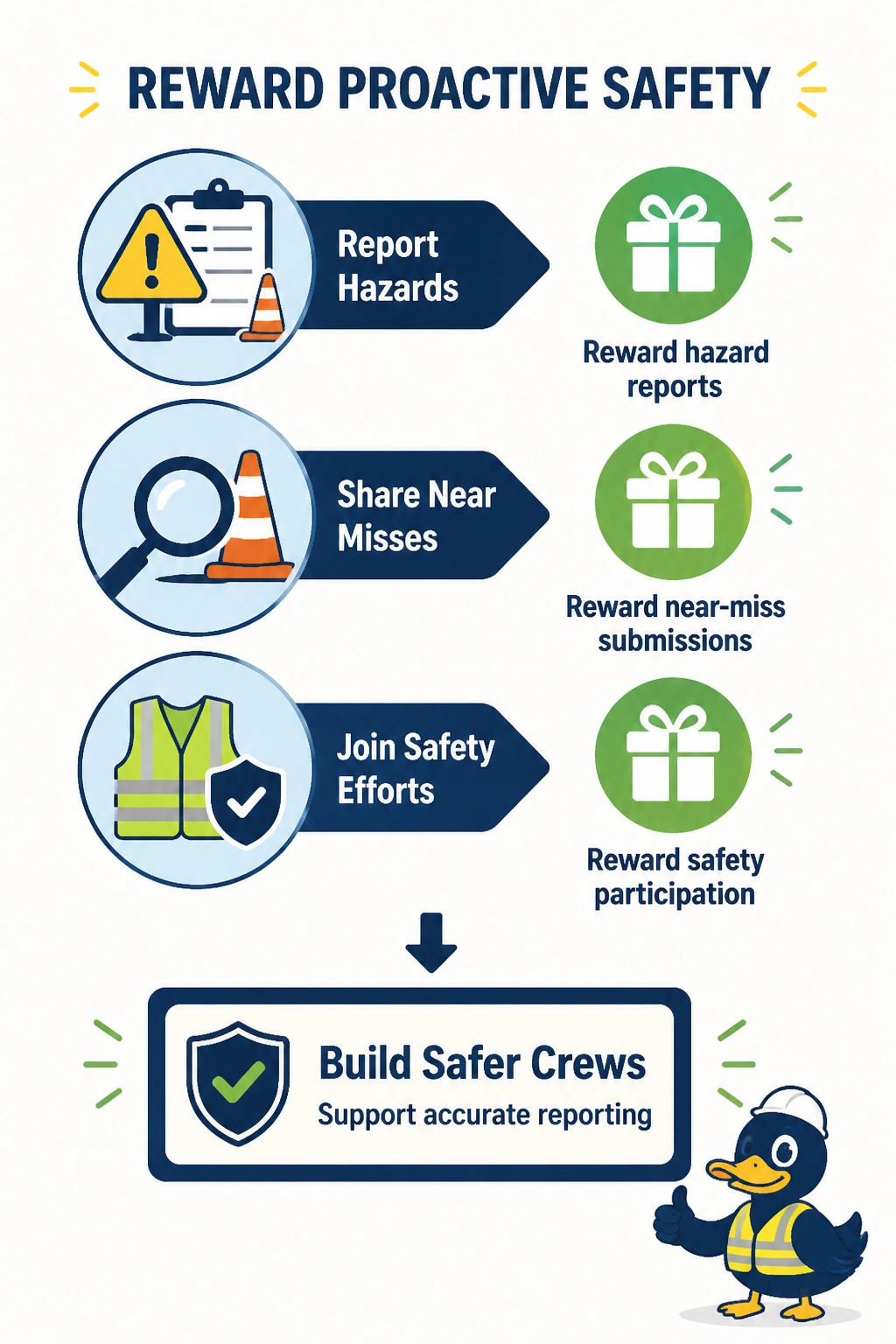
Rewarding zero injuries sounds motivating, like paying a goalie only when no shots are taken, until players start hiding bruises to protect the bonus. When you tie payouts to low injury counts, crews may conceal incidents instead of reporting them early. Shift rewards to proactive participation so your team surfaces hazards before anyone gets hurt.
Full Explanation
Under 29 CFR 1904.35, employers must not use incentive programs in a way that penalizes workers for reporting work-related injuries or illnesses. Rewarding crews for hazard reports, near-miss submissions, and safety participation reinforces observable behaviors that reduce risk without creating pressure to hide injuries. By contrast, Offering a larger quarterly payout for crews that complete projects with zero first-aid cases intensifies the same reporting chill by pushing workers to conceal even minor cuts and sprains. Similarly, Restricting cash bonuses to supervisors while excluding craft workers still incentivizes managers to pressure crews or reclassify injuries to protect their payout. Requiring workers to sign weekly pledges promising to avoid all recordable incidents treats complex workplace exposures as mere willpower and fails to build a transparent reporting climate. One caveat is that rate-based incentives are not automatically illegal if paired with strong anti-retaliation safeguards, though activity-based recognition remains far safer. For an operational check, compare first-aid log entries against clinic referrals each month to confirm minor incidents are still being reported openly.
Prefer to study offline? Printable PDF study book + test engine ($7.50, unofficial). These questions stay free here.