
A safety technician notices that several newly hired concrete finishers primarily speak Spanish and struggled to follow an English-only morning briefing on respirable silica controls. What should the technician do to ensure effective training?
Select an answer to reveal the explanation.
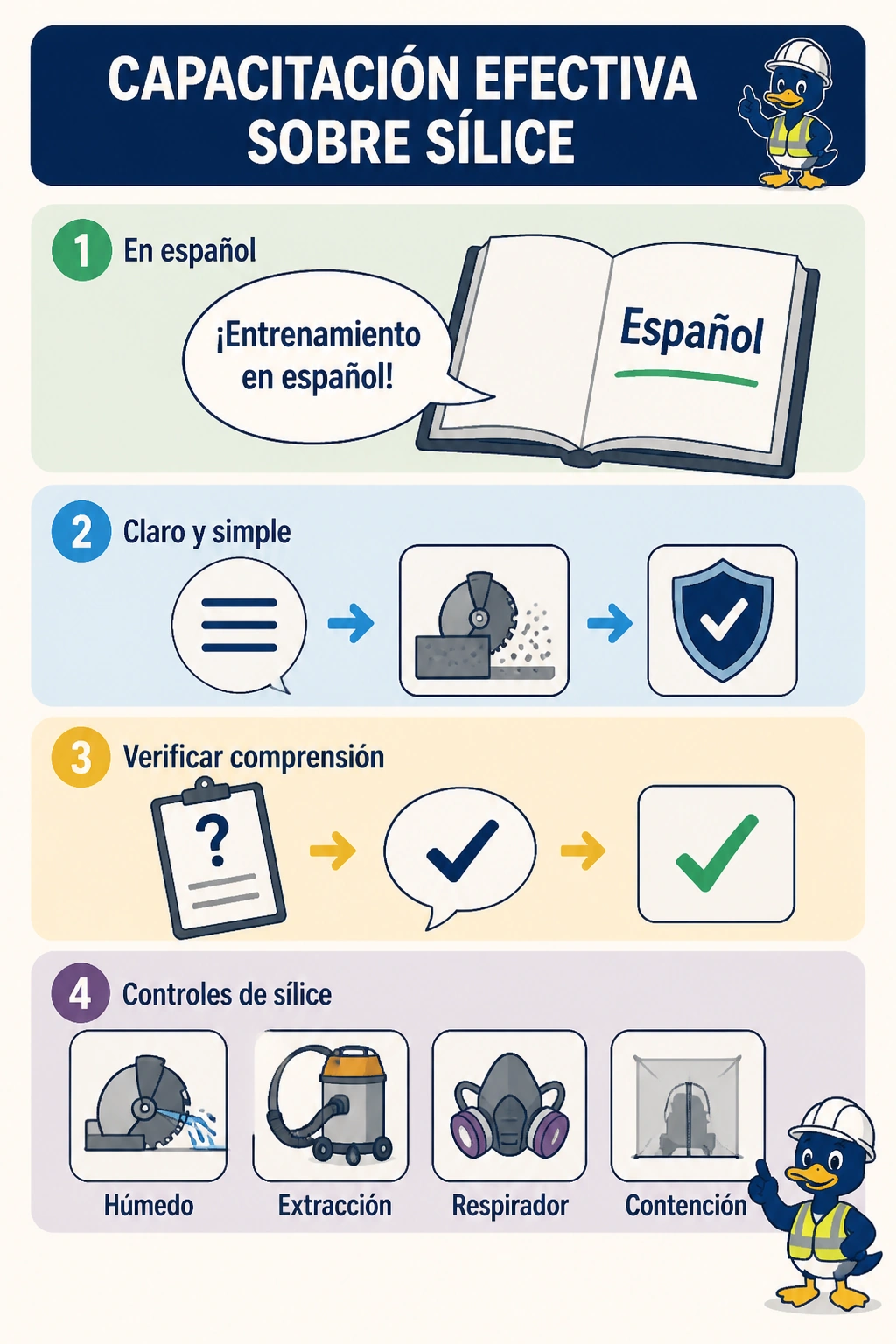
Short Explanation
A signature on an attendance sheet means nothing if your crew could not understand the words spoken. The trap is settling for quick translations or English handouts, when you need to deliver training in a language and vocabulary every worker actually grasps.
Full Explanation
OSHA training policy and 29 CFR 1926.21 require employers to instruct workers in a language and vocabulary they can understand, so the technician must Deliver the silica training in Spanish using clear, plain terminology and verify comprehension. Effective instruction bridges both language and technical jargon, ensuring workers know how to operate wet-cutting or dust-collection controls and when respirators are required. Choosing to Distribute the English-written manufacturer manual and ask for signatures creates a paper trail without transferring safety knowledge and fails OSHA's comprehension standard. Choosing to Have a bilingual coworker summarize the rules informally during lunch risks omitting critical technical controls and relies on an unverified, rushed translation during break time. Choosing to Post laminated silica warning signs in English at the concrete mixer leaves the language barrier intact and substitutes passive signage for required hands-on instruction. Caveat: even when training is translated, literacy levels vary, so visual demonstrations and hands-on practice remain essential. Operational check: use translated training materials, pair verbal Spanish instruction with a live demonstration of the silica control equipment, and have each finisher demonstrate proper setup before starting work.
Prefer to study offline? Printable PDF study book + test engine ($7.50, unofficial). These questions stay free here.