
A utility contractor is backfilling a 7-foot-deep sewer trench with a skid-steer loader whose operator cannot see the top edge of the excavation from the cab. What control must the safety technician require under OSHA 29 CFR 1926.651?
Select an answer to reveal the explanation.
Short Explanation
Driving a loader up to a blind trench edge is like backing a box truck toward a loading dock without mirrors or a spotter—you are guessing where the drop-off starts. The trap is relying on operator judgment or shouted warnings when equipment noise drowns out voices.
Full Explanation
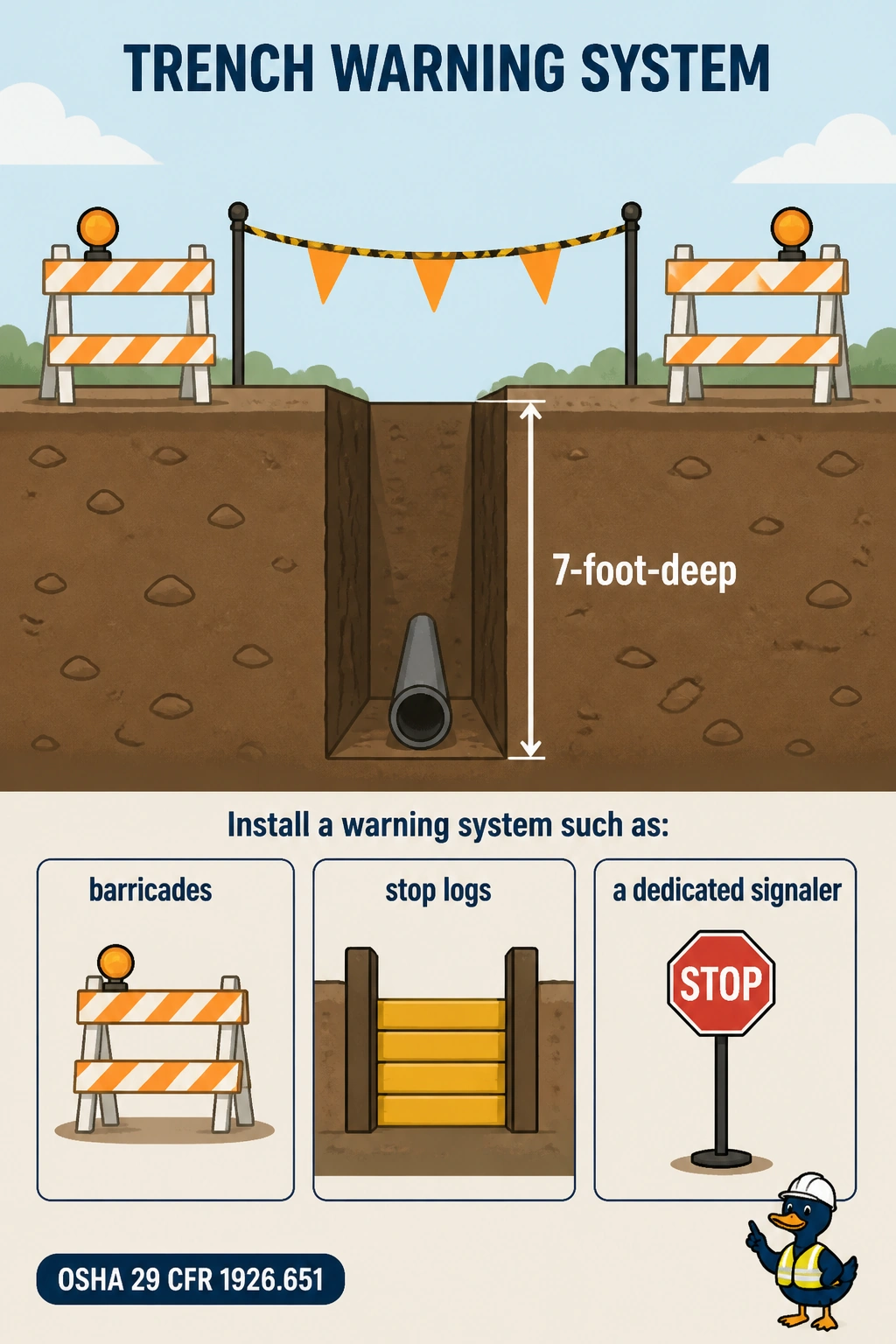
Under OSHA 29 CFR 1926.651, when mobile equipment operates adjacent to an excavation or approaches its edge and the operator lacks a clear, direct view of that edge, a physical or signaling safeguard is mandatory to prevent cave-ins and equipment rollovers. The technician must Install a warning system such as barricades, stop logs, or a dedicated signaler. You cannot Allow the loader operator to judge the trench edge by watching the tires in the side mirrors, because side mirrors do not provide a reliable view of soil undercut or sloughing along the top lip. You also cannot Require the crew inside the trench to shout warnings whenever they hear the loader approaching, because diesel engines, compactors, and backup alarms easily mask verbal shouts. Likewise, you should not Paint a bright orange line on the dirt two feet from the edge without adding physical stops or a signaler, since paint offers zero physical restraint and can be obscured by dust or spoil. As a caveat, even with stop logs or a signaler in place, a competent person must still monitor the trench walls for vibration cracks caused by heavy equipment. As an operational check, verify that stop logs are anchored clear of the surcharge zone and confirm the operator and signaler agree on clear hand signals before backfilling.
Prefer to study offline? Printable PDF study book + test engine ($7.50, unofficial). These questions stay free here.