
A demolition crew on the fourth floor of a commercial building plans to toss scrap drywall and framing lumber out a window 35 feet above an exterior courtyard into a roll-off container below. Under OSHA 29 CFR 1926.252(a), what must the safety technician require before debris removal starts?
Select an answer to reveal the explanation.
Short Explanation
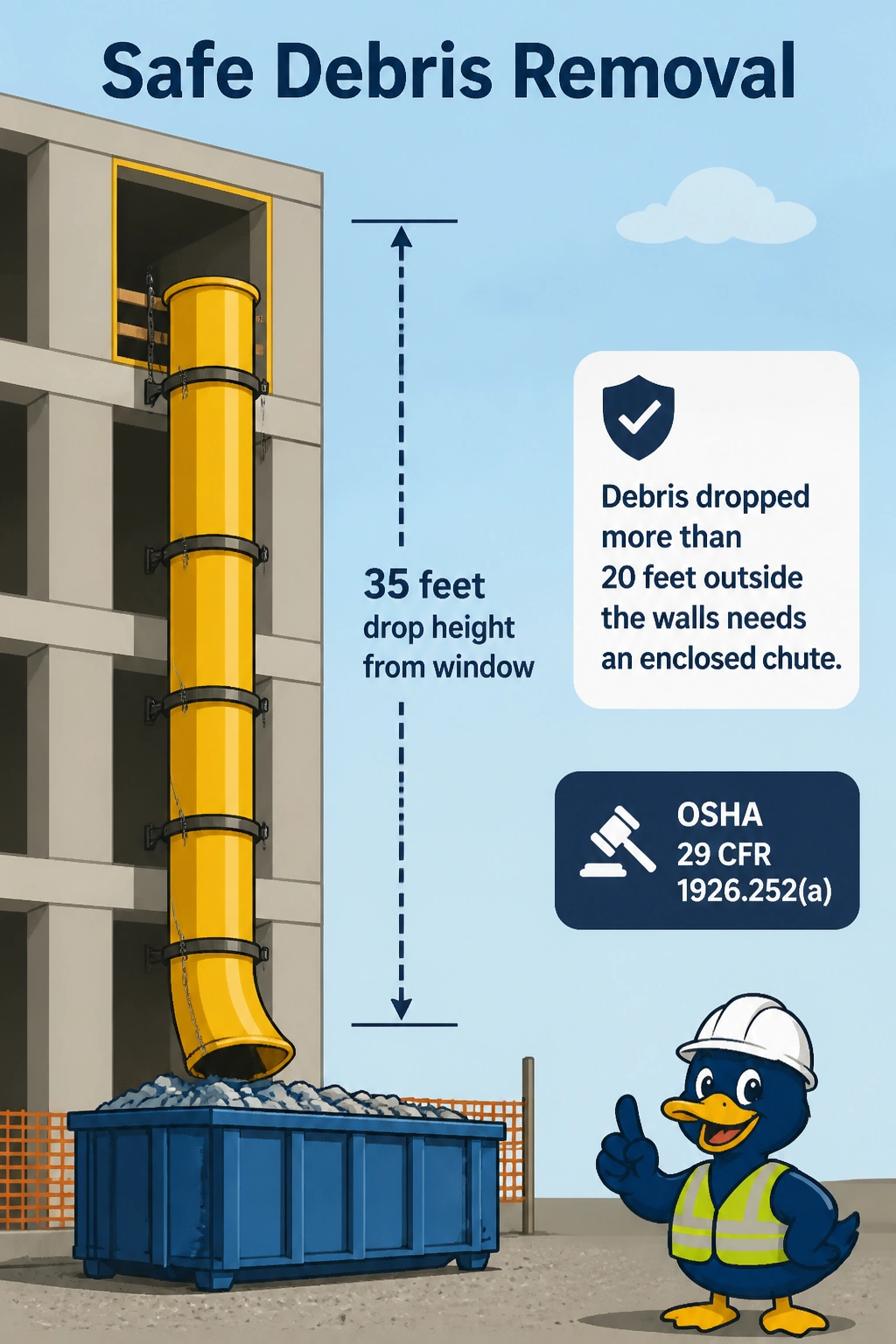
You’re right to control the debris before the work starts: a gust can turn scrap tossed from the fourth floor into a high-speed projectile. Require an enclosed chute because materials dropped more than 20 feet outside exterior walls must be contained; a warning, weight limit, or cleanup afterward cannot prevent debris from striking someone below.
Full Explanation
Under OSHA 29 CFR 1926.252, whenever materials are dropped more than 20 feet to a point outside a building’s exterior walls, an enclosed chute of wood or equivalent material must be used. Installing an enclosed chute from the window to the container physically confines falling scrap along a controlled path into the receptacle, preventing wind drift, ricochets off ledges, and struck-by injuries to workers at ground level. Posting a ground spotter with an air horn fails because warnings do not contain debris that can veer unexpectedly outside a drop zone. Limiting drops to materials under five pounds is inadequate: even small, light objects falling 35 feet can gain enough velocity to cause severe head or eye injuries, and the standard makes no exception for light scrap. Sweeping the courtyard after work stops addresses housekeeping after the fact, not the active overhead struck-by hazard during disposal. As a regulatory caveat, when debris is dropped through interior floor holes without a chute, the area below must instead be completely enclosed with barricades at least 42 inches high and set back from the opening. For an operational check, inspect the chute seams, upper hopper gate, and lower discharge baffle before each shift for gaps or loose fasteners.
Prefer to study offline? Printable PDF study book + test engine ($7.50, unofficial). These questions stay free here.