
While testing a steel water tank from outside before entry, a safety technician records an oxygen reading of 24.8 percent on a calibrated multi-gas meter. What should the technician require before anyone enters the tank?
Select an answer to reveal the explanation.
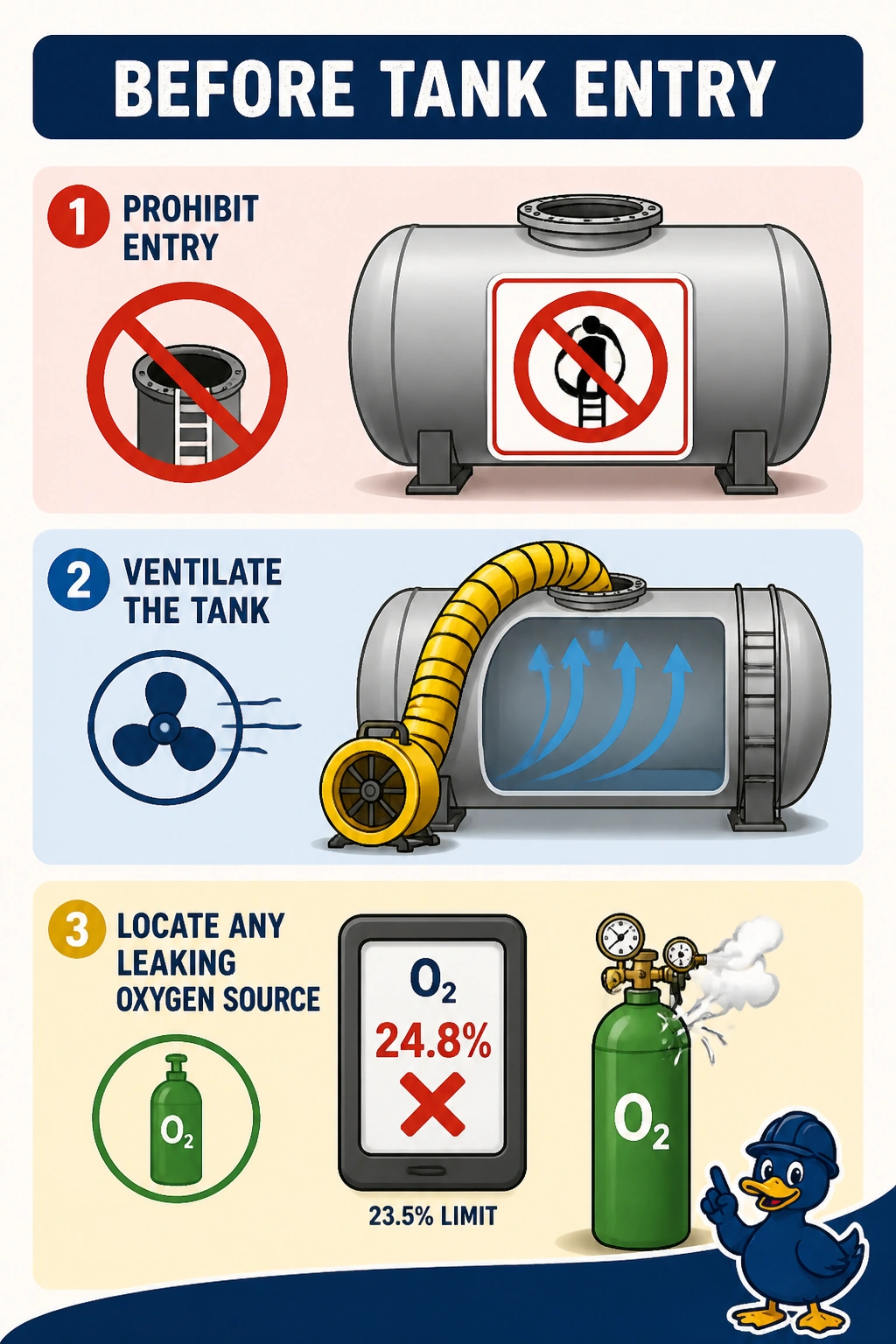
Short Explanation
More oxygen sounds helpful until you realize an oxygen-enriched space turns ordinary sparks and clothing into a flash-fire hazard. Many workers only watch for low oxygen and miss the upper limit of 23.5 percent. You must keep everyone out, ventilate the tank, and find the leak before any entry begins.
Full Explanation
Under 29 CFR 1926.1202, a confined space atmosphere exceeding 23.5 percent oxygen by volume is oxygen-enriched and immediately dangerous because clothing, oils, and ordinary combustibles ignite rapidly and burn intensely. The correct response is: Prohibit entry, ventilate the tank, and locate any leaking oxygen source, such as a damaged oxy-fuel torch or hose left inside. Choosing to "Allow entry immediately because extra oxygen improves worker alertness inside the tank" mistakes a severe fire hazard for a harmless boost in air quality. Selecting "Issue supplied-air respirators so workers can enter without ventilating the space" only shields the worker's lungs while leaving an explosive fire risk around tools and static sparks. Trying to "Zero the oxygen sensor in fresh air and retest without changing ventilation" dismisses a valid reading instead of tracing why oxygen rose above normal ambient levels. Caveat: even after mechanical ventilation restores 20.9 percent oxygen, an unisolated leak can quickly re-enrich dead pockets in the tank. Operational check: pull all gas hoses and cylinders out of the space, verify the meter is bump-tested, and confirm continuous readings stay between 19.5 and 23.5 percent before signing the entry permit.
Prefer to study offline? Printable PDF study book + test engine ($7.50, unofficial). These questions stay free here.