
A general contractor is mobilizing a crew to demolish an aging two-story brick warehouse before new site utilities are installed. Before any worker is permitted to start demolition operations, what must the employer ensure is completed?
Select an answer to reveal the explanation.
Short Explanation
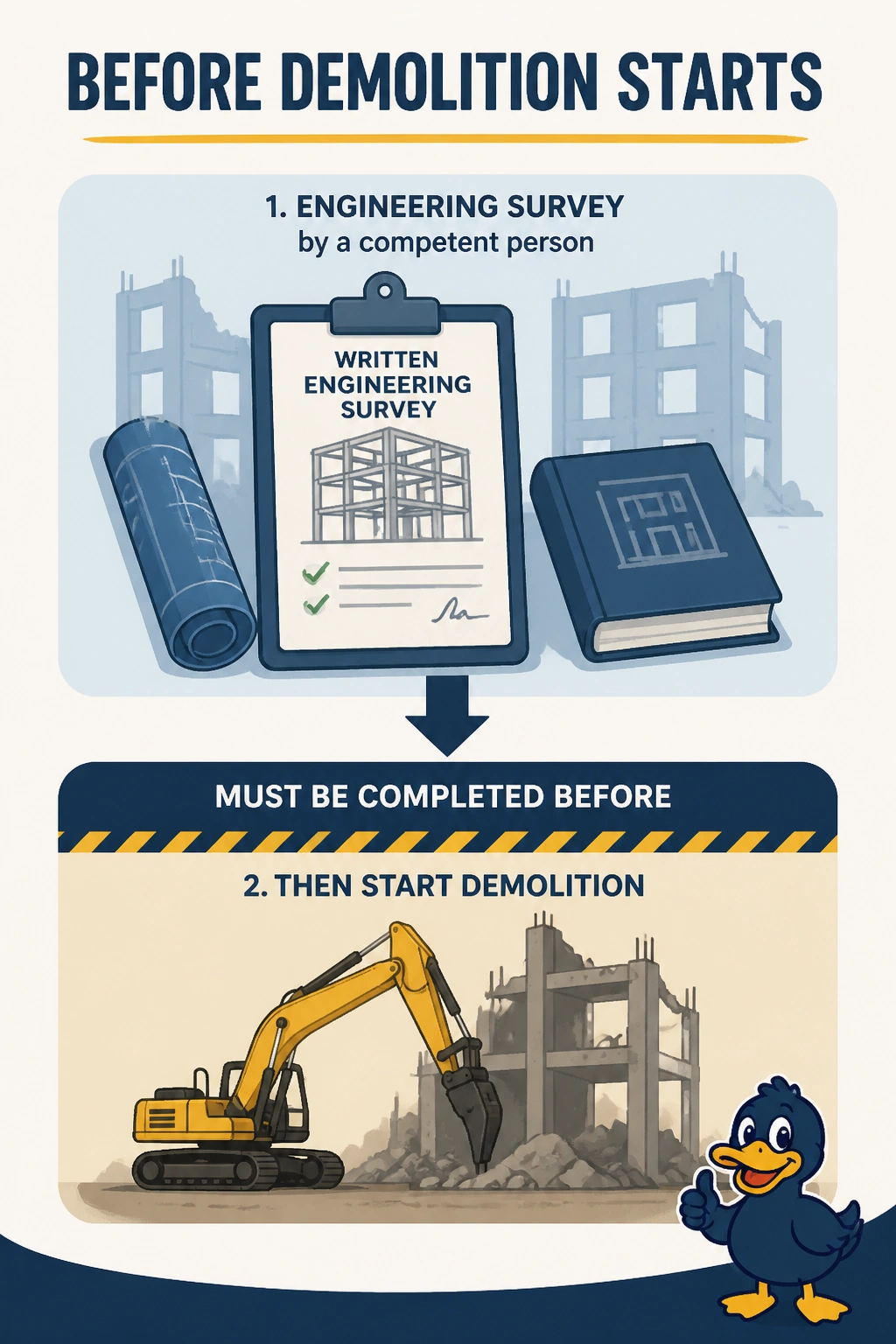
Tearing down an old building without checking its bones first is like pulling a card from the bottom of a house of cards! Don't fall into the trap of relying on a quick operator walk-through—you must have a written engineering survey by a competent person before demolition begins.
Full Explanation
Demolition work alters load paths unpredictably, so hidden structural deterioration can trigger a sudden collapse once walls or floors are disturbed. A written engineering survey of the structure by a competent person is correct because OSHA 29 CFR 1926.850 requires a competent person to evaluate framing, floors, walls, and adjacent structures for unplanned collapse hazards and requires written evidence of that survey before demolition starts. A visual walk-through by the excavator operator to plan haul routes fails because equipment operators focus on machine access and staging rather than structural integrity and adjacent building stability. A daily job hazard briefing focused only on personal protective equipment is wrong because PPE cannot protect workers from a catastrophic structural failure. A structural load test using heavy equipment placed on the upper floor is incorrect and dangerous because loading a compromised floor can cause the exact collapse the survey is meant to prevent. As a caveat, if the building has fire damage, flood damage, or shoring needs, the competent person may need a structural engineer's input and ongoing shoring plans. For an operational check, keep the signed written engineering survey on site and verify that all crews review the sequence and exclusion zones before work begins.
Prefer to study offline? Printable PDF study book + test engine ($7.50, unofficial). These questions stay free here.