
During a night shift, a pipefitter splashes a solvent primer onto their forearm and asks the foreman for chemical first-aid and hazard information. How must Safety Data Sheets be maintained on the construction site to meet OSHA Hazard Communication requirements?
Select an answer to reveal the explanation.
Short Explanation
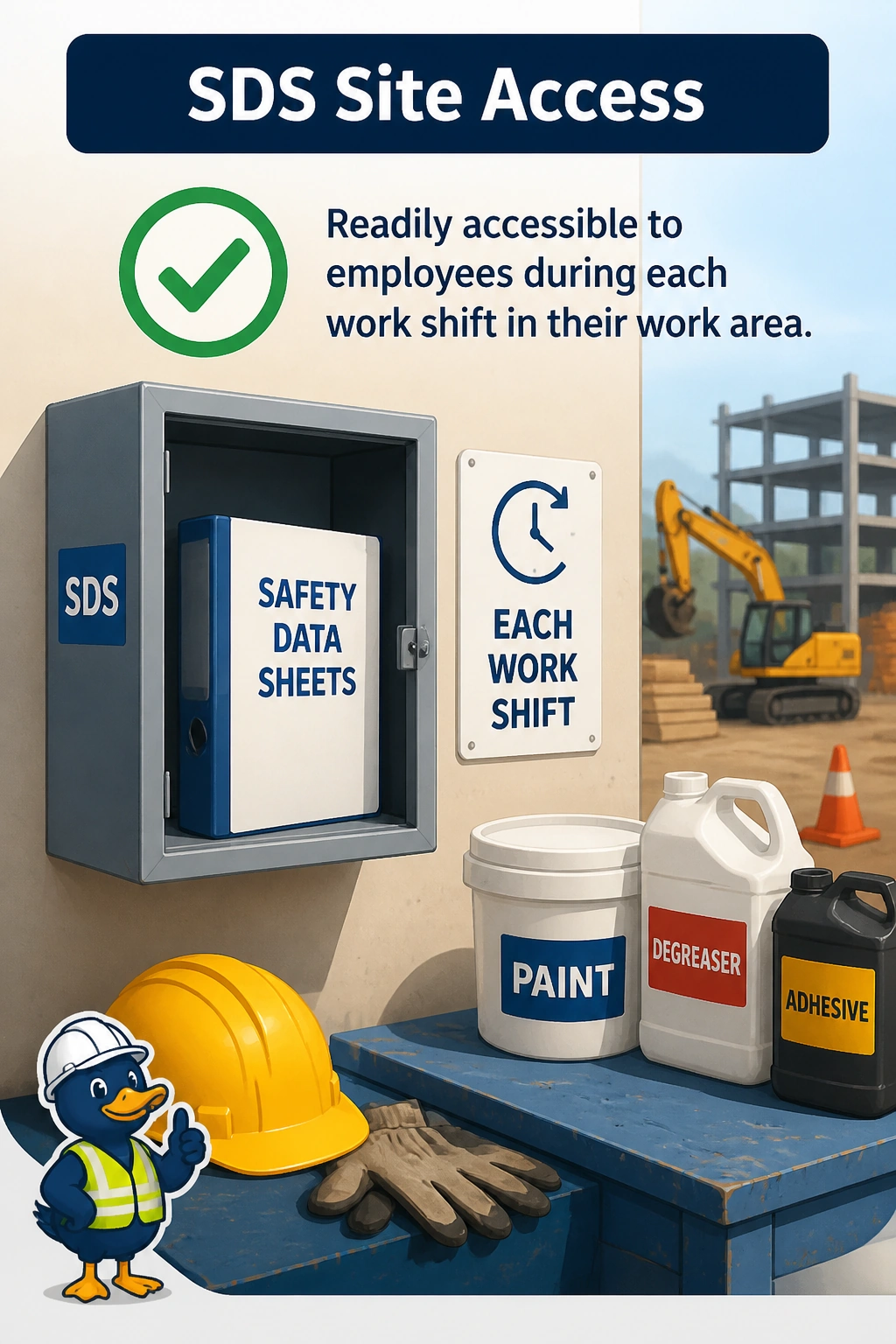
If a worker splashes solvent on a night shift, nobody has time to call headquarters or hunt for a password. Your trap is treating Safety Data Sheets like archived HR files instead of active emergency references. Keep them readily accessible in the work area on every shift.
Full Explanation
Under OSHA's Hazard Communication Standard, 29 CFR 1910.1200 as applied to construction in 29 CFR 1926.59, Safety Data Sheets must be readily accessible to employees during each work shift in their work area. Immediate access lets you and first-aid responders look up chemical hazards, PPE requirements, and first-aid steps without delay on any shift. Storing the sheets in the home office human resources vault until the project finishes makes the information useless during an active field emergency. Mailing copies to each worker's home address within thirty days of initial hiring leaves workers without hazard data at the point of exposure on the jobsite. Keeping the sheets exclusively on a password-protected laptop locked in the job trailer creates a barrier on night shifts or during power outages when supervisors are unavailable. As an exam caveat, electronic SDS binders are permitted only if workers know how to access them and have a reliable backup when systems fail. For a practical check, ask a night-shift crew member to retrieve the SDS for the solvent primer in under a minute during a routine site audit.
Prefer to study offline? Printable PDF study book + test engine ($7.50, unofficial). These questions stay free here.