
A demolition laborer suffers a deep thigh laceration from a rebar shear, and bright red blood continues spurting through soaked trauma dressings despite firm, continuous direct pressure. What immediate first-aid step should the trained responder take next?
Select an answer to reveal the explanation.
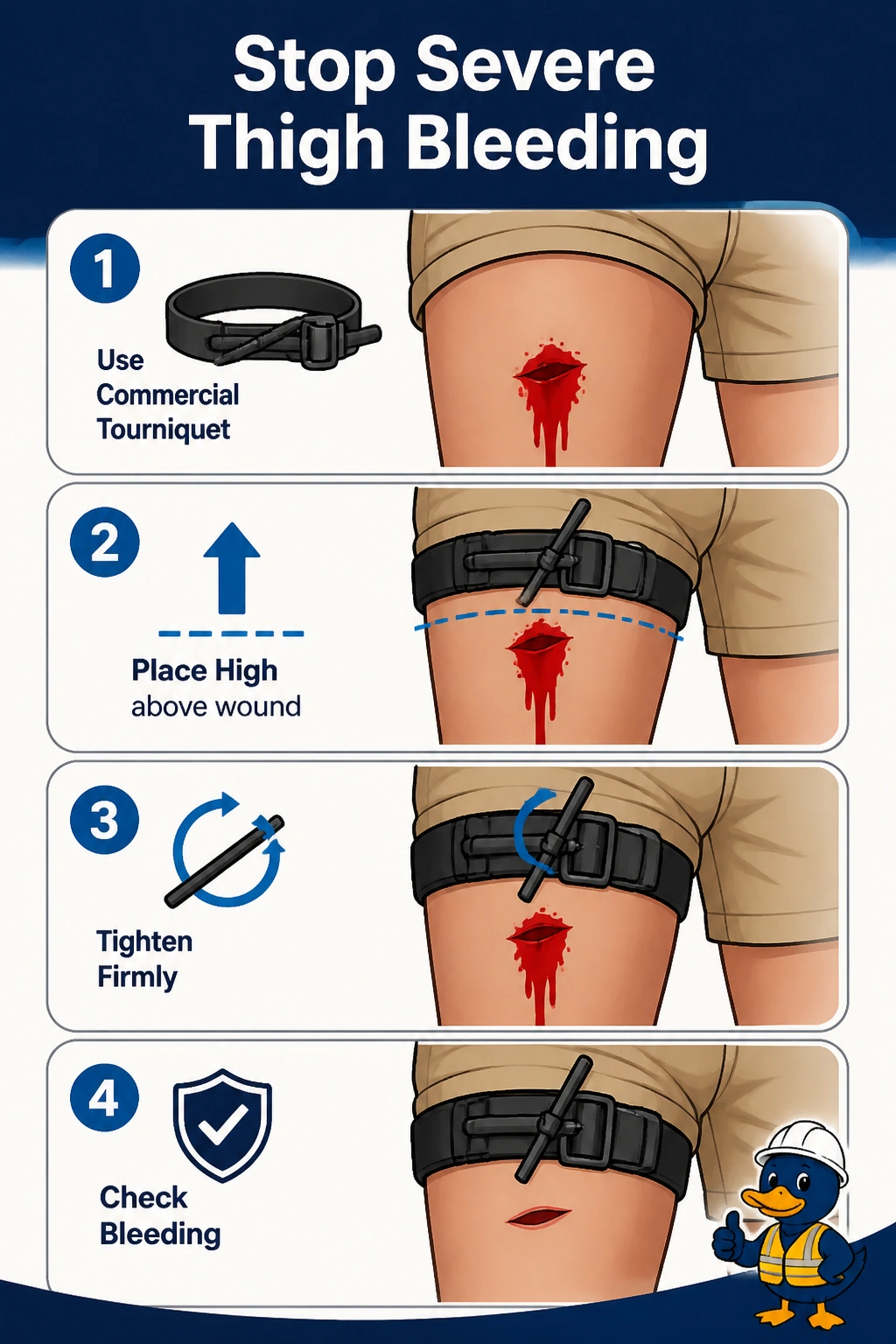
Short Explanation
When bright red arterial blood punches straight through direct pressure, seconds count more than your trauma kit inventory. You should apply a commercial tourniquet high above the wound and tighten it until bleeding stops while EMS is en route. The trap is peeling off soaked dressings or relying on elevation while life-threatening blood loss continues.
Full Explanation
Uncontrolled arterial hemorrhage from an extremity can cause fatal shock within minutes, requiring rapid escalation beyond basic pressure dressings. When firm direct pressure fails, the trained responder must Apply a commercial tourniquet high above the wound and tighten until bleeding stops, noting the exact application time for paramedics. Choosing to Remove all soaked gauze pads first so the wound can be rinsed with water disrupts early clot formation and wastes critical seconds during active arterial bleeding. Deciding to Elevate the injured leg and wait for ambulance crews to take over care fails to compress the severed vessel and allows dangerous blood loss to continue. Trying to Wrap a loose elastic bandage over the dressings without extra pressure neither occludes the artery nor stops spurting hemorrhage. As a caveat, never place a tourniquet directly over a joint such as the knee, and do not loosen it once bleeding is controlled in the field. As an operational check, stock commercial windlass tourniquets in trauma kits on heavy demolition sites and train responders in proper placement during first-aid refreshers.
Prefer to study offline? Printable PDF study book + test engine ($7.50, unofficial). These questions stay free here.