
A concrete finisher splashes wet alkaline curing compound into both eyes while pouring a curb, and a trained first-aid responder reaches the worker beside an emergency eyewash station. What immediate action must the responder direct?
Select an answer to reveal the explanation.
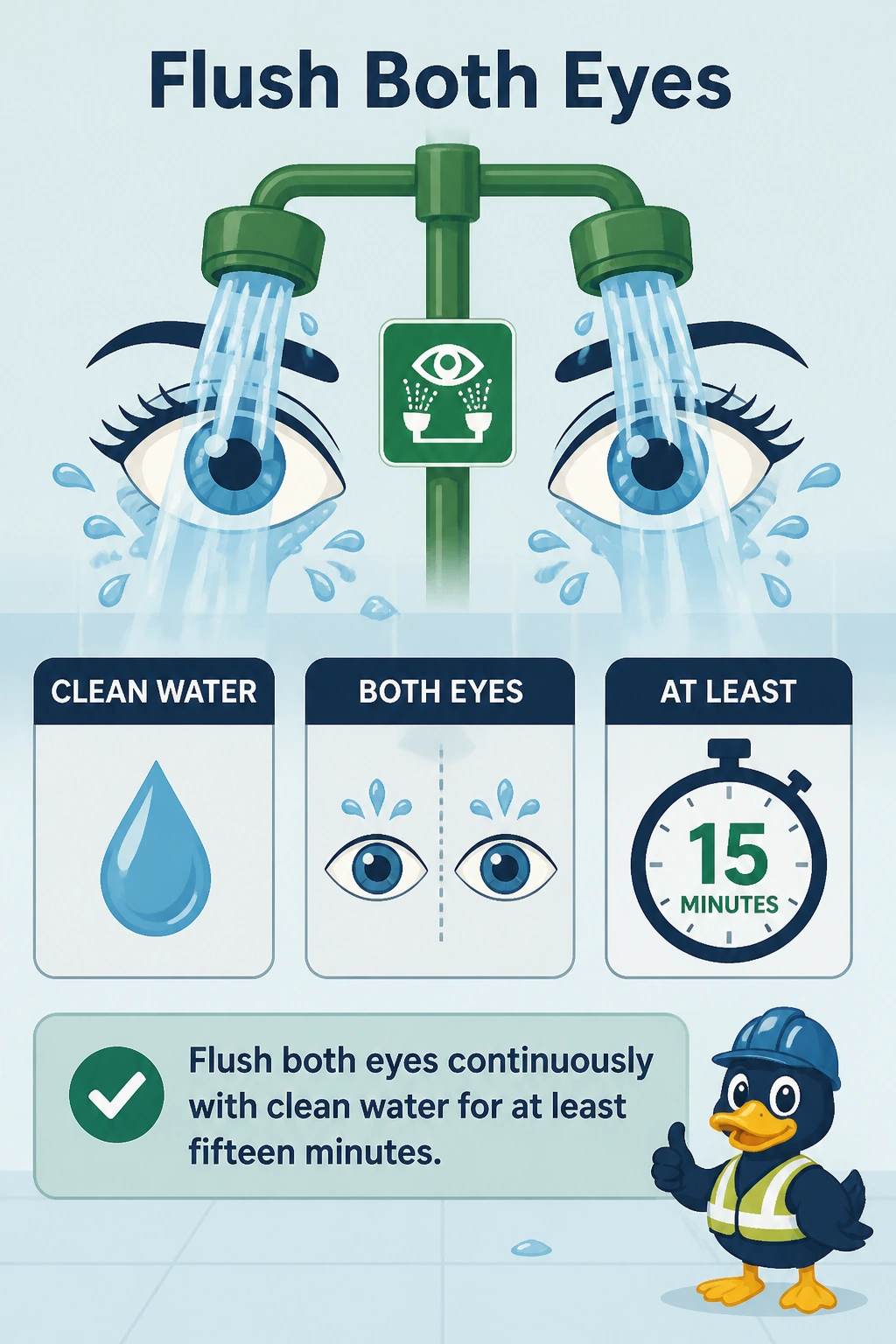
Short Explanation
With a chemical splash in your eyes, every second of delay lets the corrosive burn deeper. Immediate, continuous water flushing is your best defense; the trap is trying to "neutralize" an acid or alkali with another chemical, which creates heat and extra damage.
Full Explanation
Under OSHA 29 CFR 1926.50(g), suitable facilities for quick drenching or flushing must be provided within the work area for immediate emergency use, so the responder must Flush both eyes continuously with clean water while holding the eyelids open to dilute and wash away the corrosive material before permanent tissue damage occurs. Per ANSI/ISEA Z358.1 equipment criteria and standard first-aid practice, continue flushing for at least fifteen minutes with tepid water. Attempting to Apply a weak vinegar solution to neutralize the alkaline chemical inside the eyes fails because an acid-base reaction on delicate eye tissue releases heat and causes severe secondary burns. Choosing to Cover both eyes with dry sterile gauze pads and wait for paramedics to flush them fails because trapping concentrated alkali against the cornea during transport accelerates deep tissue injury. Choosing to Rinse the eyes for thirty seconds and then administer over-the-counter eye drops fails because brief rinsing leaves caustic residue behind and unapproved drops can worsen irritation. A key caveat is that alkaline substances penetrate eye tissue faster than acids, making uninterrupted flushing and prompt medical evaluation essential. As a concrete operational check, verify weekly that eyewash units have unobstructed access, clean nozzles, and adequate flow.
Prefer to study offline? Printable PDF study book + test engine ($7.50, unofficial). These questions stay free here.