
A mechanical crew plans to arc-weld pipe hangers on an elevated mezzanine while cardboard shipping boxes and wood pallets sit twenty feet away on the same deck. What fire prevention measure must the safety technician require before welding begins?
Select an answer to reveal the explanation.
Short Explanation
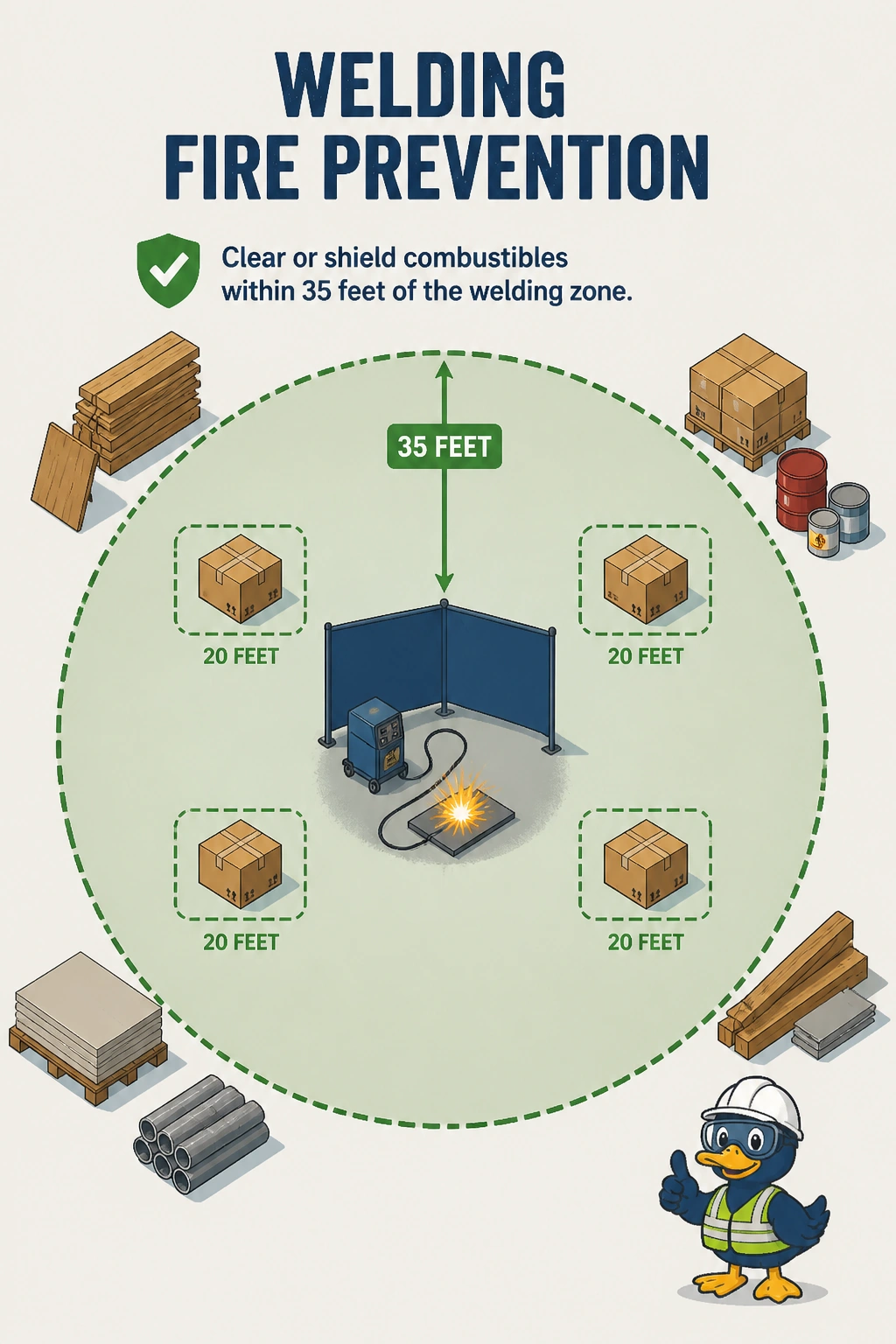
Welding sparks love to travel, and twenty feet is an easy hop for hot slag onto dry cardboard. You must clear or shield combustibles within thirty-five feet before striking an arc; the trap is thinking a bucket of water or a quick misting makes nearby fuel safe.
Full Explanation
29 CFR 1926.352(a)–(b) requires movable fire hazards in the vicinity to be taken to a safe place or guarded. The 35-foot relocation distance is 29 CFR 1910.252(a)(2) (general industry) and NFPA 51B, not the text of 1926.352. Cardboard and pallets 20 feet away are still in the vicinity and must be moved or shielded. That means relocating movable items like cardboard and pallets or covering immovable structures with fire-resistant blankets before any hot work begins. Choosing to Place a single bucket of water beside the welding machine and start work fails because a bucket does not prevent sparks from igniting nearby fuel and cannot replace required portable fire extinguishers. Choosing to Wet down the cardboard boxes lightly with a garden hose every two hours fails because dampened cardboard dries rapidly and still ignites from hot slag. Choosing to Post a warning sign on the pallet stack without relocating any materials fails because signage does nothing to physically separate ignition sources from fuel. Sparks can also fall through floor cracks or grating to lower levels, requiring shields and fire-watch coverage below as well.
Prefer to study offline? Printable PDF study book + test engine ($7.50, unofficial). These questions stay free here.