
A sheet metal worker suffers a deep, pulsing arterial laceration on the forearm from a sharp duct edge while a trained first-aid responder arrives with a trauma kit. After donning disposable medical gloves, what immediate action should the responder take to control the bleeding?
Select an answer to reveal the explanation.
Short Explanation
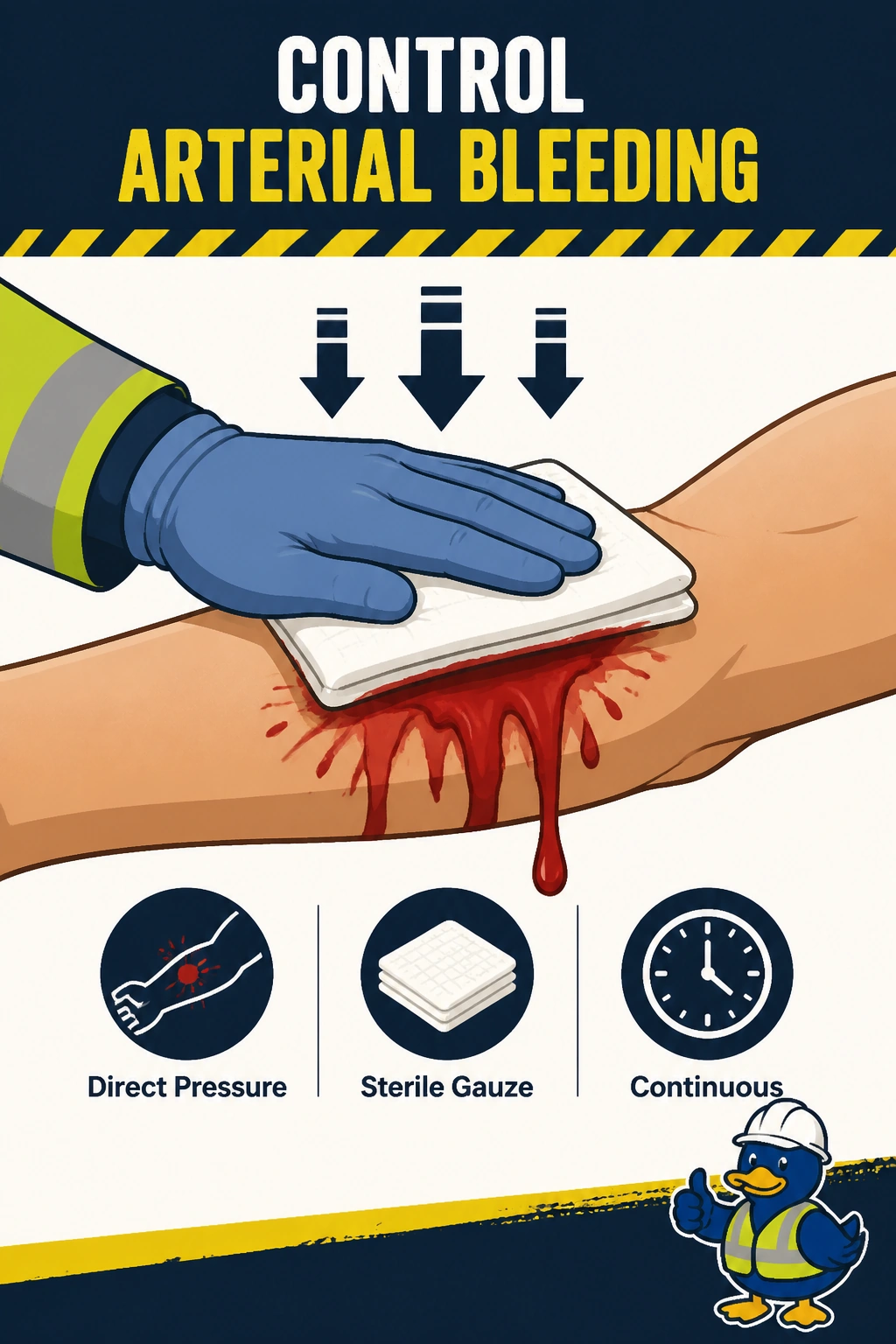
When you face severe bleeding, every second counts—like plugging a burst pipe before the basement floods. Apply direct pressure firmly and steadily over the wound; rinsing the deep arterial cut, using a loose adhesive bandage without pressure, or waiting for municipal paramedics wastes precious time.
Full Explanation
Apply firm, continuous direct pressure over the wound with sterile gauze because mechanical compression slows blood loss and supports clotting at the injury site while emergency medical services are en route. Maintain steady pressure; if blood soaks through, add fresh gauze on top rather than disturbing the first layer, helping stabilize the worker without disrupting early clot formation. Rinsing the deep wound with cold tap water before dressing it delays control of a life-threatening bleed and can wash away forming clots. A loose adhesive bandage and arm elevation without pressure do not overcome arterial pressure, leaving the worker at risk of hemorrhagic shock. Waiting for municipal paramedics before touching the forearm fails the primary purpose of workplace first aid when minutes matter. As an exam caveat, if direct pressure alone fails to stop life-threatening extremity bleeding, a trained responder should use an approved tourniquet according to site medical protocols. As a practical check, verify during weekly trauma-kit inspections that the kit contains sterile gauze or hemostatic dressings, nitrile gloves, and a commercial tourniquet.
Prefer to study offline? Printable PDF study book + test engine ($7.50, unofficial). These questions stay free here.