
Midway through a multi-story hospital build, the general contractor closes the east stairwell for concrete curing and reroutes the primary evacuation path to a new exterior stair tower. Under 29 CFR 1926.35, when must the safety technician review the updated Emergency Action Plan with affected crews?
Select an answer to reveal the explanation.
Short Explanation
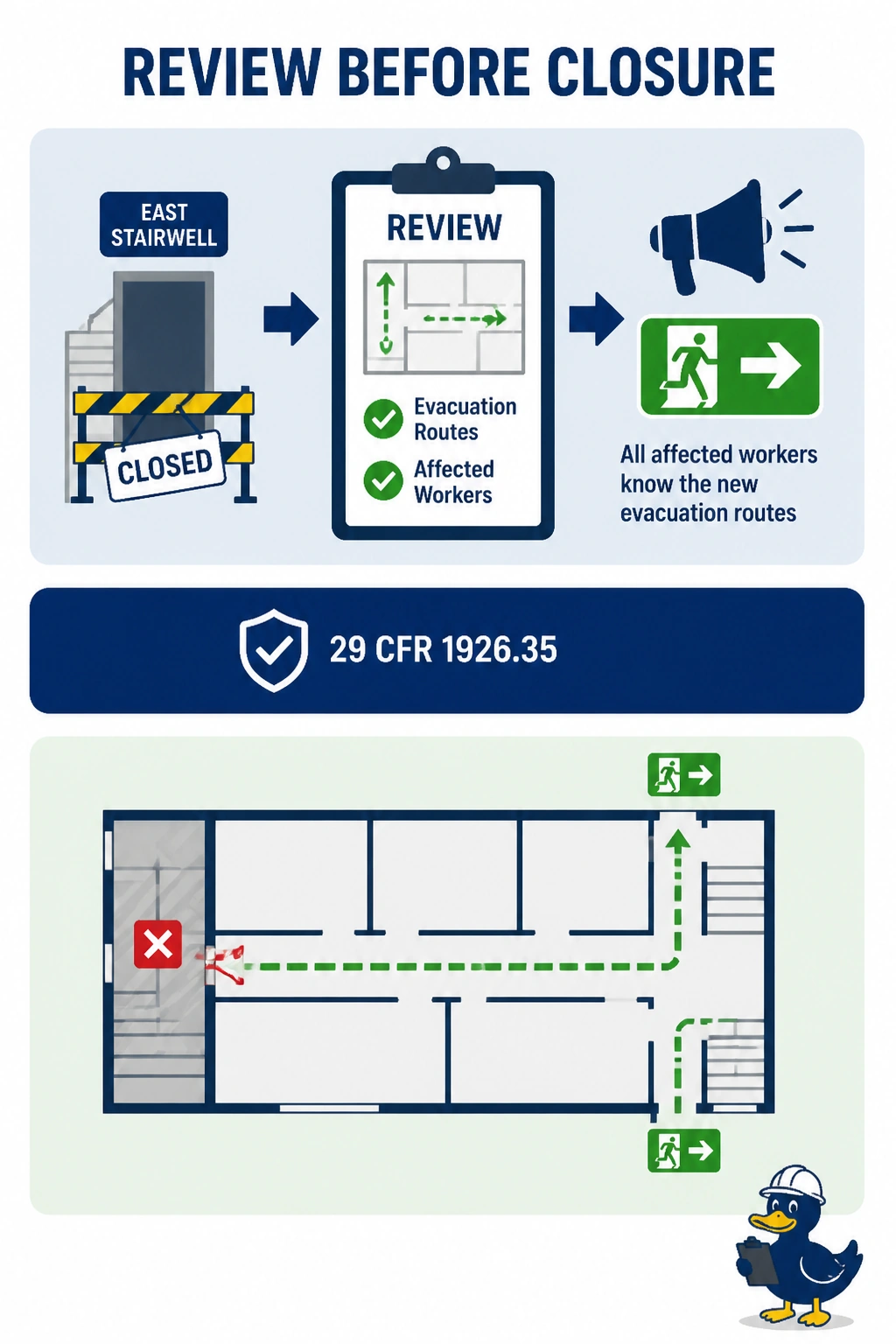
An evacuation map taped in the trailer does no good if your crew runs straight into a locked stairwell during an alarm. Whenever an exit path changes, update the plan and brief everyone before the old route is blocked.
Full Explanation
Under OSHA 29 CFR 1926.35(e)(2), an employer must review the Emergency Action Plan with each covered employee whenever the plan is developed, when an employee's responsibilities change, or when the plan itself changes. Reviewing the updated plan before the east stairwell closes, so all affected workers know the new evacuation routes ensures crews do not waste critical seconds trapped at a blocked exit during a fire or chemical release. Waiting during the next quarterly site safety audit once the stair tower is fully framed leaves workers without accurate egress instructions for weeks. Waiting only after an emergency drill reveals that crews tried to use the closed stairwell creates preventable confusion and risk during a real emergency. Reviewing the change at the end of the concrete curing phase when the original route reopens ignores the entire period when the east stairwell is unavailable. As a caveat, update posted exit signage and floor maps simultaneously so visual cues match the verbal briefing. For an operational check, walk the new exterior stair tower route before the east stairwell closes to confirm lighting, handrails, and clear discharge to the muster area.
Prefer to study offline? Printable PDF study book + test engine ($7.50, unofficial). These questions stay free here.