
An electrician troubleshooting a temporary 480-volt distribution box freezes in place while gripping an energized conduit and cannot let go. What must a coworker do first before attempting physical rescue?
Select an answer to reveal the explanation.
Short Explanation
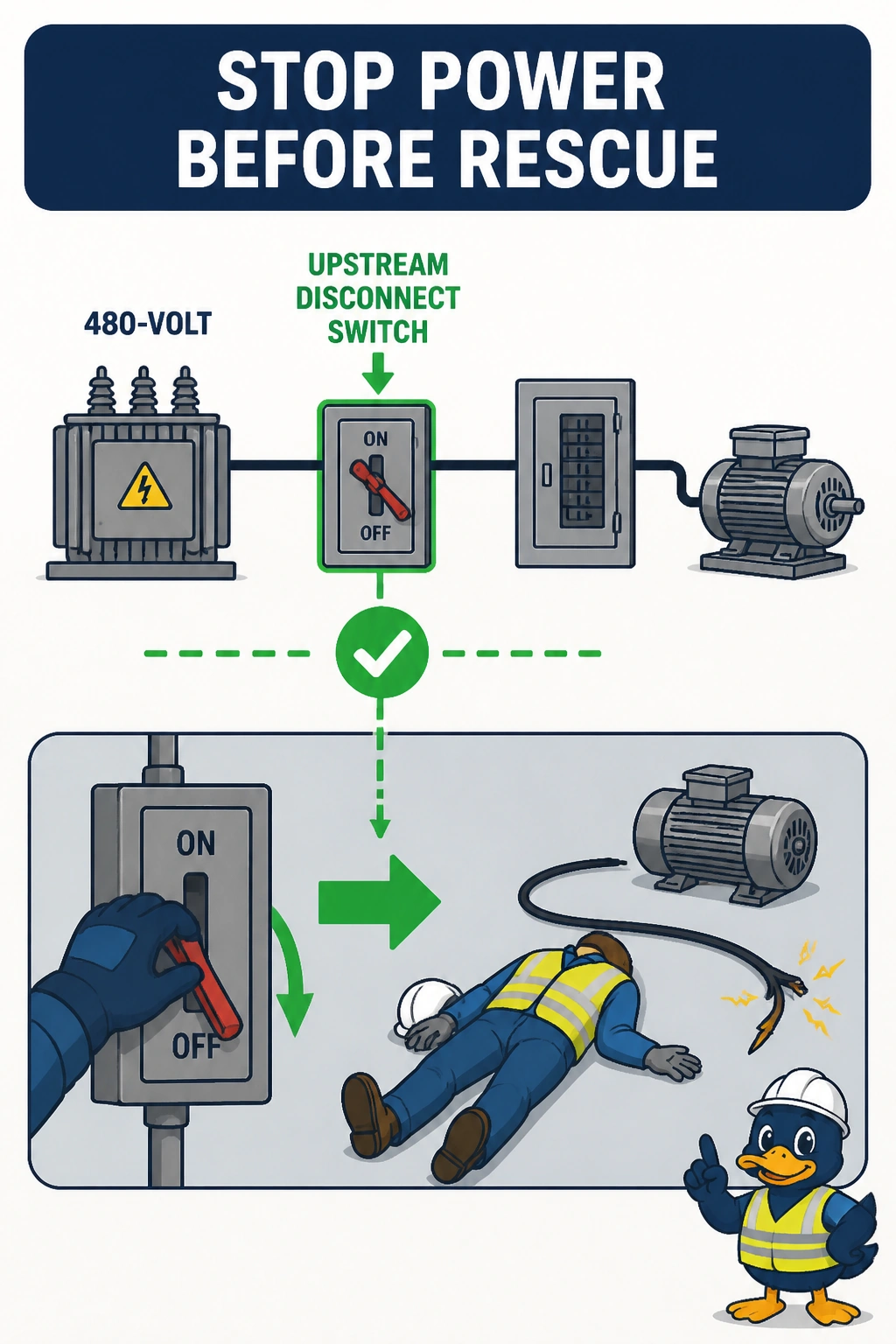
You may feel tempted to pull your teammate free, but touching someone who is still energized can make you a second victim. First, de-energize the circuit at the upstream disconnect before anyone attempts physical rescue. Pulling the worker, starting chest compressions while they remain against the box, or splashing water on the conduit all leave you facing serious electrical danger.
Full Explanation
When a worker is locked onto a live 480-volt circuit, the immediate priority is to de-energize the circuit at the upstream disconnect switch. Opening that disconnect removes the electrical hazard so you can safely approach and begin rescue. Pulling the electrician free by grabbing their leather tool belt is dangerous: sweat, damp clothing, or metal buckles may conduct current to you. Beginning chest compressions while the worker remains against the box exposes you to the same lethal voltage; compressions cannot address the ongoing current hazard. Splashing cool water on the conduit is hazardous because water can lower resistance and spread current across the floor toward nearby workers. Exam caveat: if the upstream disconnect cannot be reached safely, only a trained rescuer using properly rated, inspected insulated rescue equipment should attempt separation, while keeping bystanders clear of potential step-potential zones. As a practical check, label each temporary panel with its upstream feed location and keep emergency shutoff paths unobstructed.
Prefer to study offline? Printable PDF study book + test engine ($7.50, unofficial). These questions stay free here.