
During a weekly walk on a multi-story wood-frame apartment project, a safety technician finds a portable ABC fire extinguisher with a broken tamper seal and a pressure needle resting in the red recharge zone. What action must the technician take immediately?
Select an answer to reveal the explanation.
Short Explanation
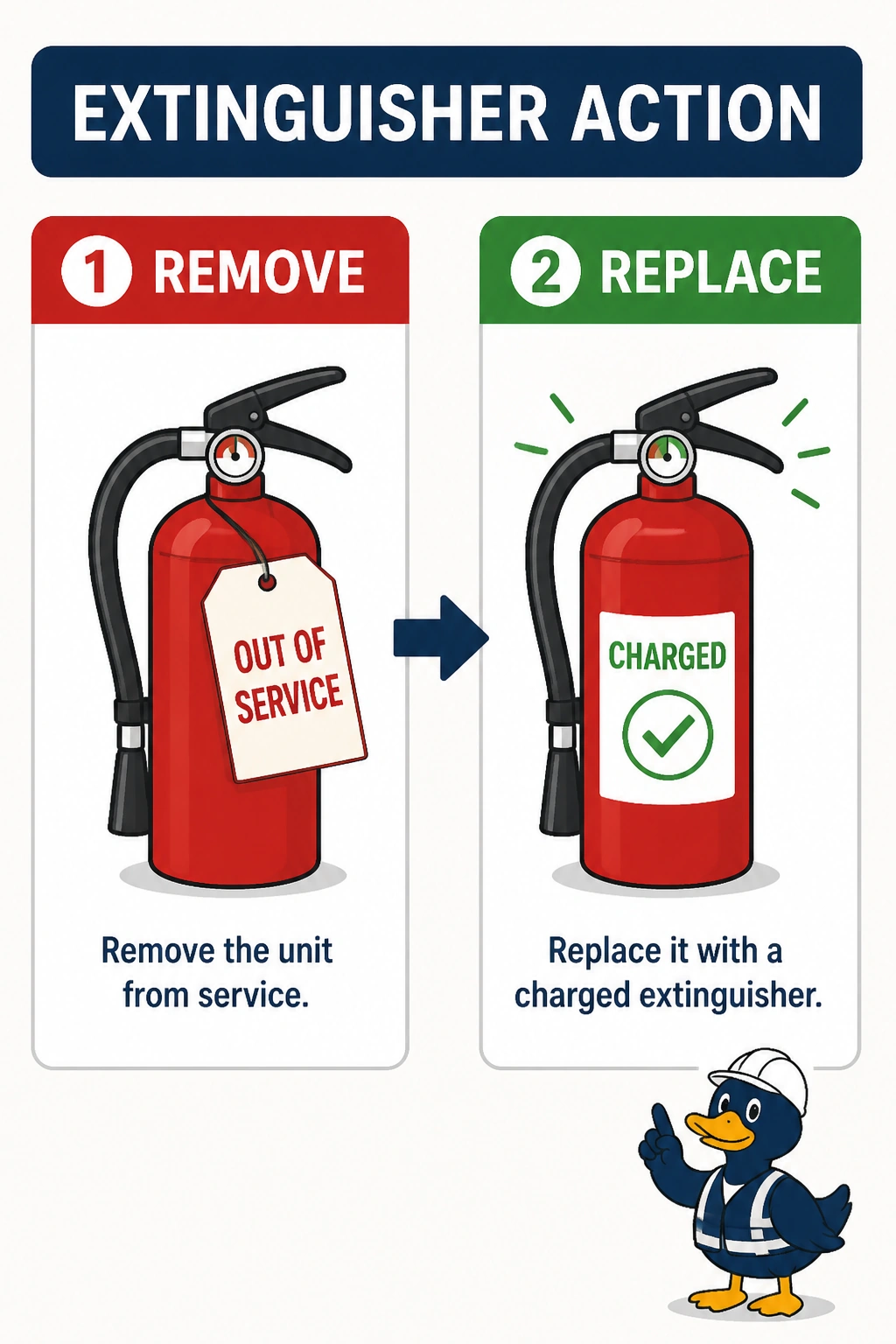
A fire extinguisher with a broken seal and a needle in the red is an empty promise sitting on the wall. If you leave it there until the next inspection, your crew could grab a dead cylinder during a real fire, so you must pull it and swap in a charged unit right away.
Full Explanation
On an active wood-frame site, fire protection equipment must remain ready for instant use, so the technician must remove the unit from service and replace it with a charged extinguisher immediately. A broken tamper seal paired with a low-pressure gauge reading indicates the cylinder may have been partially discharged or lost propellant, meaning it cannot be relied upon to suppress a nascent fire. Choosing to wait until the next scheduled annual vendor service visit to tag the unit leaves the floor unprotected against rapidly spreading timber fires. Choosing to test-squeeze the handle briefly outdoors to verify whether powder discharges is improper because discharging a dry-chemical extinguisher contaminates the valve seat and causes any remaining pressure to leak away completely. Choosing to leave the extinguisher in place and note it on next month's audit checklist creates a false sense of security for workers who expect a working unit at that station. Note that even a brief accidental discharge requires professional recharging before the unit returns to the field. As an operational check, swap in a fully charged spare right away, tag the defective unit out of service, and verify unobstructed access to all floor extinguisher stations.
Prefer to study offline? Printable PDF study book + test engine ($7.50, unofficial). These questions stay free here.