
A commercial construction firm hires five new laborers who will work around silica dust, trenches, and fall hazards, and a superintendent proposes covering all required safety training through five-minute morning toolbox talks. Why is relying solely on toolbox talks insufficient for initial worker training?
Select an answer to reveal the explanation.
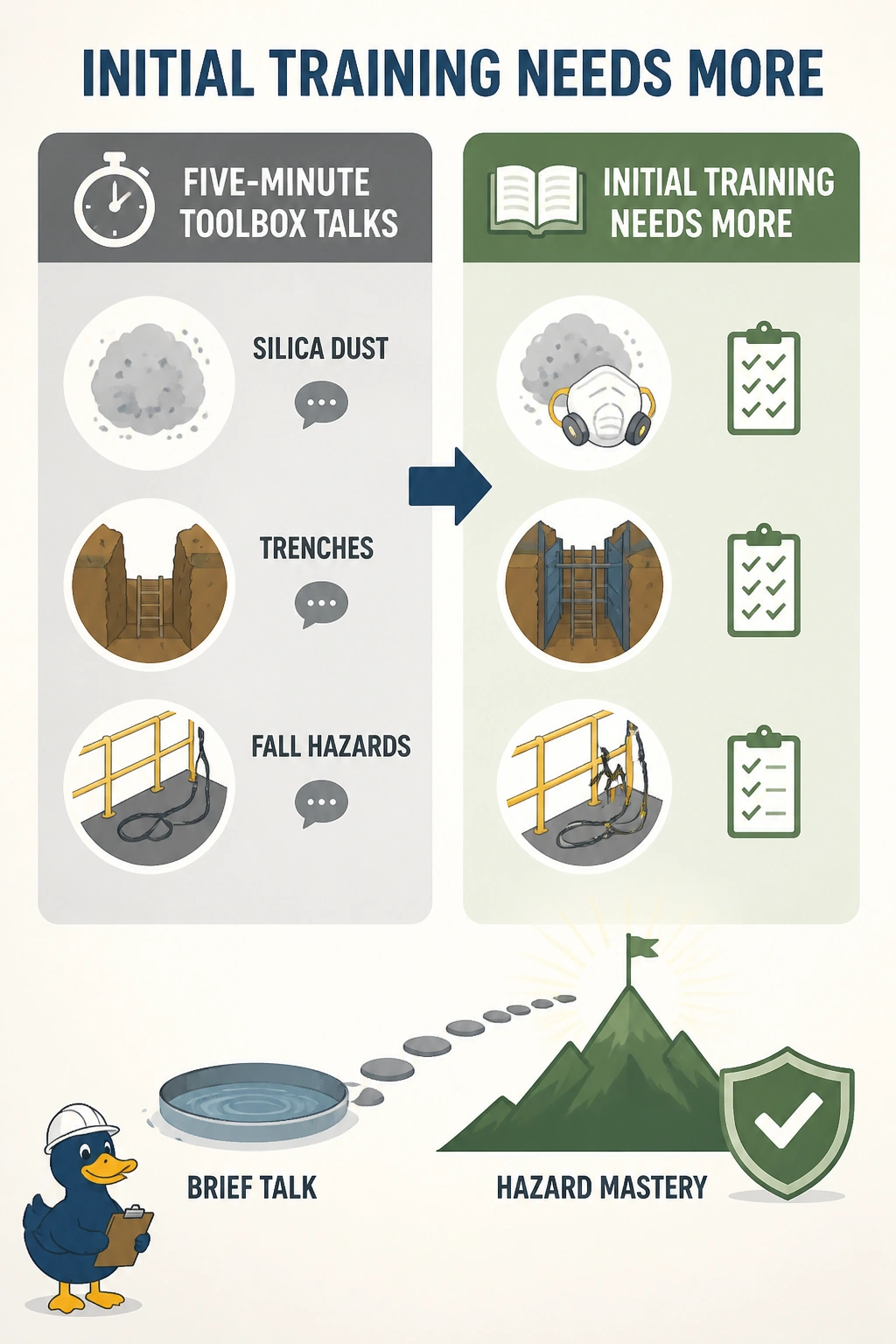
Short Explanation
Think of a five-minute toolbox talk like a quick pre-game huddle—great for sharpening focus on one play, but no substitute for learning the whole playbook. The trap is assuming any brief morning chat satisfies initial training or, on the flip side, that foremen are barred from giving huddles or everyone needs a 30-hour card. You need structured initial training with verified comprehension before workers face complex site hazards.
Full Explanation
Toolbox talks lack the depth, structure, and verification needed for initial hazard mastery because brief daily huddles are designed to reinforce single, immediate task hazards rather than teach foundational hazard recognition, regulatory controls, and emergency procedures across silica, excavation, and fall protection. Effective initial onboarding requires structured curriculum, hands-on demonstration, and a check that workers actually understand how to protect themselves. OSHA prohibits foremen from delivering any jobsite safety briefings during morning shift huddles is incorrect because foremen regularly and appropriately lead daily safety briefings to keep crews aligned on changing site conditions. Toolbox talks are only valid when delivered as written handouts rather than spoken discussions is wrong because interactive verbal discussion is actually the core strength of a tailgate briefing, even when attendance is logged. New laborers must complete thirty hours of formal classroom lecture before entering any jobsite is also false because OSHA outreach cards are generally voluntary unless mandated by a specific contract or local ordinance, whereas task-specific hazard training is required before exposure. As a caveat, toolbox talks remain valuable for ongoing reinforcement when paired with documented initial training. As an operational check, audit your onboarding records to confirm every new hire completes structured hazard training and a skills check before starting field tasks.
Prefer to study offline? Printable PDF study book + test engine ($7.50, unofficial). These questions stay free here.