
A metal plating shop hires several new operators who will work near open tanks of nitric acid and alkali cleaners. Under OSHA's Hazard Communication standard (29 CFR 1910.1200), which topic must be included in their initial chemical safety training before they begin work?
Select an answer to reveal the explanation.
Short Explanation
Before you put new operators beside acid tanks, they need to know how to spot a leak before it hurts them. Don't fall for reporting thresholds, synthesis detail, or shift rules — OSHA wants you focused on practical hazard recognition on the shop floor.
Full Explanation
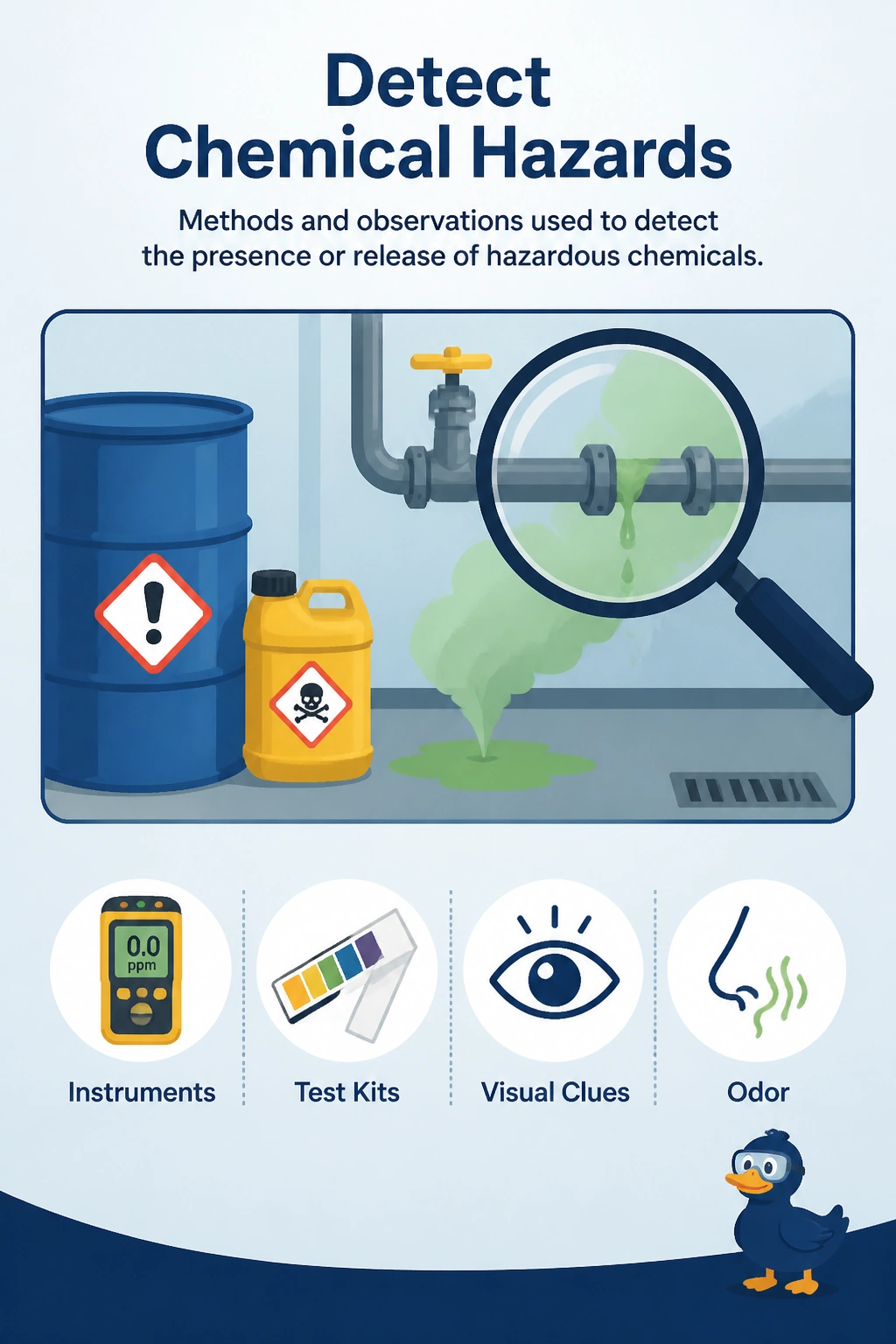
Under 29 CFR 1910.1200(h)(3), Hazard Communication training must give workers practical knowledge of chemicals in their work area, specifically including Methods and observations used to detect the presence or release of hazardous chemicals such as monitor alarms, visual fuming, or characteristic odors. Knowing how a release looks, smells, or alarms enables operators to evacuate or use controls immediately rather than breathing toxic vapors unknowingly. The EPCRA reportable quantity and Tier II threshold for each tank chemical concern community right-to-know reporting under EPCRA, not worker recognition under HazCom, and do not help spot a leak in real time. Detailed chemical synthesis pathways used by the upstream manufacturer go beyond workplace hazard communication and distract from safe handling, PPE, and emergency procedures. The shift schedule and overtime rules for operators assigned to the plating tanks are human resources matters with no protective value during exposure. HazCom training must also cover physical and health hazards, protective measures, and reading labels and Safety Data Sheets, and be repeated when a new hazard enters the work area. As a check, ask a trained operator to point out gas monitors and describe alarm cues for a tank release.
Prefer to study offline? Printable PDF study book + test engine ($7.50, unofficial). These questions stay free here.