
A mid-sized metal fabrication plant wants to improve safety communication and hazard follow-through after workers complain that reported floor hazards disappear into a management black hole. Which program structure best closes this loop?
Select an answer to reveal the explanation.
Short Explanation
If your crew reports a hazard and never hears back, they stop speaking up—trust dies in silence. The trap is relying on one-way newsletters or quarterly suggestion boxes instead of a joint committee that tracks fixes openly with workers.
Full Explanation
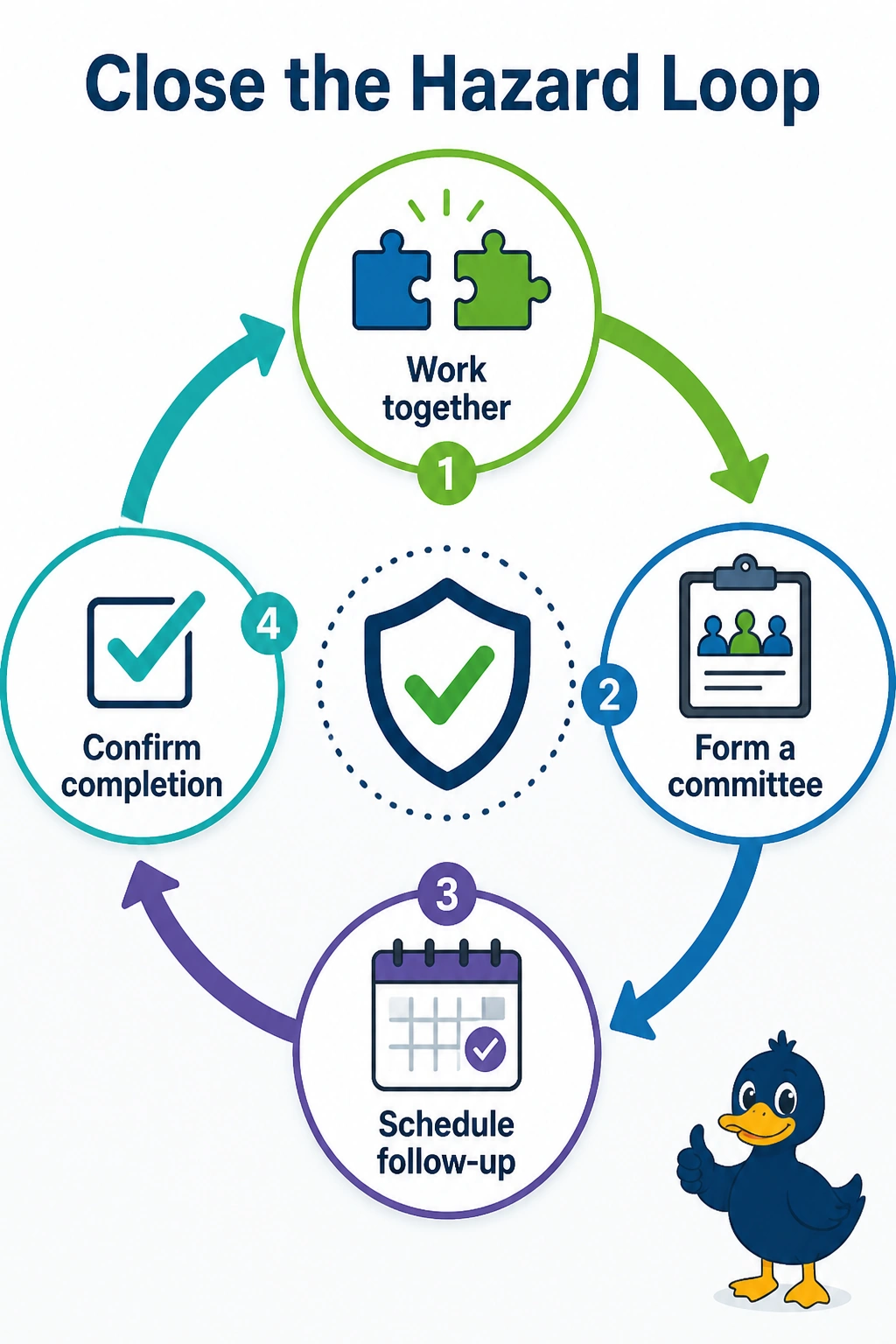
Effective safety communication depends on two-way dialogue and visible follow-through so workers see that reporting hazards leads to timely action. A joint worker-management safety committee with scheduled tracking of hazard abatement closes the feedback loop by pairing frontline workers with supervisors to assign owners, set deadlines, and verify completed fixes. An annual all-hands safety town hall led exclusively by corporate executives is too infrequent and top-down to resolve daily shop-floor hazards. An anonymous suggestion box emptied once per quarter by human resources leaves hazards unaddressed for months and gives workers no visibility into corrective actions. A monthly safety newsletter posting plant-wide injury totals in breakrooms communicates lagging statistics rather than resolving reported conditions. As a caveat, a safety committee only builds trust when management allocates real resources and authority to fix valid findings. Operationally, post a simple hazard-tracking board showing open items, assigned owners, and target completion dates after each committee meeting.
Prefer to study offline? Printable PDF study book + test engine ($7.50, unofficial). These questions stay free here.