
A manufacturing plant replaces its paper Safety Data Sheet (SDS) binders with a cloud-based SDS portal accessed through shop-floor kiosks. Under OSHA's Hazard Communication Standard (29 CFR 1910.1200), what must the employer ensure for this electronic system?
Select an answer to reveal the explanation.
Short Explanation
An electronic SDS portal only works if your workers can pull up first-aid steps in seconds—even when the Wi-Fi goes down. The trap is locking kiosks behind a supervisor's password, which turns a quick safety lookup into a dangerous waiting game when you need chemical hazard data fast.
Full Explanation
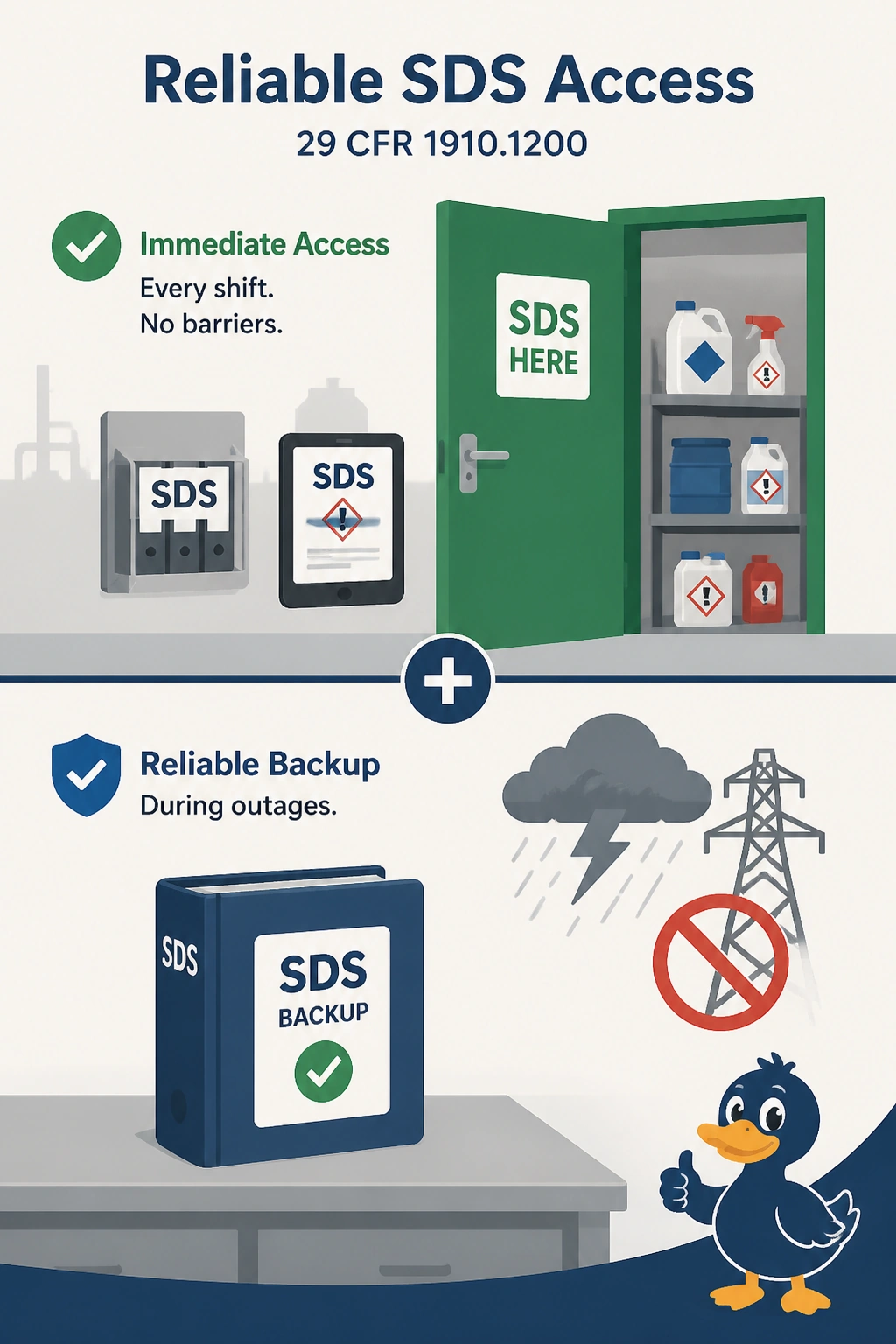
Under OSHA 29 CFR 1910.1200, electronic SDS systems are permitted only if the employer ensures immediate employee access without barriers during every shift and a reliable backup during outages. In an exposure or spill emergency, workers on night or weekend shifts must be able to read hazard and first-aid information instantly, and a secondary method—such as local offline files or backup paper binders—must remain available if power or network service fails. Requiring password-protected supervisor login access so chemical records remain secure from visitors creates an unlawful barrier whenever a supervisor is away from the floor. Requiring annual printed distribution of all SDSs to each employee's personal locker is neither mandated nor practical, as SDSs change when formulations update and lockers are not emergency work-area references. Relying on quarterly email summaries listing newly added chemicals for shift leads fails to provide full 16-section SDS data to exposed workers at the point of use. Caveat: employees must also be trained on how to use the kiosks and where the outage backup is stored. As an operational check, disconnect a shop-floor kiosk from the network during an audit to verify the local backup system opens SDSs immediately.
Prefer to study offline? Printable PDF study book + test engine ($7.50, unofficial). These questions stay free here.