
A 24-hour distribution center notices that forklift near-misses and pallet-racking strikes cluster between 2:00 a.m. and 5:00 a.m. on the overnight shift, even among experienced operators. Which human risk factor best explains this pattern and guides the safety team's intervention?
Select an answer to reveal the explanation.
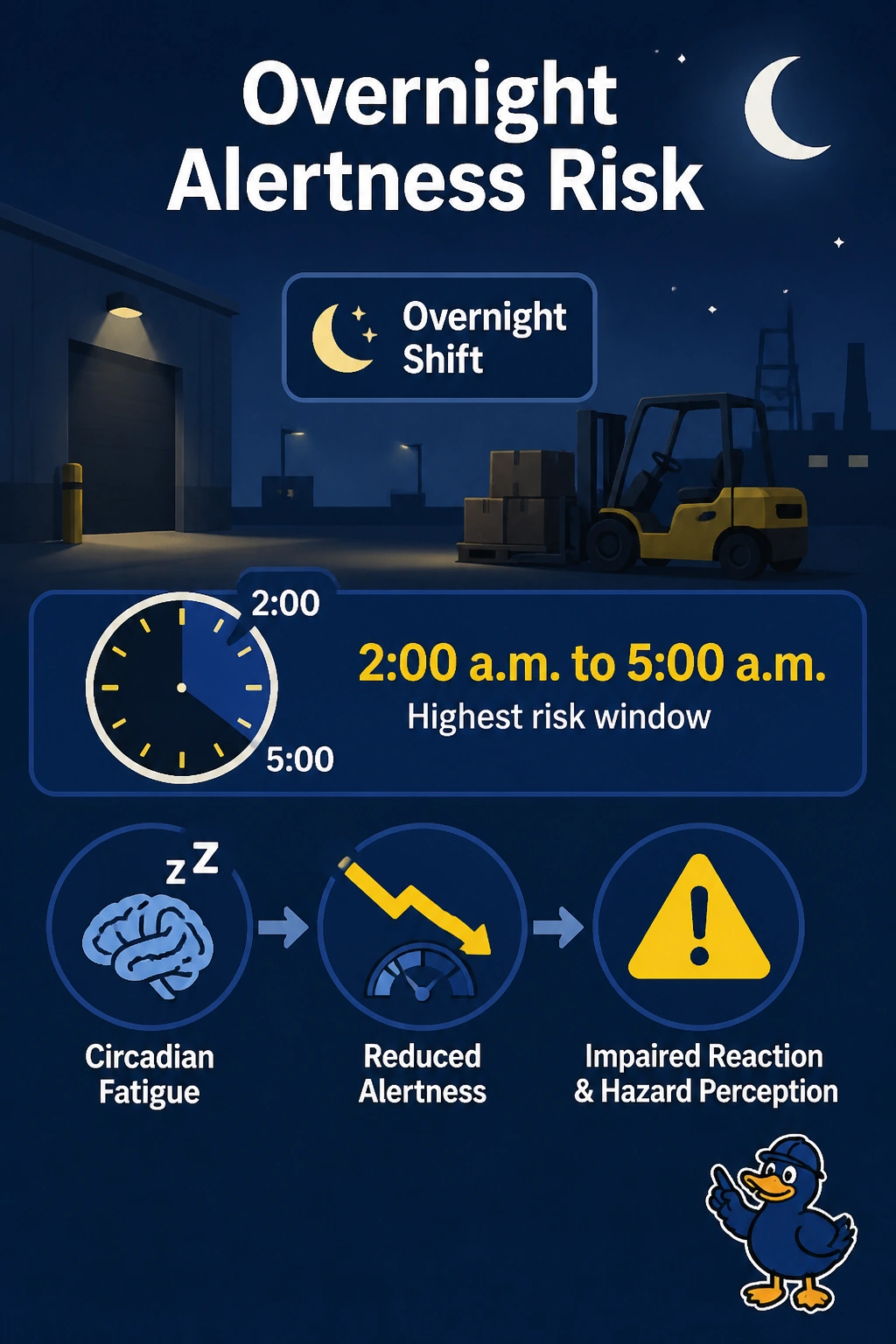
Short Explanation
Between 2:00 a.m. and 5:00 a.m., your operators’ bodies are at a circadian low, regardless of experience, and fatigue can slow reaction time. You’ll get further by addressing that alertness dip than by assuming more classroom hours, written discipline, or visibility measures will prevent these unintentional errors.
Full Explanation
Human risk factors include physiological states such as fatigue, sleep debt, and circadian rhythm troughs, which can degrade vigilance and motor coordination even in skilled workers. Circadian fatigue and reduced alertness impairing reaction time and hazard perception explains why experienced operators strike racking during the pre-dawn circadian low, guiding the safety team toward scheduling controls, task rotation, brighter lighting, and fatigue-awareness training. Insufficient classroom lecture hours during initial forklift certification does not fit the pattern if the same operators perform safely at other hours. Lack of written disciplinary policies in the employee handbook treats a biological alertness dip as willful misconduct and does not prevent unintentional errors. Overreliance on high-visibility vests rather than floor striping concerns pedestrian conspicuity, not an operator’s slowed reaction time around stationary racking. One caveat: fatigue-management programs work best when shift design limits consecutive night shifts and provides structured rest breaks, rather than relying solely on caffeine or motivational posters. As a practical check, compare incident timestamps by shift hour with overtime logs, then assess whether fatigue hotspots improve after adjusting breaks and the timing of high-risk tasks.
Prefer to study offline? Printable PDF study book + test engine ($7.50, unofficial). These questions stay free here.