
After delivering a new hazard communication course, a training coordinator collects end-of-class feedback forms showing that 94% of attendees liked the instructor and found the slides engaging. Why do these survey results fail to verify that workers actually mastered the material?
Select an answer to reveal the explanation.
Short Explanation
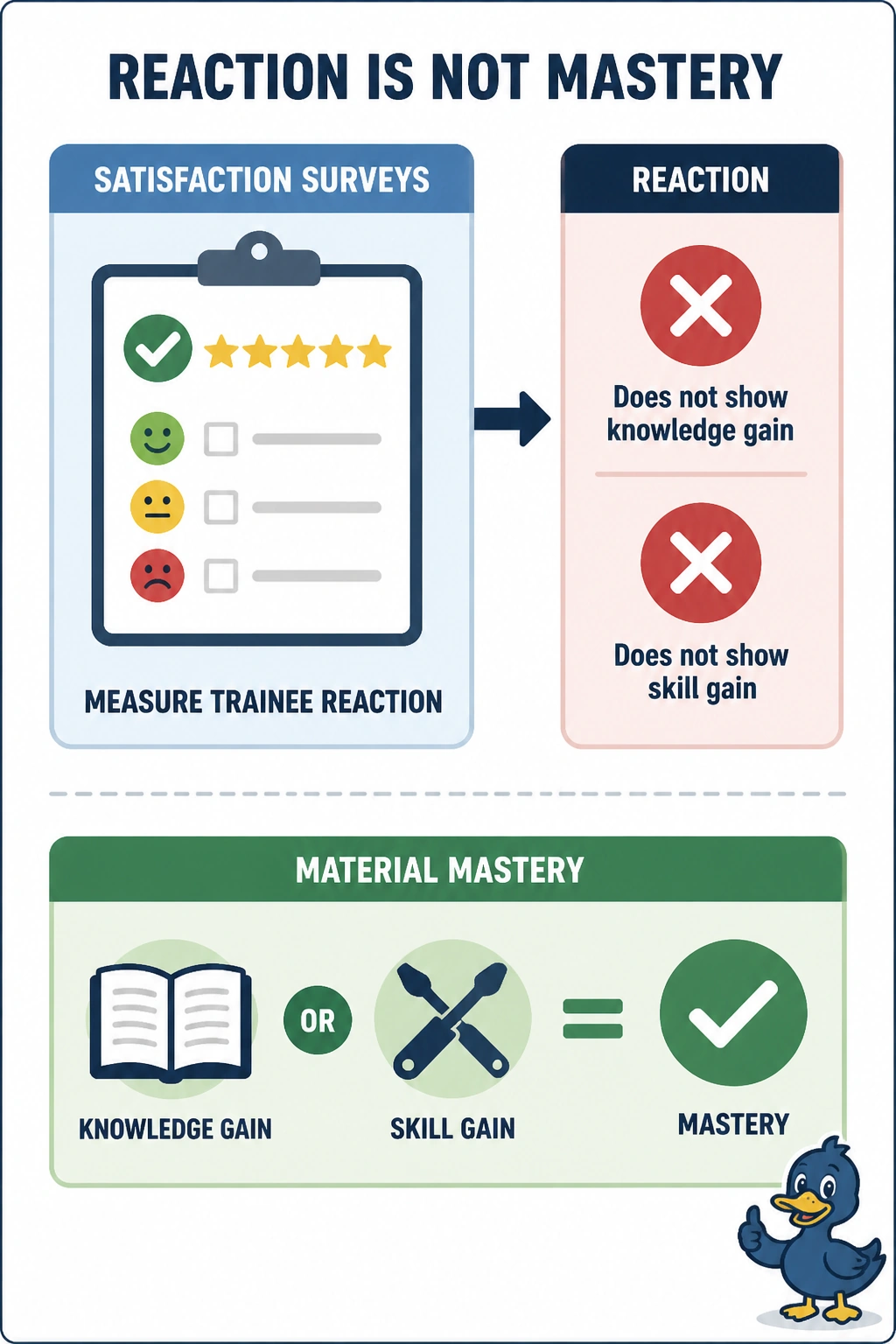
A standing ovation at the end of a class feels great, but applause alone never proves your crew can read a Safety Data Sheet under pressure. The trap is mistaking high satisfaction scores for real learning; you must test knowledge or skills directly to verify mastery.
Full Explanation
Under Kirkpatrick's four-level training evaluation model, end-of-class enjoyment forms sit at Level 1 because satisfaction surveys measure trainee reaction rather than actual knowledge or skill gain. Workers can enjoy a polished presentation while still misunderstanding GHS pictograms or container labeling rules. Claiming that satisfaction surveys measure long-term injury reduction rather than immediate trainee feedback describes Level 4 organizational results, which require tracking lagging or leading safety metrics over time. Stating that satisfaction surveys measure on-the-job behavior transfer rather than classroom attendance confuses Level 1 feedback with Level 3 behavioral observation on the shop floor. Asserting that satisfaction surveys measure organizational return on investment rather than course design points to financial impact analysis rather than learner perception. As a caveat, Level 1 surveys are still useful for spotting scheduling issues or unclear slides, even though they cannot replace Level 2 testing. To verify comprehension, pair your course with a post-test or hands-on label-reading exercise and log each worker's passing score before assigning chemical-handling tasks.
Prefer to study offline? Printable PDF study book + test engine ($7.50, unofficial). These questions stay free here.