
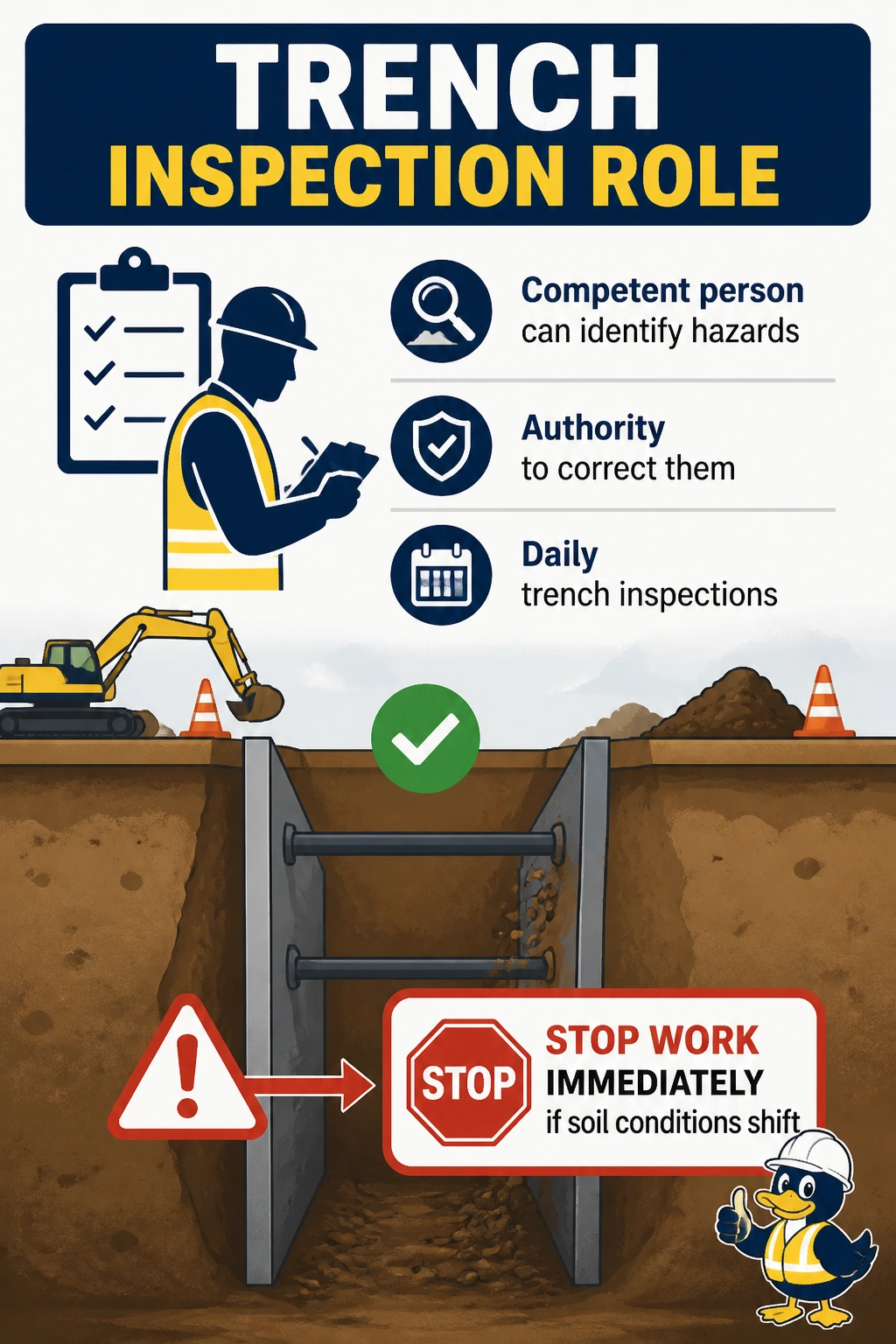
A construction site superintendent needs someone to perform daily trench inspections and stop work immediately if soil conditions shift. Which individual meets OSHA's criteria for this role?
Select an answer to reveal the explanation.
Short Explanation
Being a competent person is like being a referee with a whistle—you do not just spot the foul, you have the power to blow the whistle and stop the play. The classic trap is picking someone with academic credentials who lacks the authority to halt unsafe work on the spot.
Full Explanation
Under OSHA 29 CFR 1926.651(k) and 1926.32(f), daily excavation inspections must be performed by A competent person who can identify hazards and has authority to correct them. Both elements are mandatory: hazard recognition through training or experience and prompt corrective authority to remove workers from danger. Choosing A qualified person who holds an engineering degree without site stop-work authority fails because a qualified person solves technical design problems through recognized credentials or extensive knowledge, yet lacks the required corrective authority unless separately designated. Choosing An authorized employee who operates the excavator inside the protective trench box borrows terminology from lockout/tagout and does not establish soil-classification training or stop-work authority. Choosing An affected employee who works near the trench perimeter and wears high-visibility gear describes a worker exposed to surrounding operations rather than an inspector empowered to intervene. Caveat: a single individual may serve as both competent and qualified if they hold both the technical capability and management-granted authority. Operational check: confirm in writing before excavation begins who the designated competent person is and verify that site leadership backs their authority to halt work.
Prefer to study offline? Printable PDF study book + test engine ($7.50, unofficial). These questions stay free here.