
During a pre-use inspection on a commercial renovation site, a carpenter notices a 50-foot heavy-duty extension cord with a two-inch gash in the outer jacket exposing inner copper wire insulation and a missing ground prong. What action is required?
Select an answer to reveal the explanation.
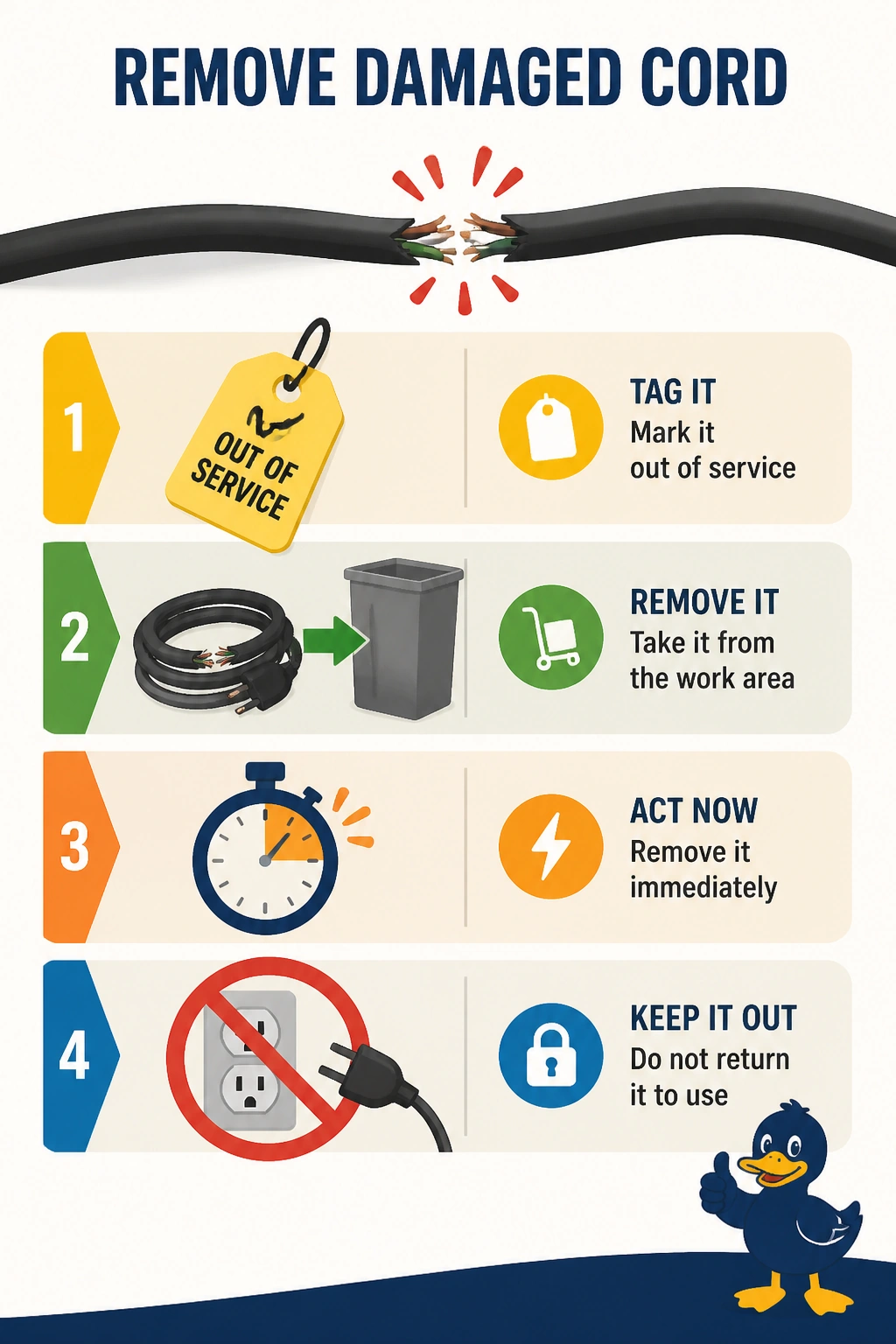
Short Explanation
You’re right to stop using a cord with a split jacket and missing ground prong: it can expose you to shock, arcing, or fire, and tape cannot restore the broken safety path. A GFCI or limiting the cord to dry areas doesn’t make it safe, so tag it out of service and remove it from the work area.
Full Explanation
Tagging the damaged cord out of service and removing it from the work area immediately eliminates the shock, arc-fault, and fire hazards created by compromised insulation and a lost equipment-grounding path. Under OSHA electrical safety rules for general industry and construction, flexible cords with worn, frayed, or damaged outer jackets or missing grounding prongs must not be used until properly repaired or replaced. Wrapping the damaged jacket with two layers of black vinyl electrical tape does not restore the missing ground prong and leaves a weak, non-waterproof repair vulnerable to abrasion. Plugging the cord into a GFCI-protected receptacle misuses ground-fault protection as an excuse to operate defective equipment; a GFCI does not prevent every line-to-neutral shock or fire. Restricting the cord to dry indoor areas away from grounded metal pipes still cannot eliminate contact with grounded building steel or tool frames. As an exam caveat, flexible-cord repairs are permitted only when a qualified person uses approved methods that restore the original insulation and strain relief; damaged molded plugs cannot be patched. As a practical check, inspect cords during daily tool inspections and keep any cord with a damaged jacket or missing ground prong out of service.
Prefer to study offline? Printable PDF study book + test engine ($7.50, unofficial). These questions stay free here.