
A chemical plant operating an OSHA Process Safety Management (PSM)-covered ammonia system schedules regular thickness testing on pressure vessels and function checks on emergency relief valves. Which PSM element requires these ongoing inspection and testing procedures to prevent catastrophic releases?
Select an answer to reveal the explanation.
Short Explanation
Think of Mechanical Integrity as preventive medicine for high-hazard pipes, tanks, and relief valves before a leak ever starts. The trap is picking another PSM pillar like investigations or employee participation, when your inspection and testing schedule lives squarely under Mechanical Integrity.
Full Explanation
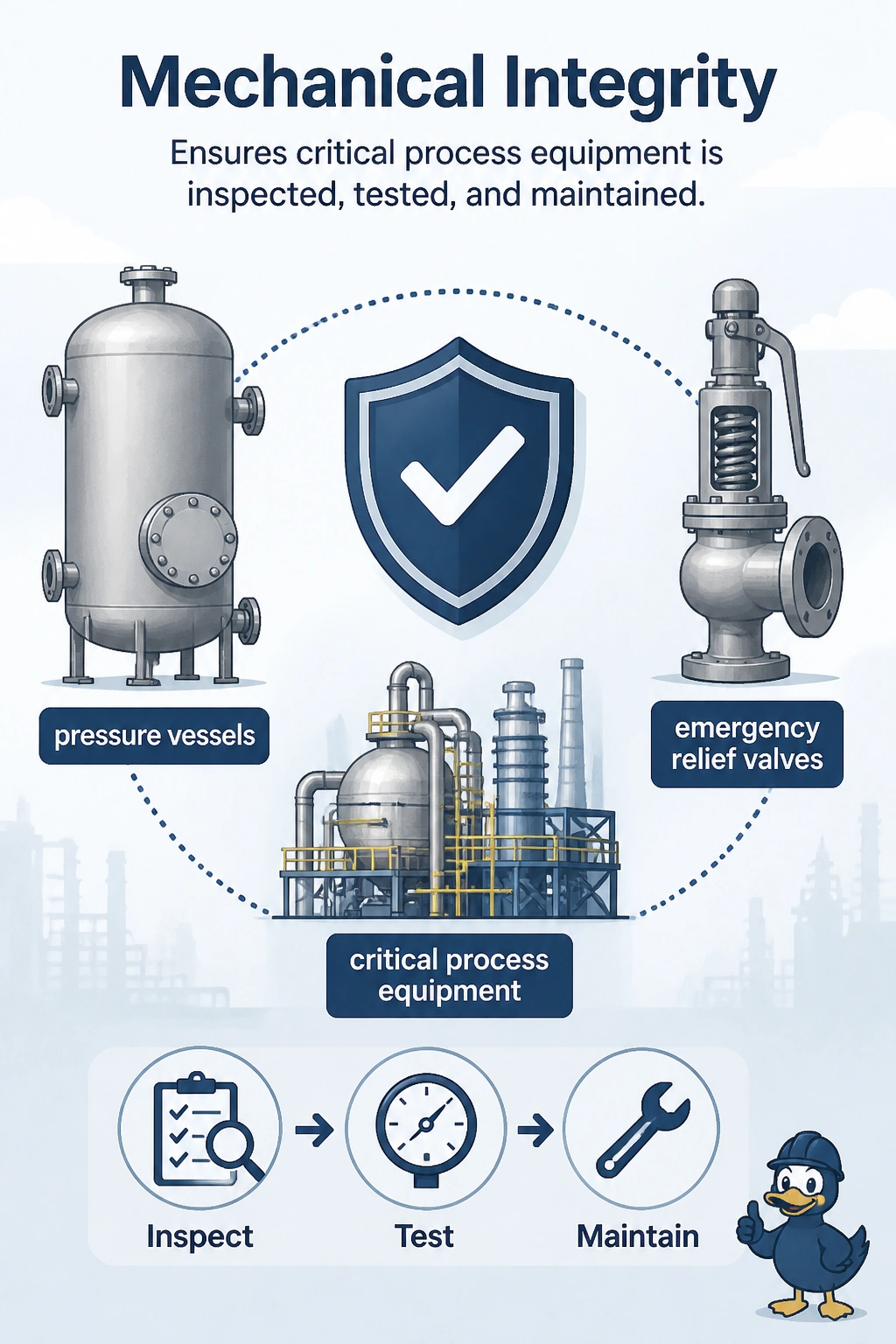
Mechanical Integrity, which ensures critical process equipment is inspected, tested, and maintained under 29 CFR 1910.119(j), specifically covers pressure vessels, storage tanks, piping systems, relief and vent systems, emergency shutdown systems, controls, and pumps. Its purpose is to detect corrosion, wear, or valve failure early through recognized and generally accepted good engineering practices before a catastrophic release can occur. Employee Participation, which requires operators to sign off on daily shift logs mischaracterizes the employee-involvement element, which focuses on consulting workers on process hazard analyses and granting access to PSM information. Trade Secrets, which restricts contractor access to proprietary piping schematics describes the opposite of the trade-secrets element, which actually requires employers to provide necessary process information to people preparing hazard analyses and operating procedures. Incident Investigation, which begins only after a reportable chemical release occurs is reactive and applies after an incident or near-miss rather than governing routine preventive equipment testing. As a caveat, employers must also train maintenance personnel in process hazards and document every inspection and test result. As an operational check, audit the preventive maintenance database to confirm relief valve test dates and vessel thickness readings have no overdue items.
Prefer to study offline? Printable PDF study book + test engine ($7.50, unofficial). These questions stay free here.