
A warehouse safety manager is updating forklift operator training for sit-down counterbalanced lift trucks equipped with overhead guards and factory seatbelts. What instruction must operators follow if a truck begins to tip over sideways?
Select an answer to reveal the explanation.
Short Explanation
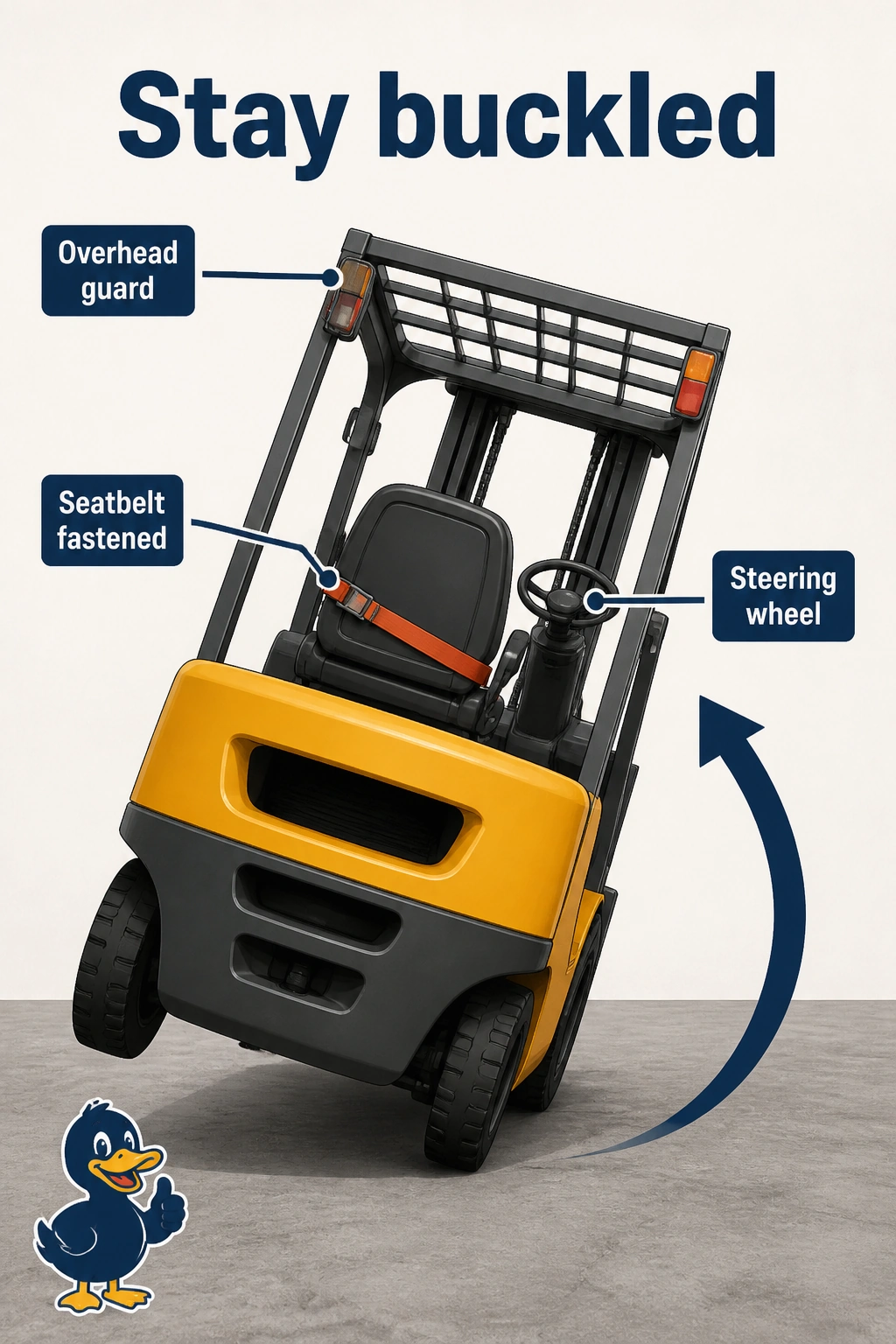
When a sit-down forklift starts to roll, your natural instinct screams jump, yet staying strapped inside the steel cage is what saves your life. The trap is thinking you can outrun a multi-ton overhead guard that slams down faster than you can unbuckle.
Full Explanation
When a sit-down counterbalanced forklift tips laterally, the safest action is to stay buckled in the seat, grip the steering wheel, and lean away from the tip. The overhead guard and seat restraint keep the operator inside the protected cab envelope so the heavy mast or roof frame cannot pin the worker against the concrete floor. Attempting to unbuckle immediately and jump clear toward the opposite side from the falling direction is dangerous because tip-overs happen faster than human reaction time, often throwing the operator under the descending overhead guard. Trying to step off the low side of the operator compartment while keeping one hand on the frame places the worker directly in the crush zone beneath the falling truck. Choosing to stand up inside the cab and brace both shoulders against the overhead guard posts removes the protective geometry of the seat and increases the chance of being ejected or striking the steel structure. As a caveat, this stay-with-the-truck rule applies specifically to sit-down counterbalanced forklifts, whereas stand-up end-control lift trucks follow different manufacturer-specific exit instructions. As an operational check, inspect seatbelt retractors and latches during every pre-shift forklift checklist and verify operators wear the belt whenever the truck moves.
Prefer to study offline? Printable PDF study book + test engine ($7.50, unofficial). These questions stay free here.