
A manufacturing plant hires an outside electrical contractor to install new switchgear, and the contract requires the contractor to carry general liability coverage naming the plant as an additional insured. Which step should the plant's safety and risk team complete before the contractor begins work on-site?
Select an answer to reveal the explanation.
Short Explanation
A contract promise on paper is like an umbrella with holes unless you confirm the insurance policy actually exists. Verify coverage before tools hit the floor, so you are not left holding the bag if an injury occurs and the policy has expired.
Full Explanation
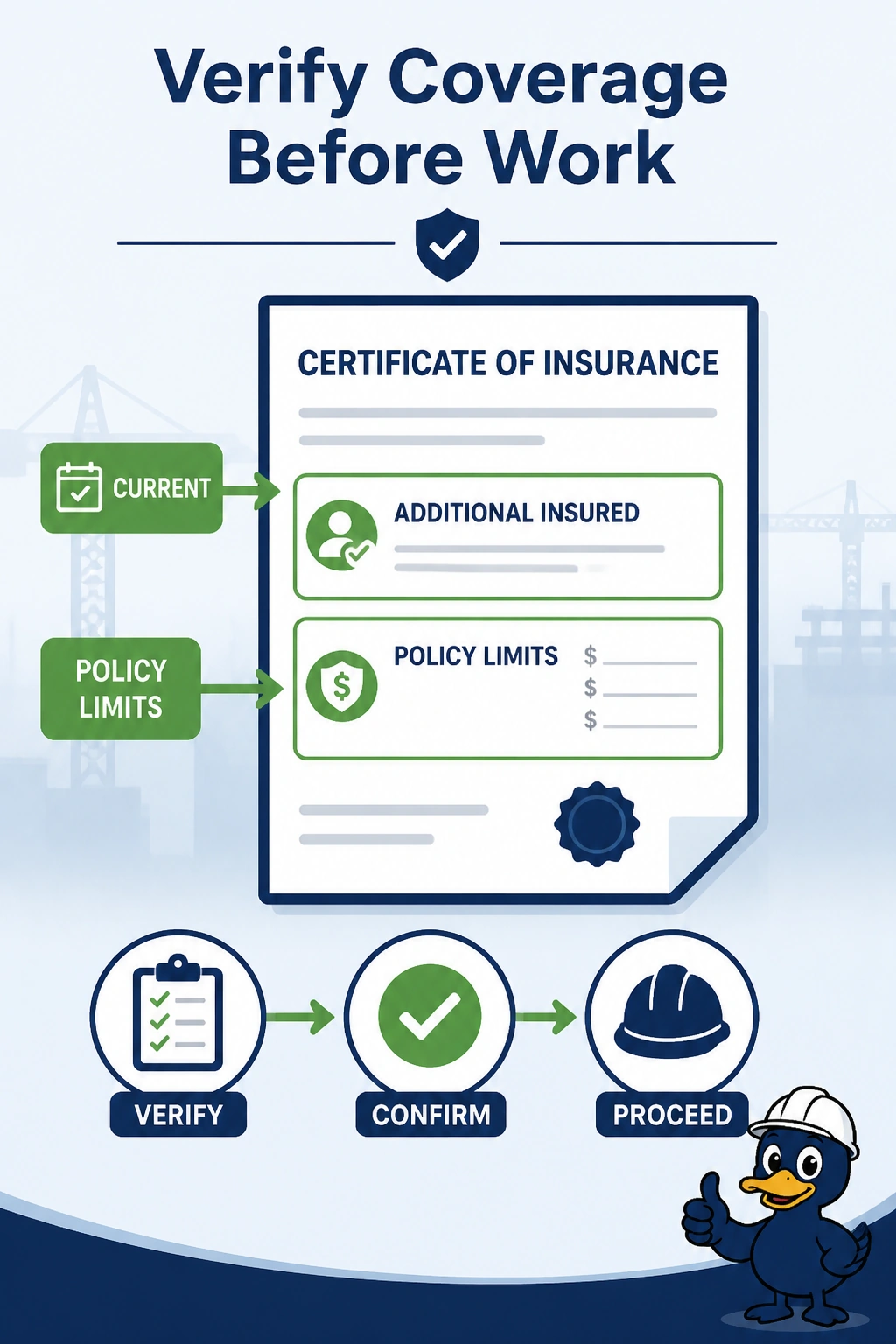
To execute contractual risk transfer, you should verify a current Certificate of Insurance showing Additional Insured status and policy limits before the contractor begins work. The certificate confirms policy dates, coverage types, and dollar limits; the Additional Insured endorsement extends defense and indemnity protection to the plant under the contractor’s policy. Requiring the crew to sign individual personal liability waivers at the security gate is ineffective and often unenforceable: workers cannot waive statutory workers’ compensation rights or shift third-party corporate liability through personal waivers. Assuming the signed master service agreement automatically binds the contractor’s insurer is a dangerous misconception; the insurer is not a party to that contract unless the policy is properly endorsed. Waiting until an incident occurs to request proof from the broker removes your leverage if the policy has lapsed or carries inadequate limits. One caveat: a Certificate of Insurance is informational, so for high-hazard work, request the actual Additional Insured endorsement pages. As a practical check, build a pre-mobilization checklist into procurement so site badges are not issued until insurance documentation is verified and logged.
Prefer to study offline? Printable PDF study book + test engine ($7.50, unofficial). These questions stay free here.