
A chemical processing plant is updating its records retention schedule for personal air-monitoring results that document worker exposure to hazardous solvents. Under OSHA's Access to Employee Exposure and Medical Records standard (29 CFR 1910.1020), how long must the employer preserve these exposure records?
Select an answer to reveal the explanation.
Short Explanation
OSHA treats exposure records like a long-term health timeline, not a temporary tally sheet you toss after a few years. The trap is confusing exposure data with your 5-year injury log retention rule, when toxic exposures often take decades to show health effects.
Full Explanation
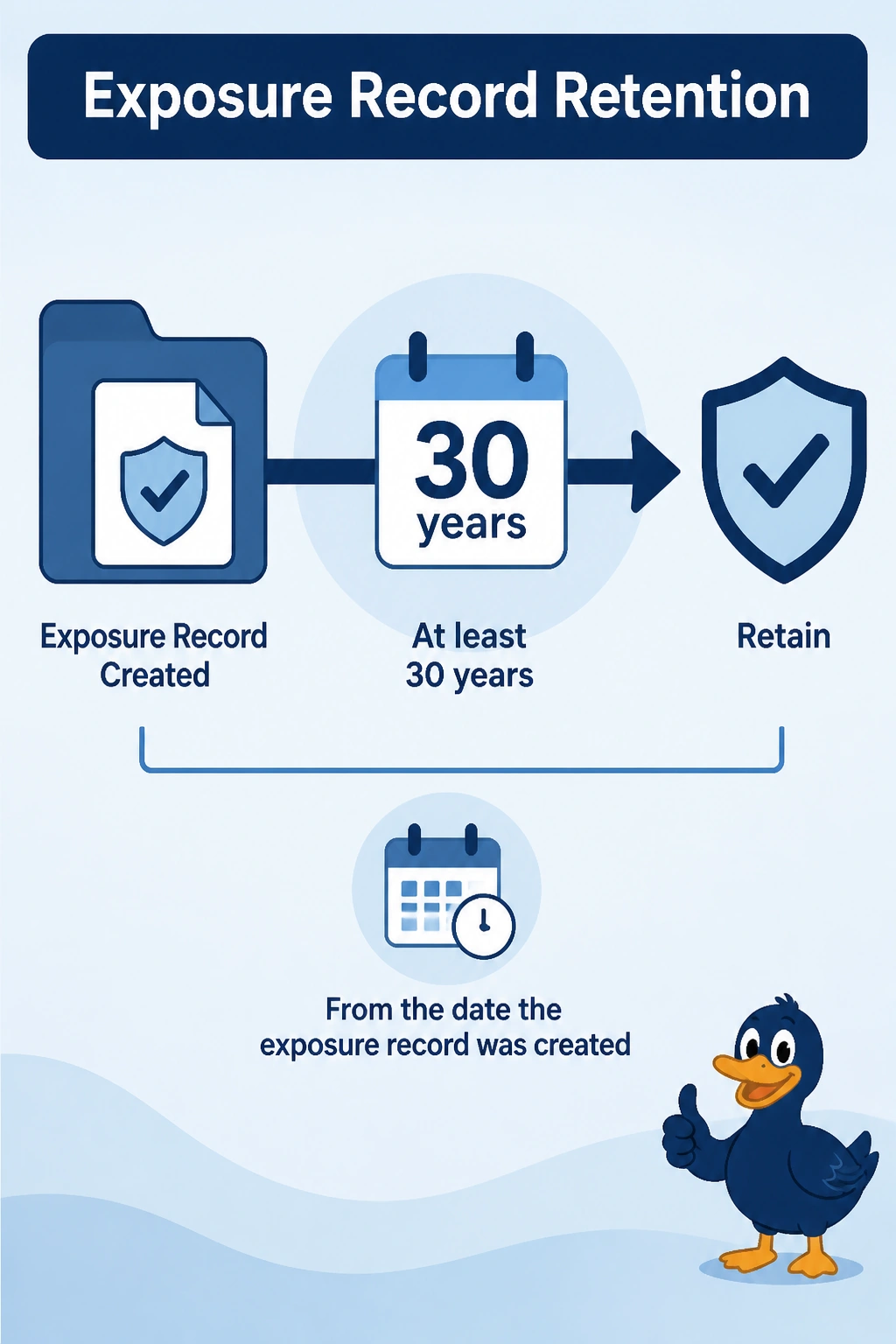
Under OSHA 29 CFR 1910.1020, employers must preserve and maintain employee exposure records For at least 30 years from the date the exposure record was created. This extended retention mechanism exists because occupational illnesses caused by chemical solvents and other toxic agents often have latency periods spanning decades, so workers, their designated representatives, and OSHA need historical air-monitoring data to evaluate chronic health risks and cumulative dose. By contrast, For 5 years following the end of the calendar year the monitoring occurred confuses air-monitoring exposure records with the 5-year retention period for OSHA 300 injury and illness logs under 29 CFR 1904. Similarly, For the duration of employment plus 10 years after the worker separates understates the required 30-year preservation window and improperly ties exposure-record retention to an employee's separation date rather than when the record was created. Finally, Only until the next annual industrial hygiene survey supersedes the data would eliminate historical baseline measurements needed to track long-term exposure trends across a worker's career. Caveat: if a facility closes or transfers ownership without a successor employer, the outgoing employer must follow the standard's notice and transfer procedures rather than discarding the files. Operational check: audit the industrial hygiene archive annually to verify that personal air-monitoring records remain indexed, legible, and accessible.
Prefer to study offline? Printable PDF study book + test engine ($7.50, unofficial). These questions stay free here.