
A warehouse supervisor notices that a forklift operator smells strongly of alcohol, has slurred speech, and is unsteady on their feet midway through a shift. To minimize employer impairment liability and immediate safety risk, what action should the supervisor take?
Select an answer to reveal the explanation.
Short Explanation
Think of impairment like a leaking hydraulic line—you shut the machine down right away instead of letting it roll out onto the highway. The trap is thinking that sending a worker off the clock ends your responsibility, when putting an impaired person behind the wheel creates foreseeable third-party liability.
Full Explanation
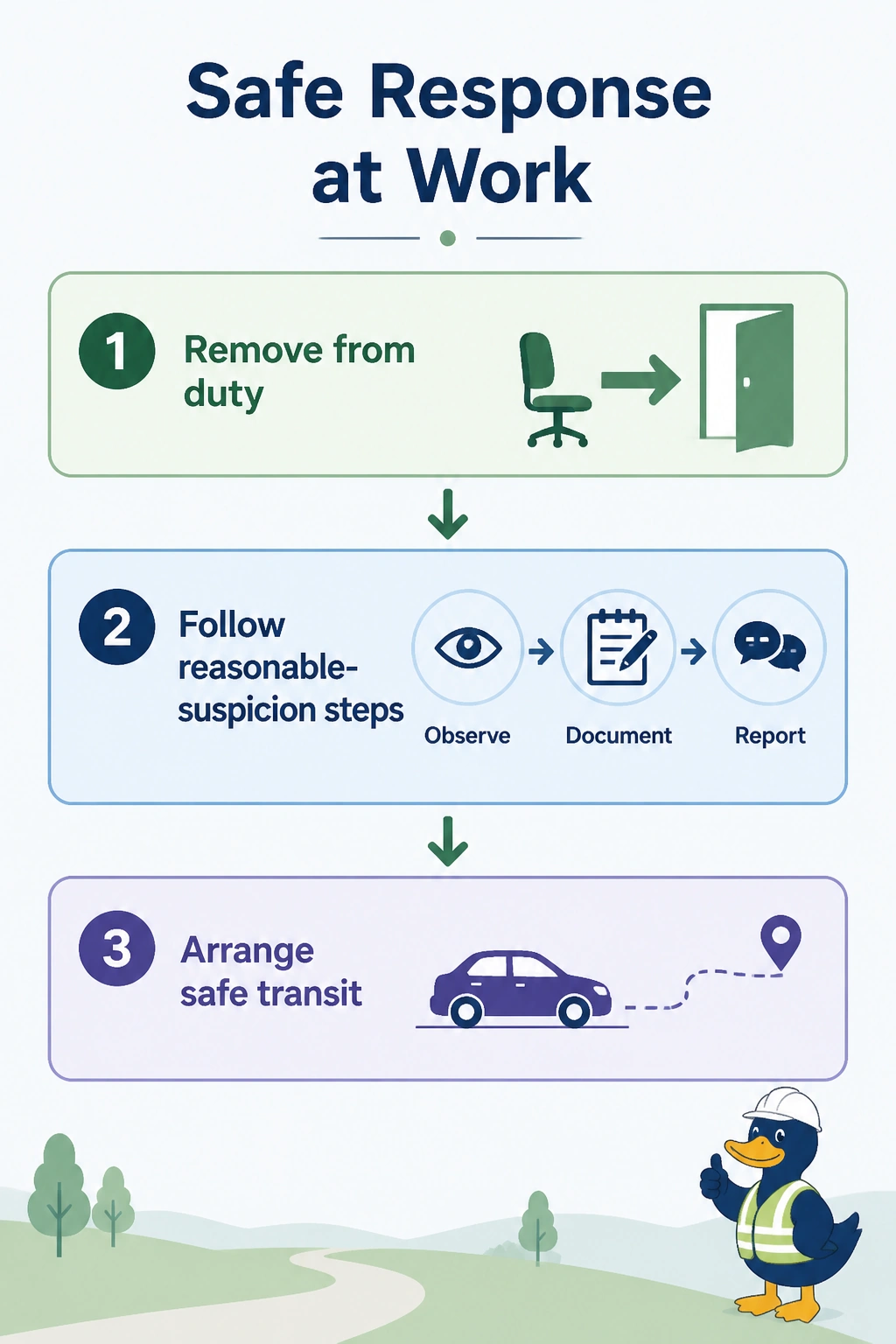
To control both immediate workplace hazards and third-party liability, the supervisor must remove the employee from duty, follow reasonable-suspicion steps, and arrange safe transit. This mechanism halts safety-sensitive forklift operation, creates an objective contemporaneous record under company policy, and prevents a foreseeable off-site motor vehicle crash. Choosing to direct the employee to clock out immediately and drive their personal vehicle home to avoid on-site injury exposes the employer to third-party negligence claims if a collision occurs on the road. Choosing to reassign the employee to sweep the active loading dock for the remainder of the shift under observation still leaves an impaired worker exposed to moving forklifts and dock edges. Choosing to document the behavior privately and wait for the next scheduled random test cycle to address impairment leaves an active hazard on the floor and fails to link testing to observed signs. Caveat: supervisors should always have a second trained witness corroborate objective signs before initiating reasonable-suspicion testing. As an operational check, verify that your site policy includes pre-arranged ride-share or taxi vouchers and an emergency contact protocol for impaired workers.
Prefer to study offline? Printable PDF study book + test engine ($7.50, unofficial). These questions stay free here.