
An industrial hygienist plans to collect full-shift personal air samples for silica dust using cyclone samplers connected to battery-operated sampling pumps. Which quality-assurance step is essential to ensure the calculated airborne dust concentration is accurate?
Select an answer to reveal the explanation.
Short Explanation
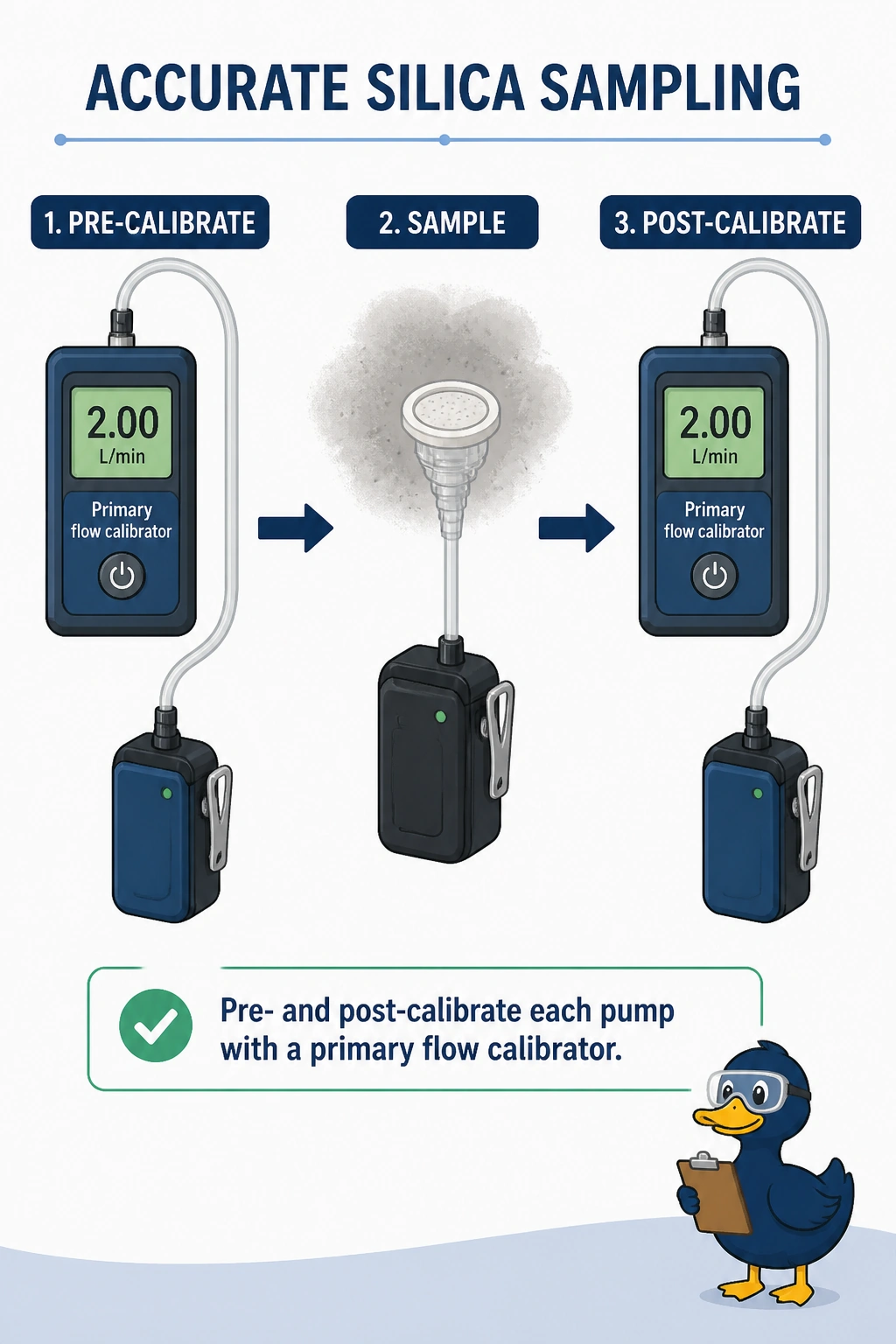
A sampling pump that drifts during an eight-hour shift can turn your exposure data into guesswork. Never trust a nominal flow rating alone; you need pre- and post-sampling calibration with a primary standard so your calculated air volume holds up.
Full Explanation
Accurate gravimetric air sampling depends on knowing exact air volume and maintaining the cyclone's cut-point flow rate, so the hygienist must Pre- and post-calibrate each pump with a primary flow calibrator (such as a piston or bubble calibrator) with the representative sampling train inline. Comparing pre- and post-sampling flow rates detects battery sag, tubing kinks, or filter overloading that would invalidate the sample. Choosing to Set each pump using only its built-in mechanical rotameter without field checks relies on an unverified secondary indicator that can drift significantly over time. Choosing to Estimate the total air volume by multiplying the pump's rated flow by eight hours ignores actual flow variations and backpressure from the cyclone and filter. Choosing to Weigh the cassette filter only before sampling and calculate dust gain visually is invalid because silica concentrations require precise laboratory gravimetric and analytical measurements. As a caveat, if pre- and post-calibration flow rates differ by more than accepted method tolerances (typically five percent), the sample may need to be voided. Operationally, record pre- and post-calibration readings, start and stop times, and pump serial numbers on the field data sheet for every sampled worker.
Prefer to study offline? Printable PDF study book + test engine ($7.50, unofficial). These questions stay free here.