
A pharmaceutical compounding lab mixes a volatile, highly toxic solvent in an open vessel, and a supervisor proposes installing a wall-mounted exhaust fan to increase general room air changes. Why should an industrial hygienist recommend local exhaust ventilation at the vessel instead of general dilution ventilation?
Select an answer to reveal the explanation.
Short Explanation
Trying to clear toxic solvent vapors with a wall fan is like spraying perfume to hide burnt toast—everyone in the room still breathes it first. The trap is thinking more room air changes equal safety, when your real goal is capturing the vapor right at the mixing bowl before it reaches a worker's nose.
Full Explanation
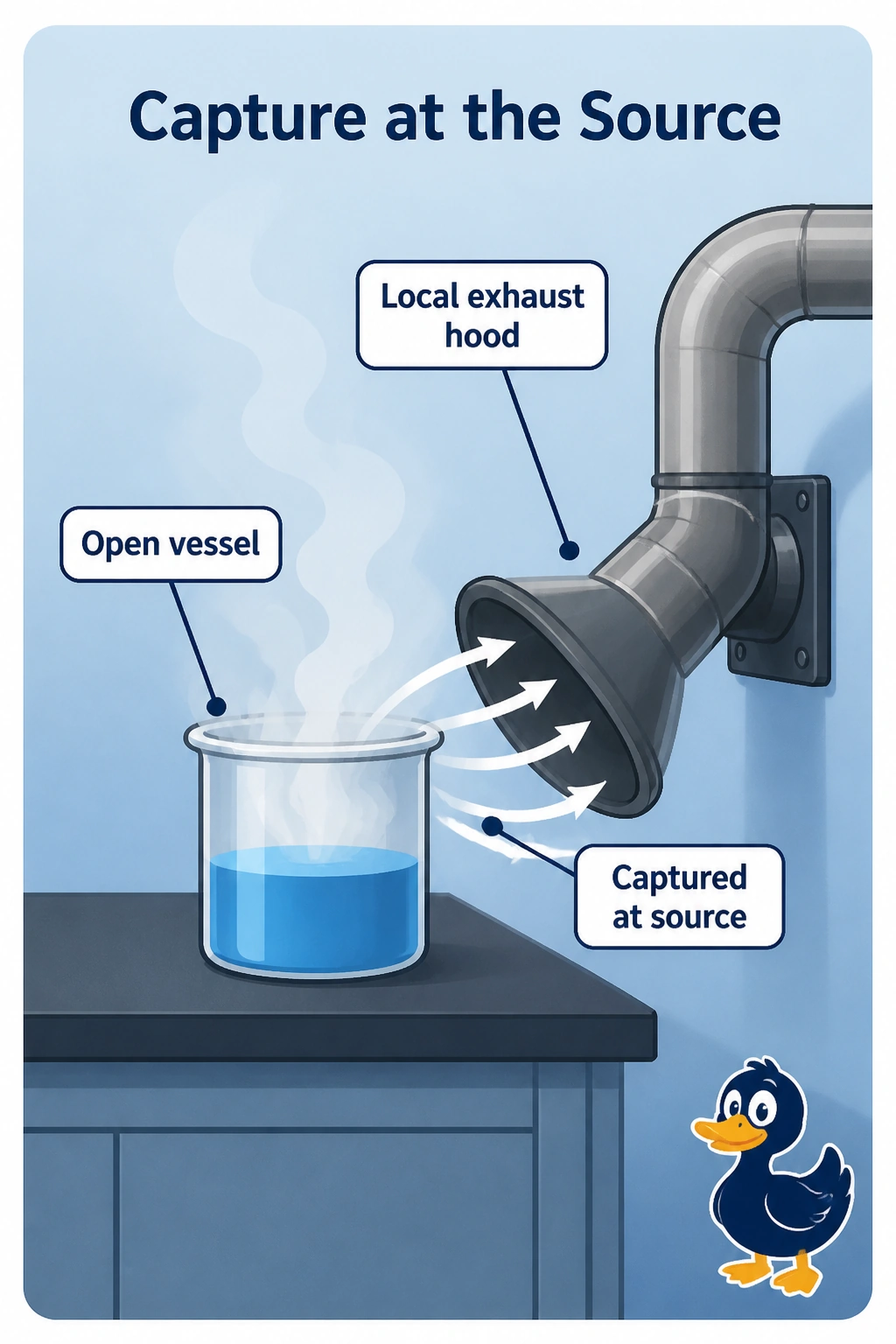
For highly toxic airborne chemicals, source capture is vastly superior to mixing contaminated air throughout a room because Local exhaust captures contaminants directly at the emission source before they enter the breathing zone. A properly designed hood or canopy encloses or draws air across the open vessel at an effective capture velocity, removing vapors before they disperse past the operator's face. The suggestion that Local exhaust neutralizes chemical vapors chemically before discharging air outside is incorrect; ventilation moves and exhausts air, whereas scrubbing or filtration requires dedicated air-cleaning equipment. The statement that General dilution ventilation is restricted exclusively to outdoor construction work is also false, as dilution ventilation is widely used indoors for comfort cooling and low-toxicity nuisance odors. Similarly, the claim that General dilution ventilation increases airborne vapor pressure inside open vessels confuses room air movement with thermodynamic vapor pressure, which depends on temperature and chemical identity. Caveat: local exhaust only works when makeup air is supplied to replace exhausted volume and workers position themselves upwind of the hood. Operational check: verify hood capture velocity with a calibrated anemometer or smoke tube during compounding setup.
Prefer to study offline? Printable PDF study book + test engine ($7.50, unofficial). These questions stay free here.