
A laboratory technician performs a 12-minute solvent-pouring task that generates a brief, high-concentration vapor spike, while spending the rest of the shift at a clean desk so the 8-hour Time-Weighted Average remains below the Permissible Exposure Limit. Which exposure limit specifically evaluates this brief peak?
Select an answer to reveal the explanation.
Short Explanation
A clean seven hours at a desk can hide a nasty twelve-minute chemical hit if you only look at full-shift averages. The trap is trusting an 8-hour TWA to protect workers from acute irritation or narcosis during brief spikes. Always check short-term limits whenever tasks create concentrated bursts.
Full Explanation
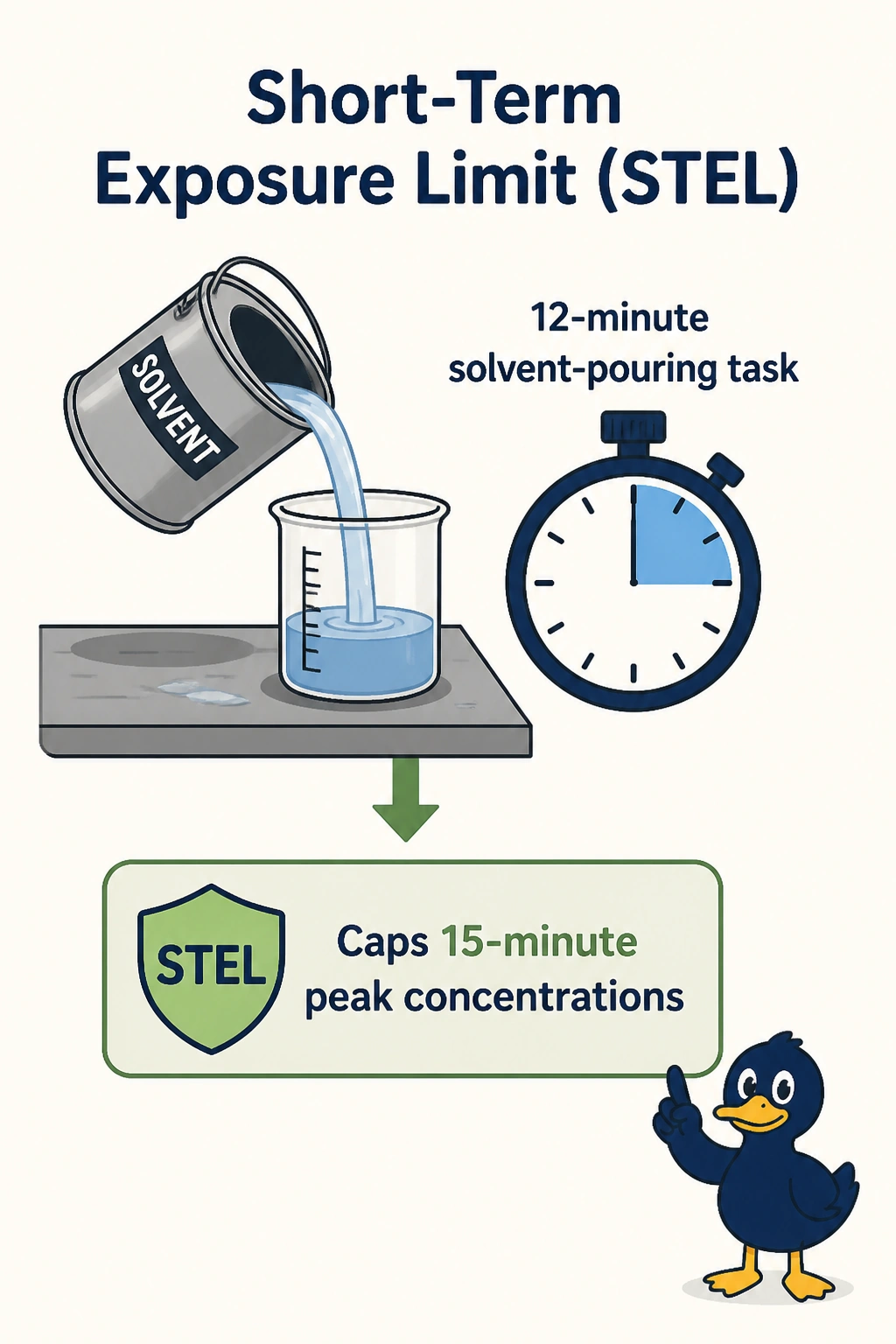
The Short-Term Exposure Limit, because it caps 15-minute peak concentrations is designed specifically to protect workers from acute health effects—such as eye irritation, central nervous system depression, or tissue damage—that can occur during brief high-exposure tasks even when the full-shift average looks acceptable. Evaluating a 12-minute pouring spike against a 15-minute STEL ensures short bursts do not overwhelm the body's defenses. The 8-hour Time-Weighted Average, because it averages all shift exposures together dilutes brief spikes across clean hours and can mask dangerous peak exposures. The Biological Exposure Index, because it measures only cumulative annual uptake is inaccurate on two counts: biological indices reflect internal dose from recent exposure through blood, urine, or breath markers rather than a 15-minute airborne peak limit. The Immediately Dangerous to Life or Health value, because it governs routine tasks misstates the role of IDLH, which defines extreme emergency or respirator-selection thresholds rather than routine operational limits. Caveat: not every regulated chemical has an established STEL, so hygienists must also check ceiling limits and excursion guidelines. As an operational check, collect 15-minute personal breathing-zone samples specifically during the pouring task rather than relying solely on full-shift dosimetry.
Prefer to study offline? Printable PDF study book + test engine ($7.50, unofficial). These questions stay free here.