
A structural steel fabrication bay experiences frequent nuisance fire alarms because standard smoke detectors are triggered by normal welding fumes and grinding dust. Which detection upgrade reduces false alarms while maintaining reliable fire detection?
Select an answer to reveal the explanation.
Short Explanation
Putting a standard smoke detector above a welding booth is like putting a motion sensor in a bowling alley—it will cry wolf until everyone ignores it. The trap is disabling alarms or swapping in another smoke sensor instead of matching the detector technology to your bay's normal fumes.
Full Explanation
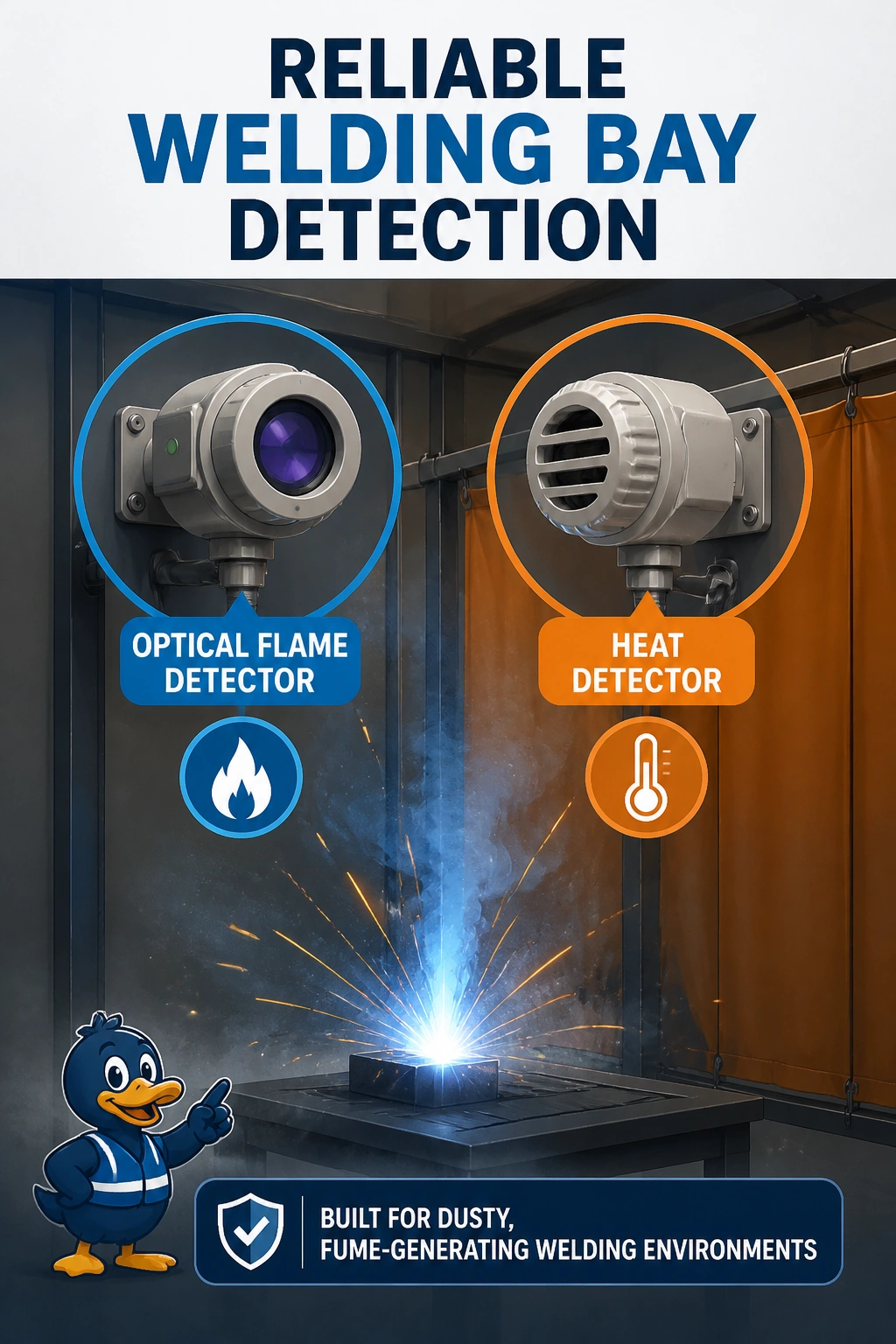
Install optical flame or heat detectors designed for dusty, fume-generating welding environments matches the sensing principle to the hazard while ignoring routine airborne particulates. Rate-of-rise or fixed-temperature heat detectors respond to abnormal thermal energy rather than welding smoke, and properly shielded multi-spectrum optical flame detectors distinguish true fire radiation signatures from arc-welding flashes. Install standard ionization smoke detectors directly above the welding booths worsens nuisance tripping because ionization sensors are highly sensitive to tiny combustion aerosols produced during normal arc welding. Silence the fire alarm panel during daytime shifts whenever welding is active creates an unacceptable life-safety blind spot during peak occupancy and violates fire-alarm impairment controls. Place photoelectric smoke detectors inside the exhaust hood ductwork only leaves the open fabrication floor unprotected and still exposes the sensors to heavy fume streams. As a caveat, verify that optical flame detectors have unobstructed lines of sight and are rated to reject arc-flash wavelengths common in the bay. Operationally, coordinate detector selection with a qualified fire protection engineer, test the new devices under simulated alarm conditions, and log any temporary hot-work impairments according to the facility's fire-watch protocol.
Prefer to study offline? Printable PDF study book + test engine ($7.50, unofficial). These questions stay free here.