
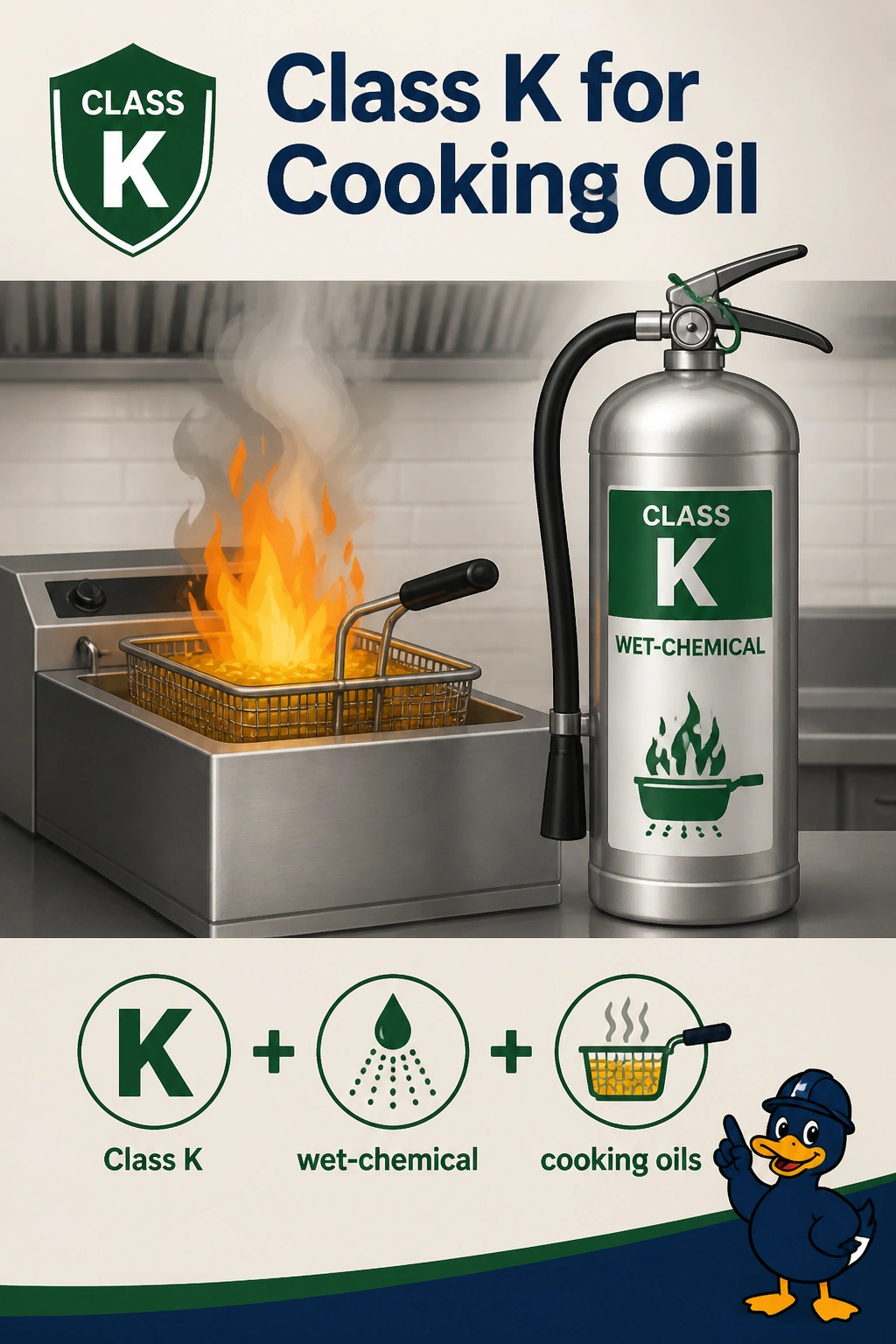
A hospital dietary kitchen experiences a fire in a deep-fat fryer filled with heated vegetable cooking oil. Which portable fire extinguisher class is specifically designed to saponify the hot oil and suppress the fire without splashing burning grease?
Select an answer to reveal the explanation.
Short Explanation
Imagine pouring water onto a sizzling pan of hot oil—you would turn a manageable fryer fire into an instant fireball. The trap is grabbing any nearby kitchen extinguisher instead of checking the label; you need a Class K wet-chemical unit to turn that oil into a cooling soapy blanket.
Full Explanation
A Class K wet-chemical extinguisher made for cooking oils discharges an alkaline potassium-based mist that reacts with hot animal fats or vegetable oils through saponification, forming a thick, soapy foam crust on the surface. That crust seals off oxygen, cools the oil below its autoignition temperature, and prevents reignition without violently dispersing burning grease. A Class A pressurized water extinguisher designed to cool ordinary solid combustibles would cause water to flash-boil beneath the oil, throwing flaming droplets across the kitchen. A Class C carbon dioxide extinguisher intended for energized kitchen appliances lacks cooling capacity and delivers a high-velocity gas stream that can splatter hot oil and allow immediate re-flash. A Class D dry-powder extinguisher formulated for combustible metal shavings is engineered for metals such as magnesium or sodium and is inappropriate for liquid cooking media. As a caveat, portable Class K units supplement fixed hood suppression systems and should only be used after the fryer heat source is shut off and the hood system is activated if needed. During monthly kitchen inspections, confirm that the Class K extinguisher is mounted along the exit path with an unobstructed pressure gauge in the operable range.
Prefer to study offline? Printable PDF study book + test engine ($7.50, unofficial). These questions stay free here.