
A short circuit ignites insulation inside an energized 480-volt motor control cabinet at a manufacturing plant. Which portable fire extinguisher class is rated for use on energized electrical equipment without conducting current back to the operator?
Select an answer to reveal the explanation.
Short Explanation
Grabbing the wrong extinguisher on a live 480-volt cabinet turns a fire response into an electrocution hazard for you. The trap is picking a water-based or foam agent that cools flames well on paper or fuel but conducts electricity straight back to the nozzle.
Full Explanation
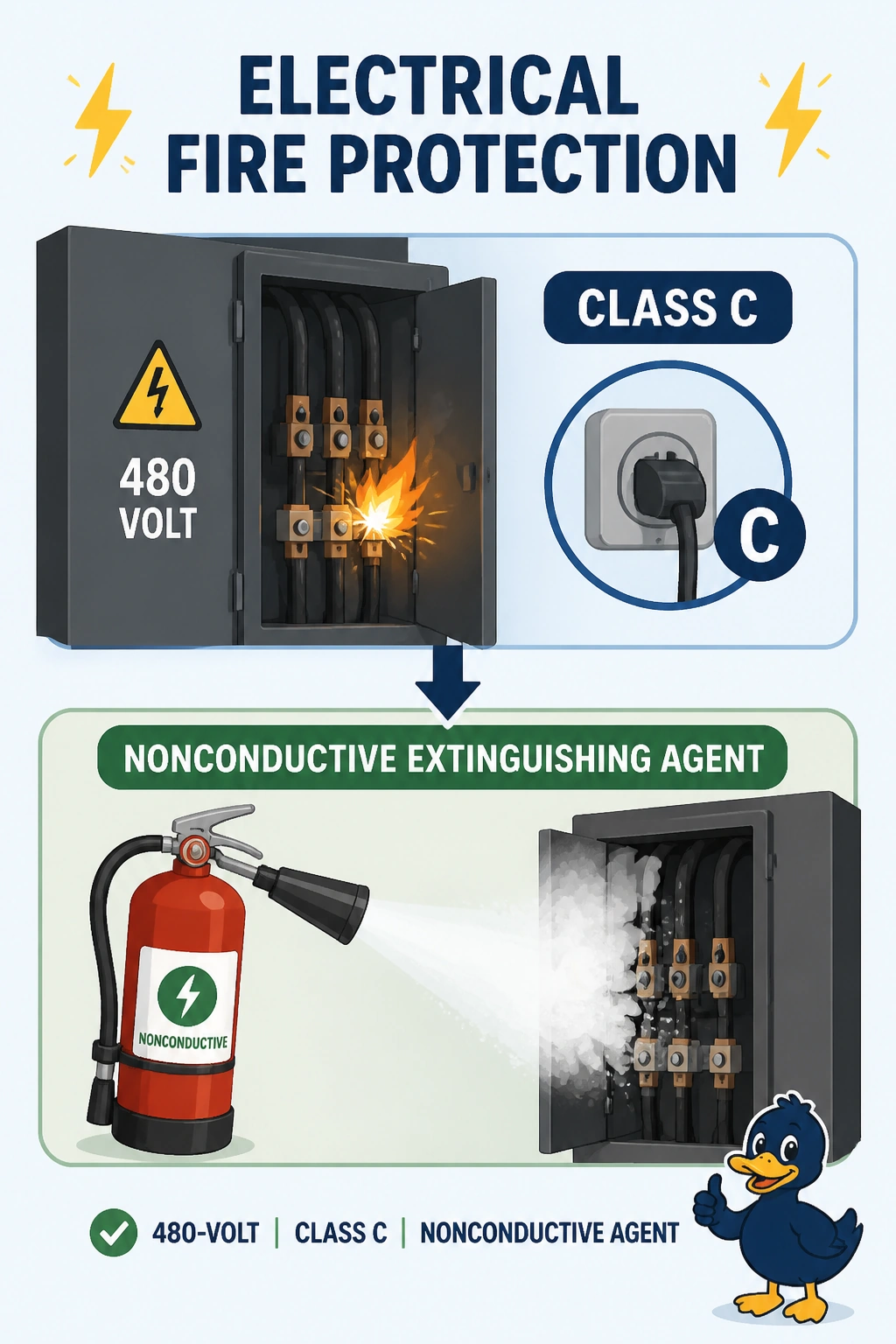
Class C using a nonconductive extinguishing agent, such as carbon dioxide or dry chemical, is specifically rated for fires involving energized electrical equipment because the agent will not conduct current back to the operator. Once power is safely de-energized, the remaining burning insulation or plastics behave as ordinary combustibles, yet while energized, nonconductivity is essential. Class A using pressurized water to cool the cabinet creates a severe shock and electrocution path through the water stream. Class B using aqueous film-forming foam concentrate is formulated for flammable and combustible liquids, and its water-based foam also conducts electricity on live switchgear. Class K using wet chemical potassium acetate solution is designed for commercial kitchen cooking oils and fats, relying on saponification and an electrically conductive liquid spray. As a caveat, clean-agent or CO2 units avoid corrosive dry-chemical residue on sensitive electronics, though CO2 requires ventilation awareness in tight rooms. Operationally, mount Class C-rated extinguishers along electrical room egress paths and inspect pressure gauges monthly.
Prefer to study offline? Printable PDF study book + test engine ($7.50, unofficial). These questions stay free here.