
Yard spotters driving terminal tractors over cracked concrete lanes for eight-hour shifts report persistent lower-back pain and sciatica. Which intervention best addresses whole-body vibration (WBV) at its source and transmission path?
Select an answer to reveal the explanation.
Short Explanation
When a driver bounces across broken concrete all shift, the truck seat acts like a piston driving vibration straight into your spine. The trap is slapping on a back belt or padding the steering wheel instead of isolating the seat suspension and smoothing the surface.
Full Explanation
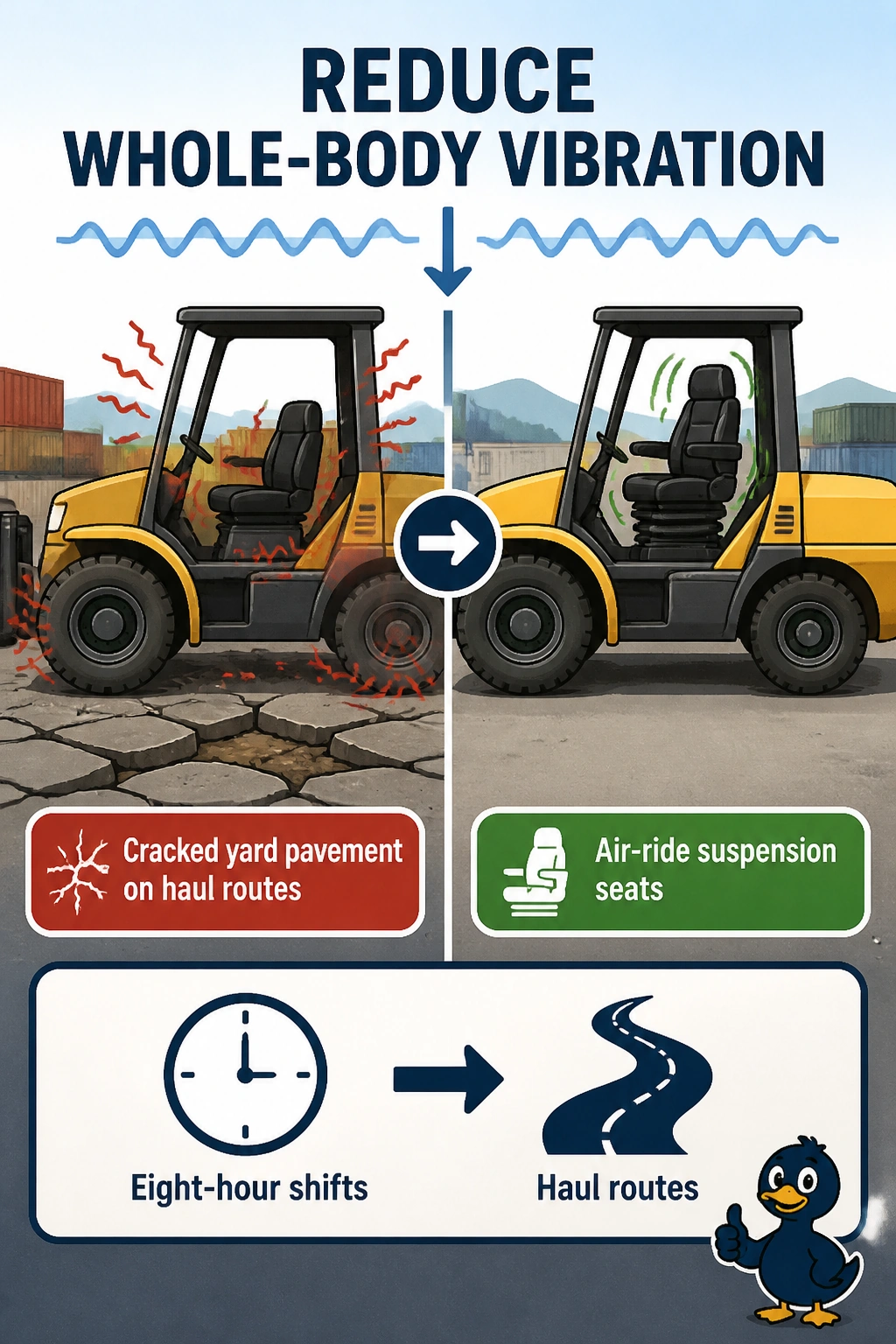
Whole-body vibration transmitted from uneven yard surfaces through a rigid seat frame compresses spinal discs and accelerates lower-back musculoskeletal disorders. Installing air-ride suspension seats and repairing cracked yard pavement along haul routes applies engineering controls both at the source (smoothing the driving surface) and along the transmission path (damping vertical shock before it reaches the operator). Switching operators from diesel to electric yard tractors to eliminate cab noise addresses acoustic exposure rather than mechanical vibration transmitted through the chassis. Requiring operators to wear wide elastic lumbar back belts during all driving shifts relies on an unproven personal device that NIOSH does not recognize as effective protection against whole-body vibration or lifting injuries. Adding padded steering wheel covers to reduce grip force during tight turns targets hand-arm contact stress rather than whole-body spinal vibration. As a caveat, air-ride seats must be adjusted to each driver's body weight or they can bottom out and amplify shock. Operationally, inspect yard haul lanes for potholes during monthly walks and verify seat suspension travel and damping controls during pre-shift tractor checks.
Prefer to study offline? Printable PDF study book + test engine ($7.50, unofficial). These questions stay free here.